

- Historical Background
- History of use
- Ownership History
- Architectural Features
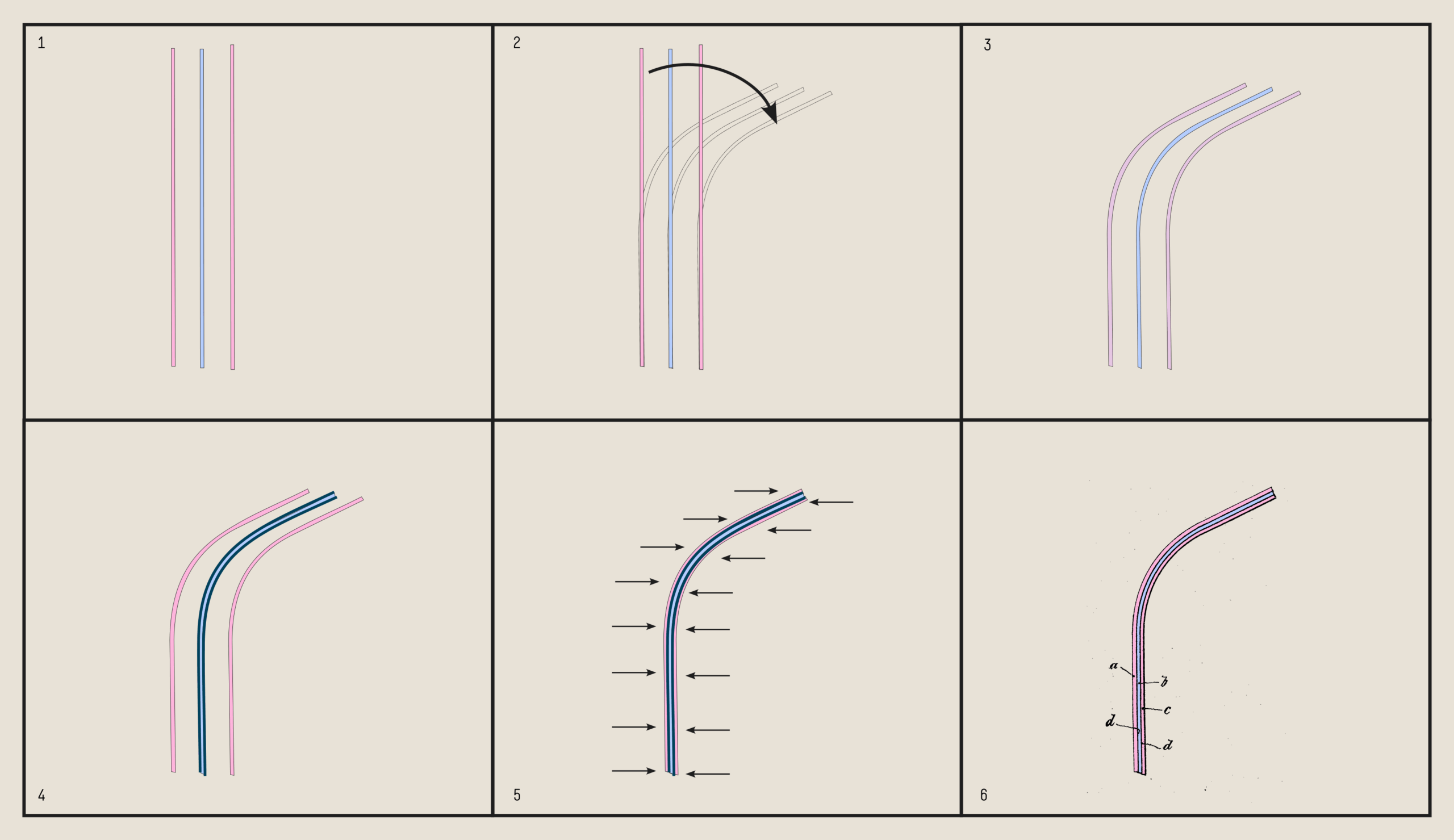
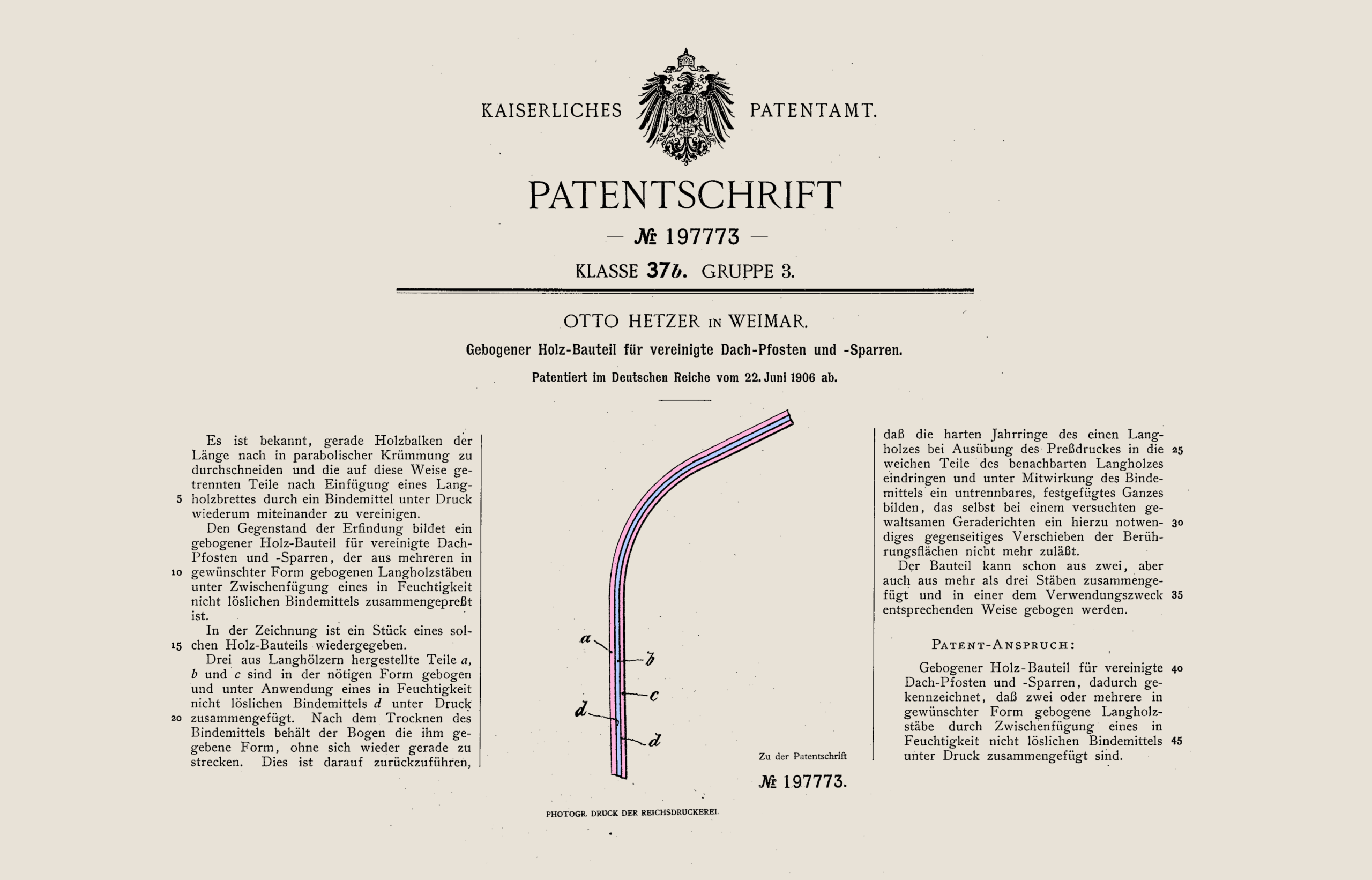
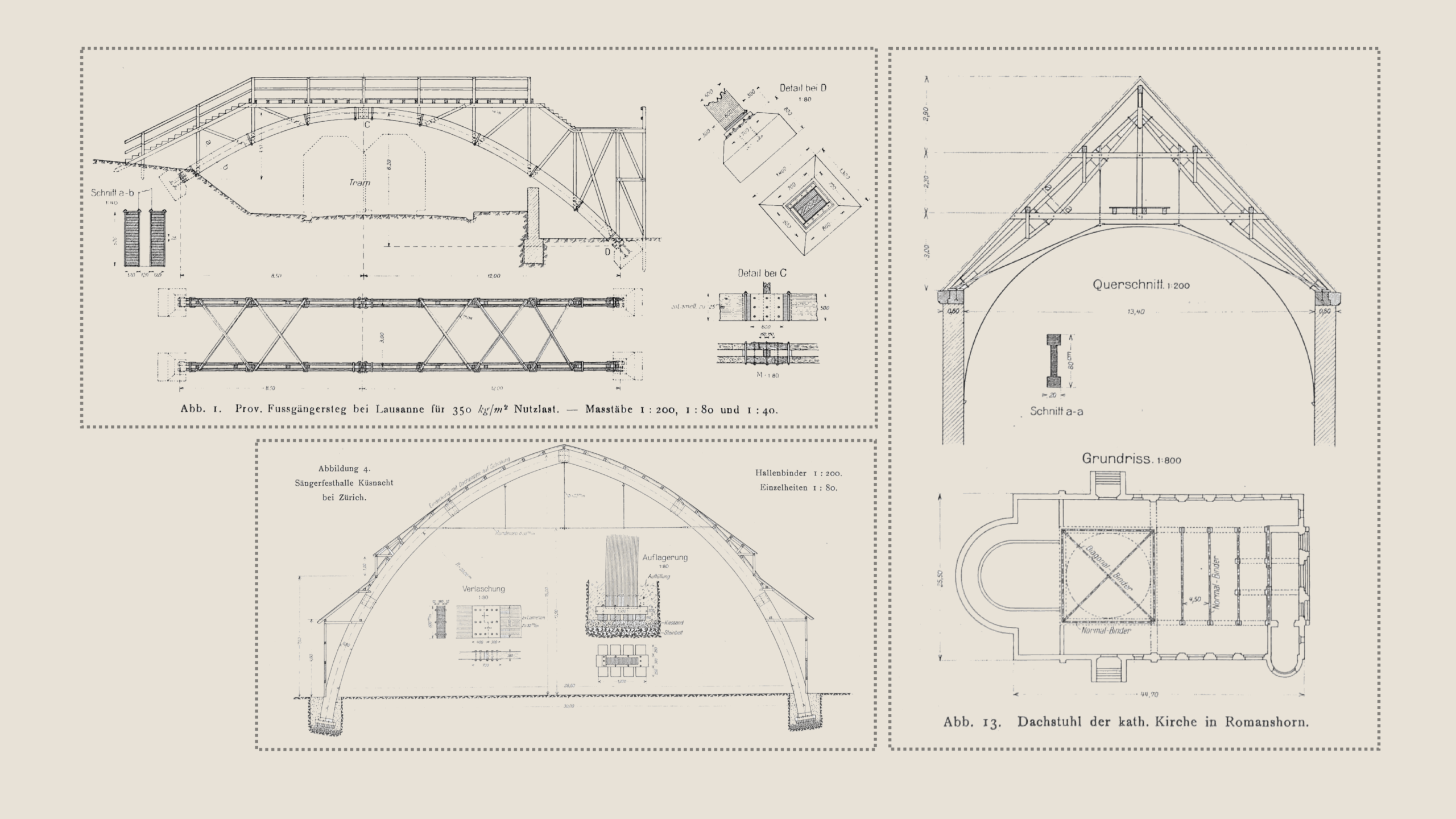
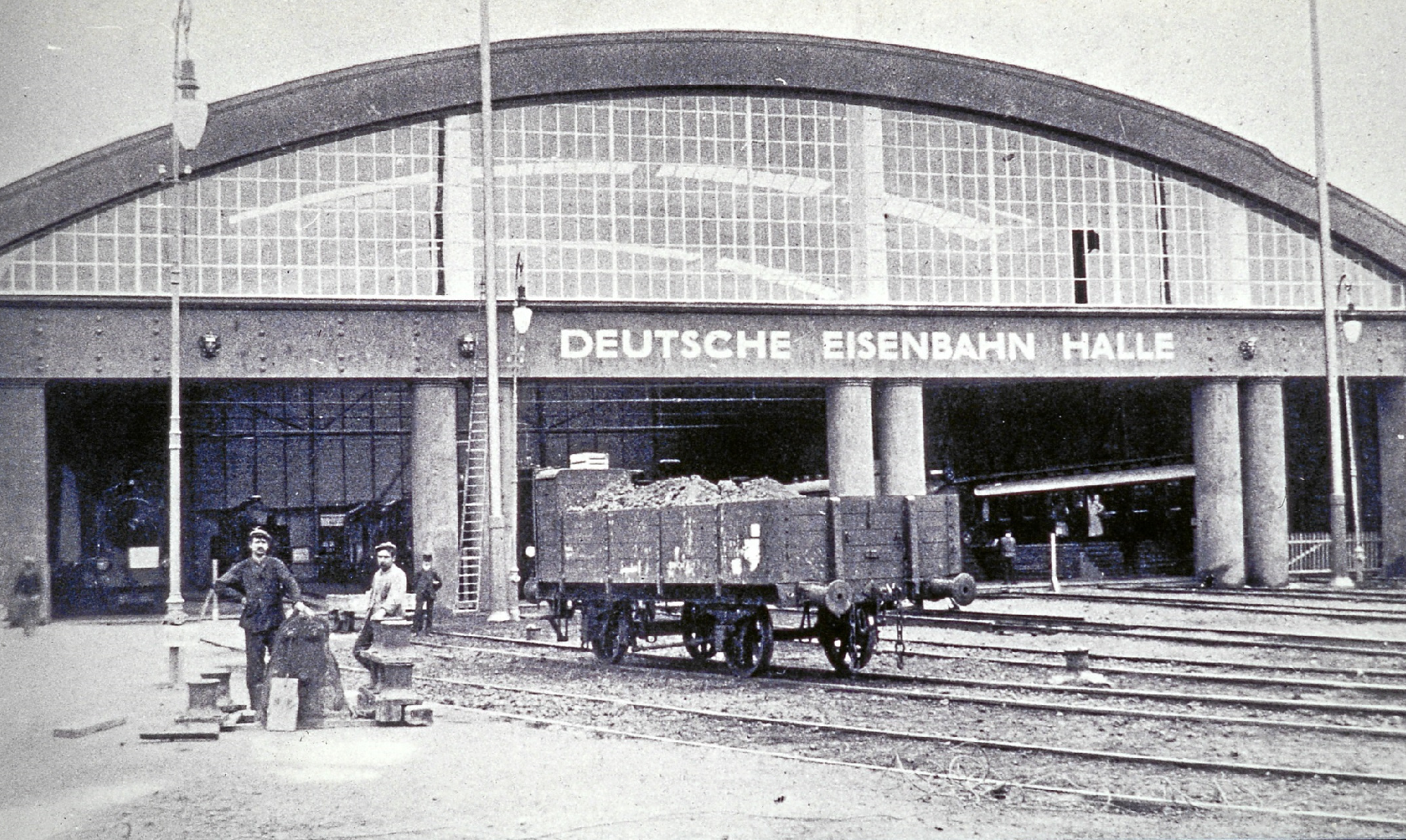
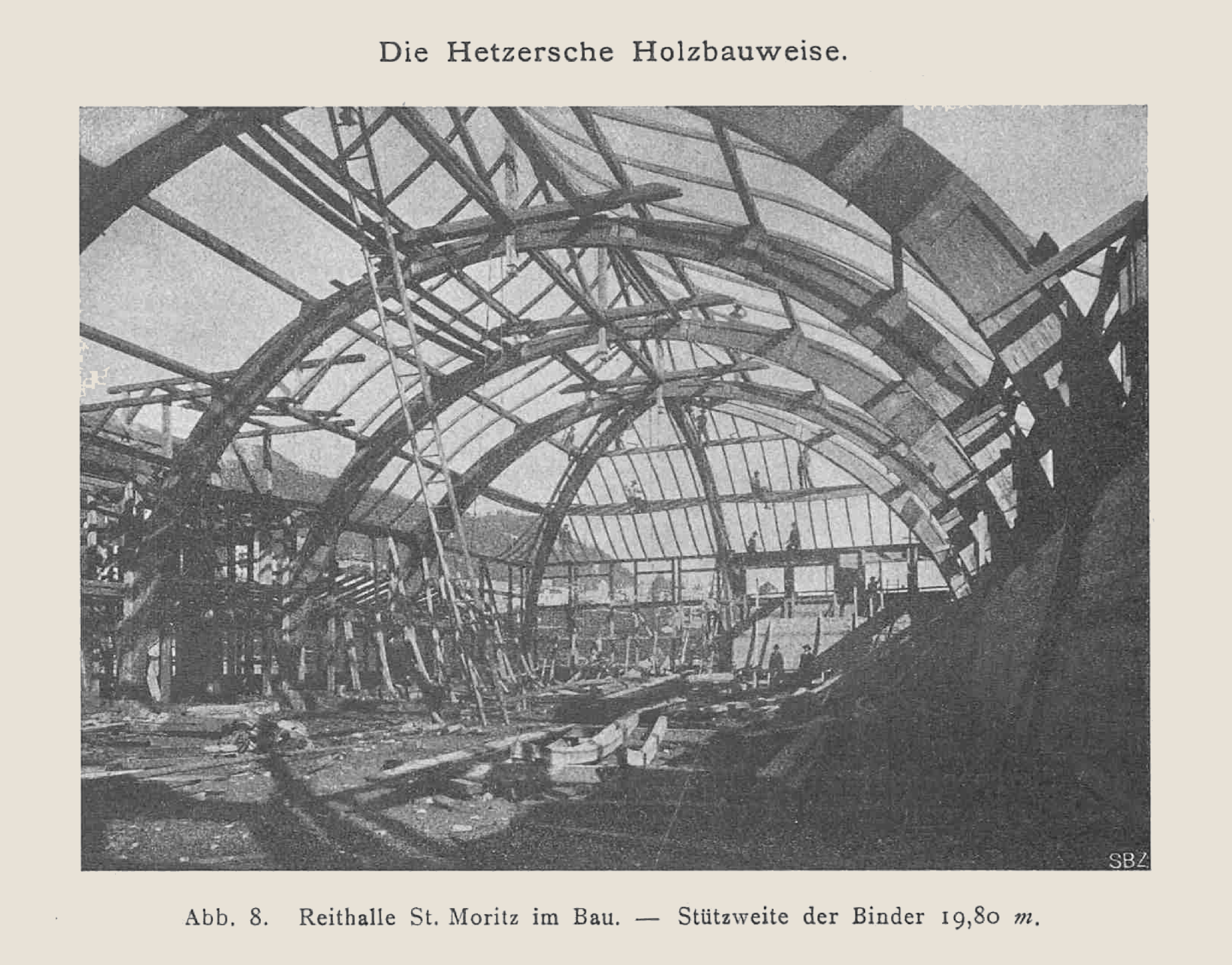
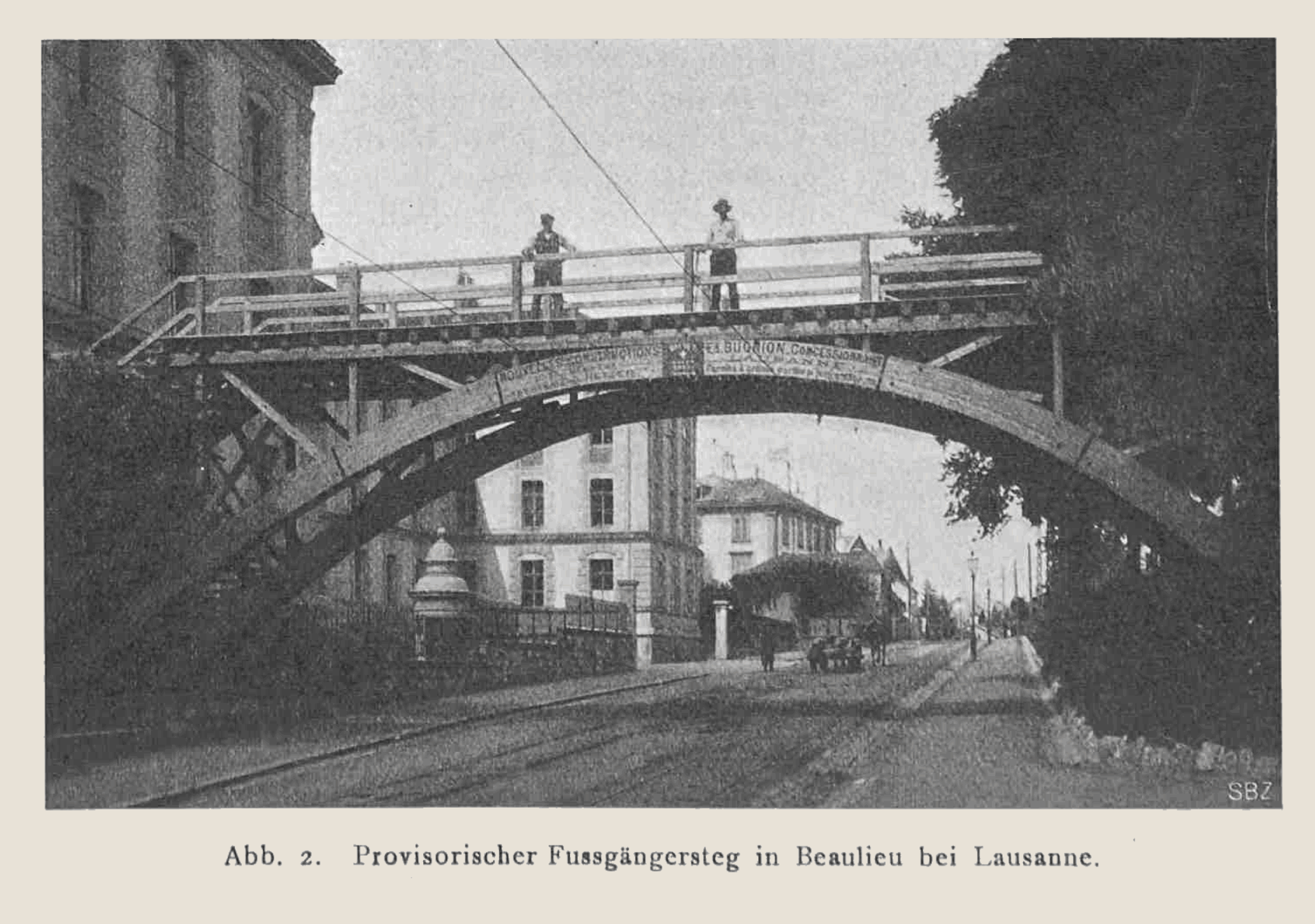
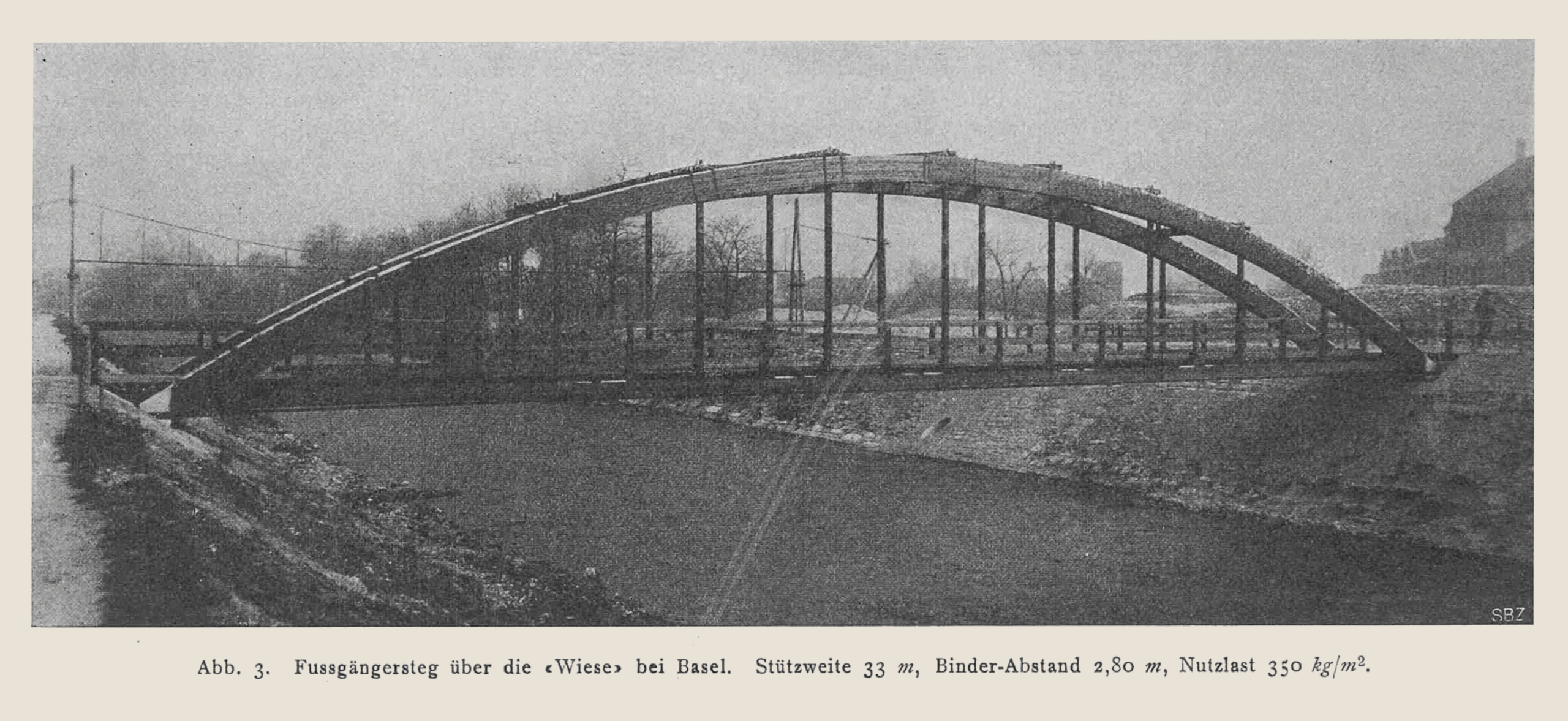
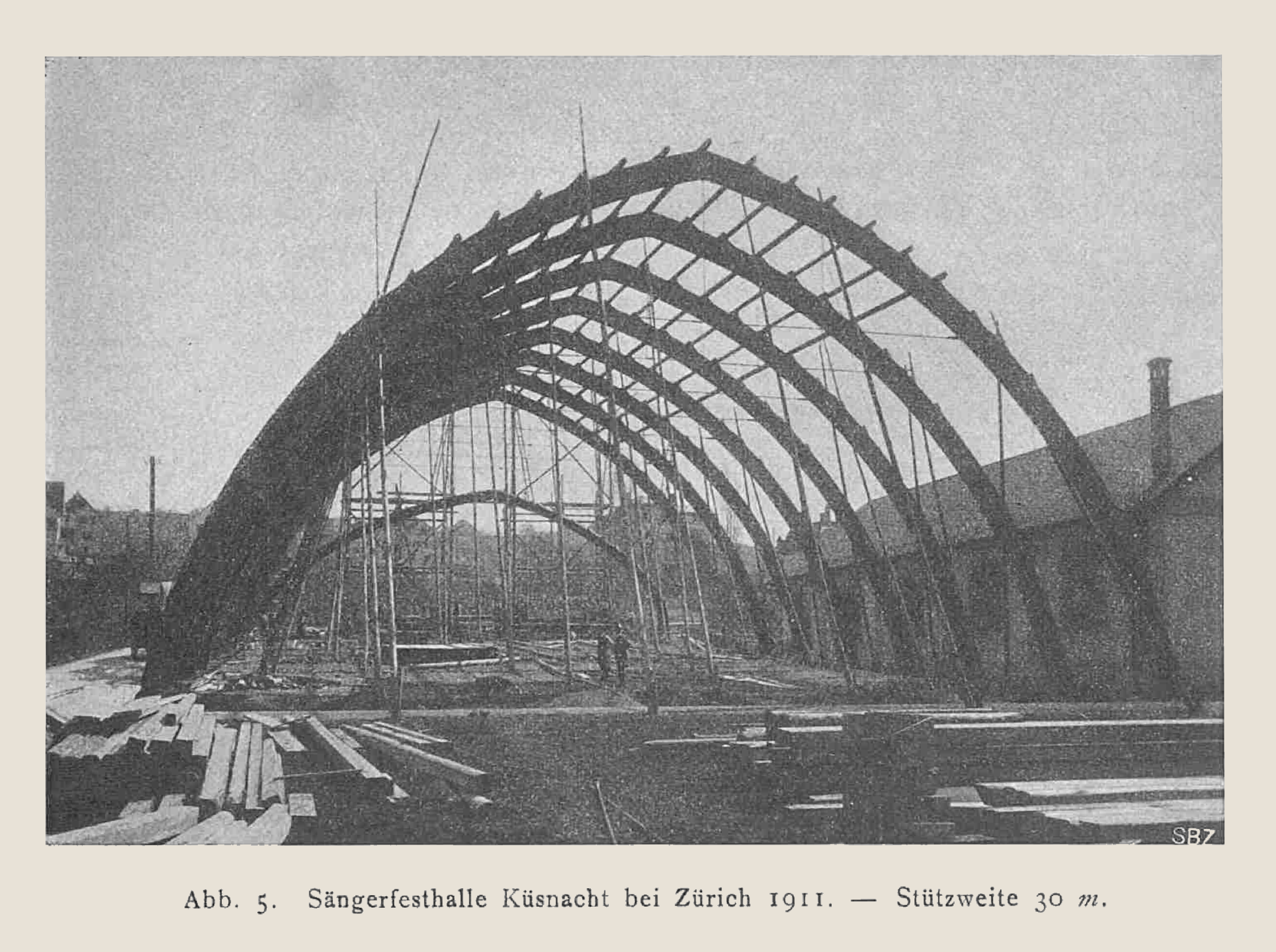
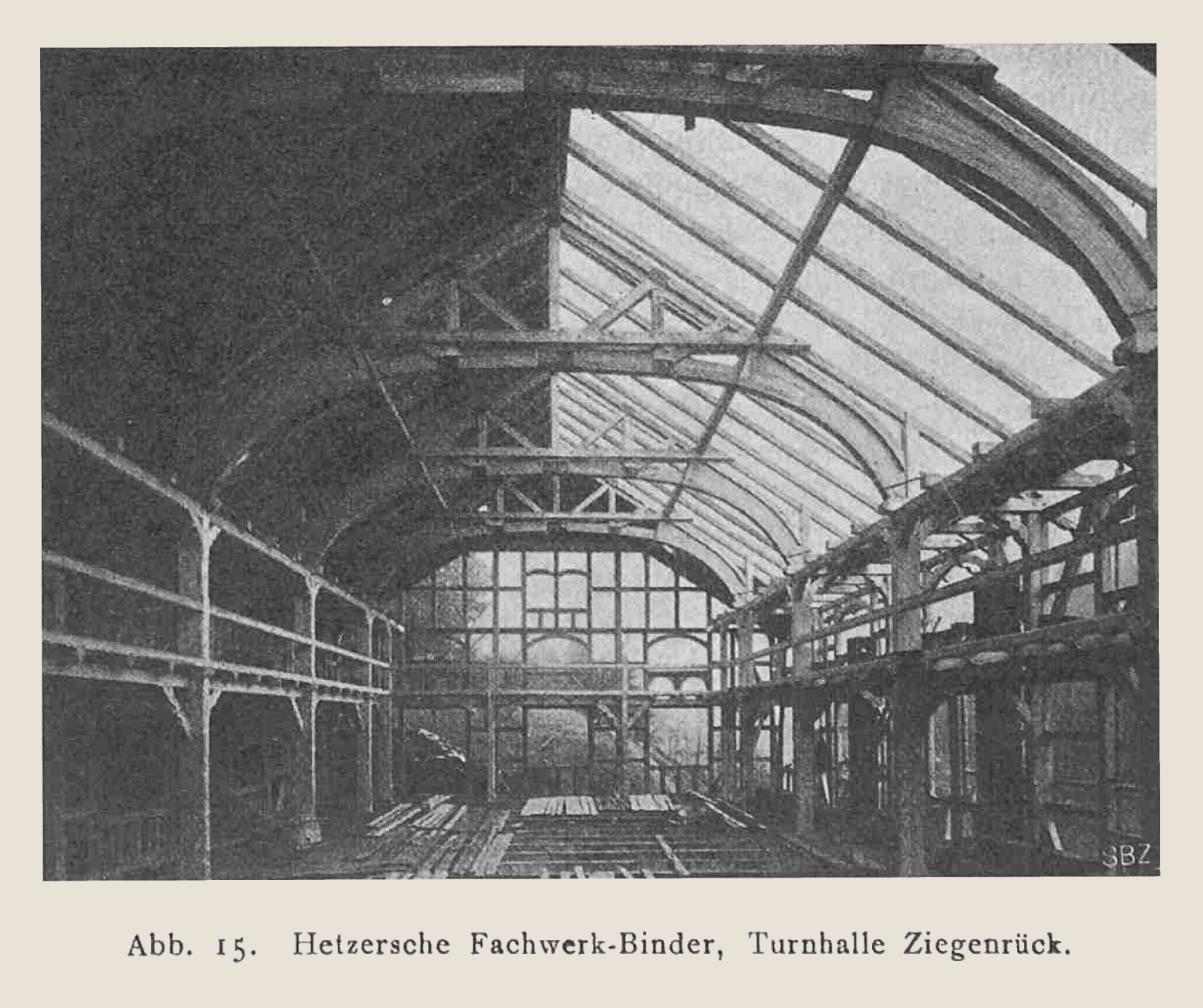
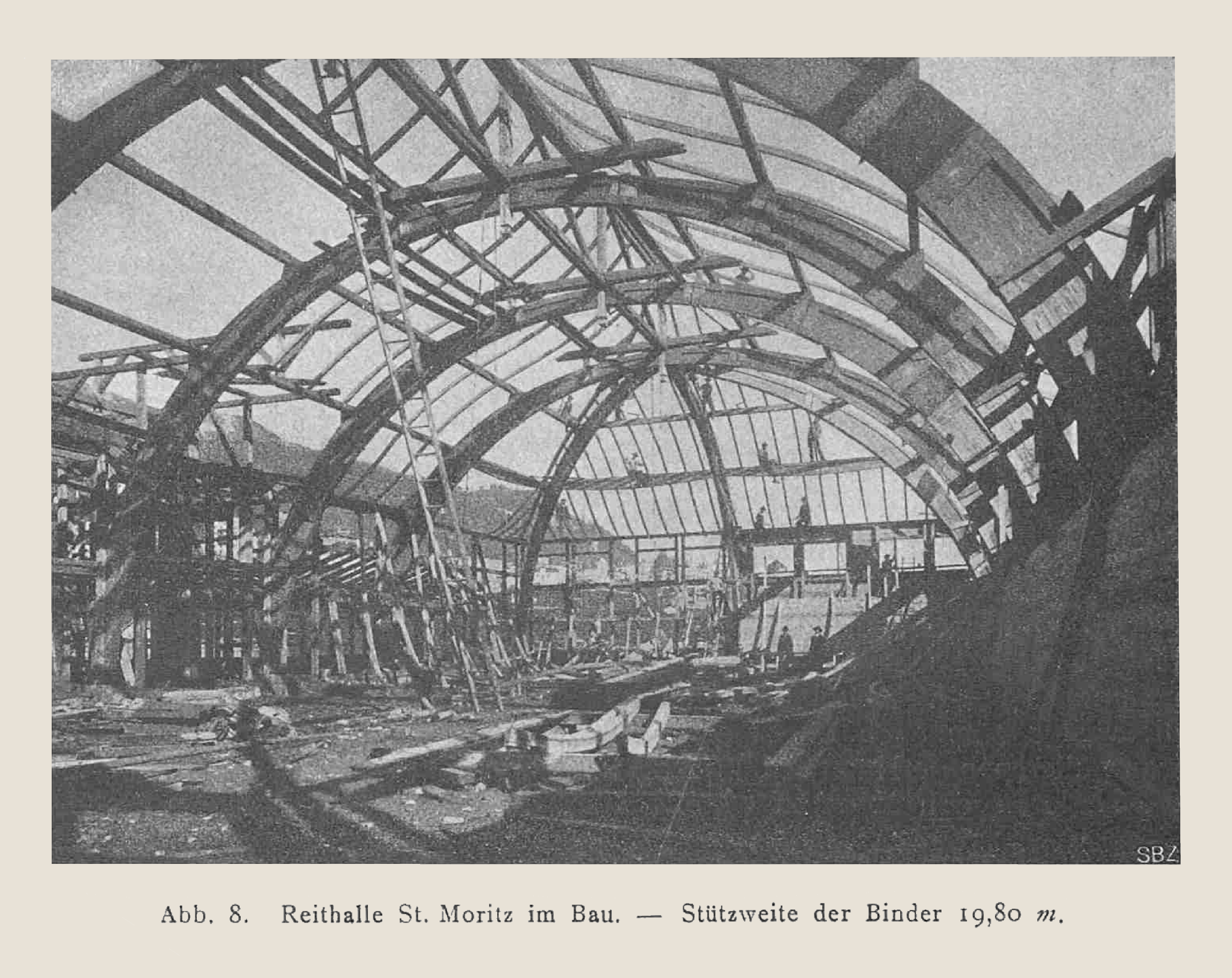
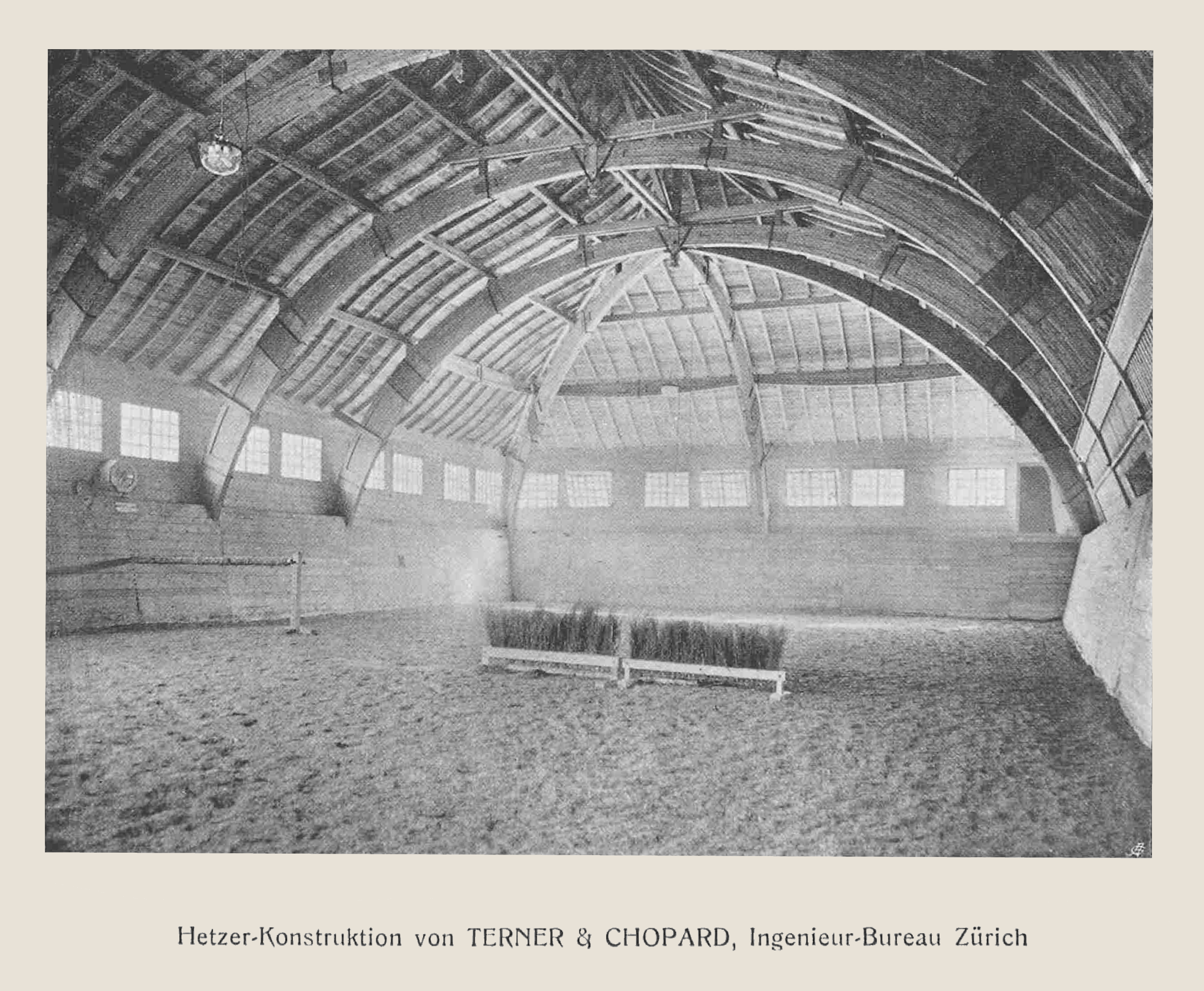
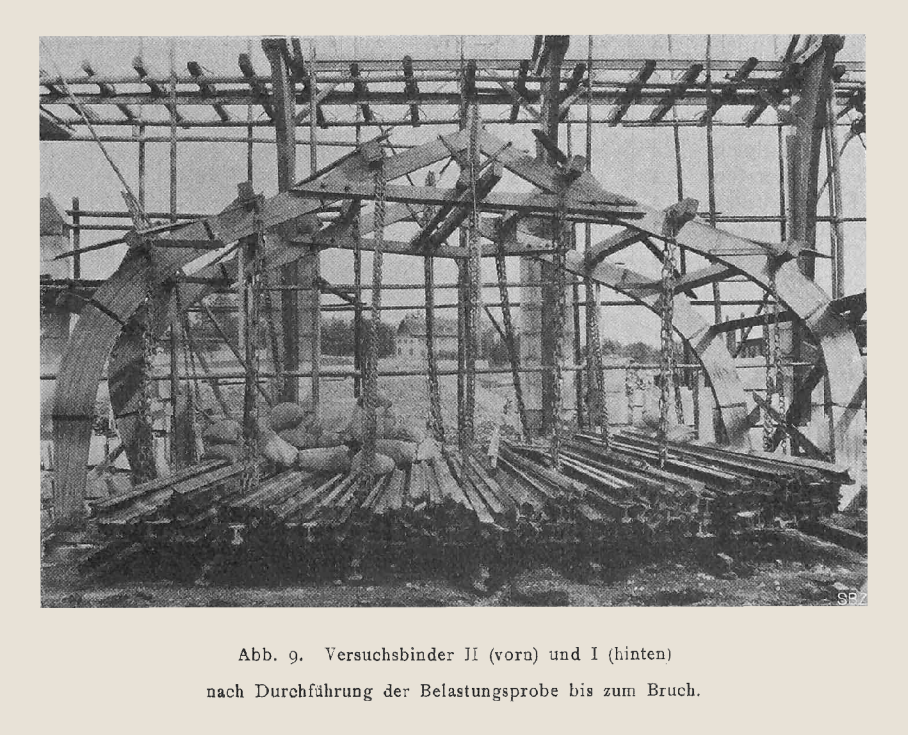
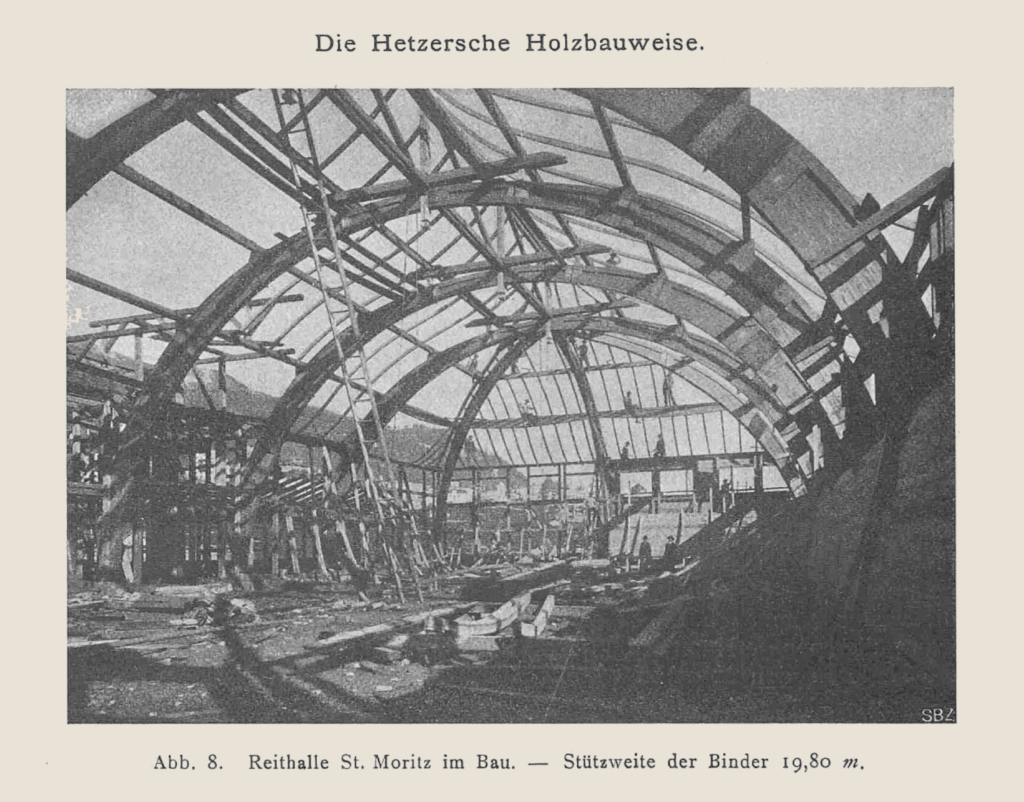
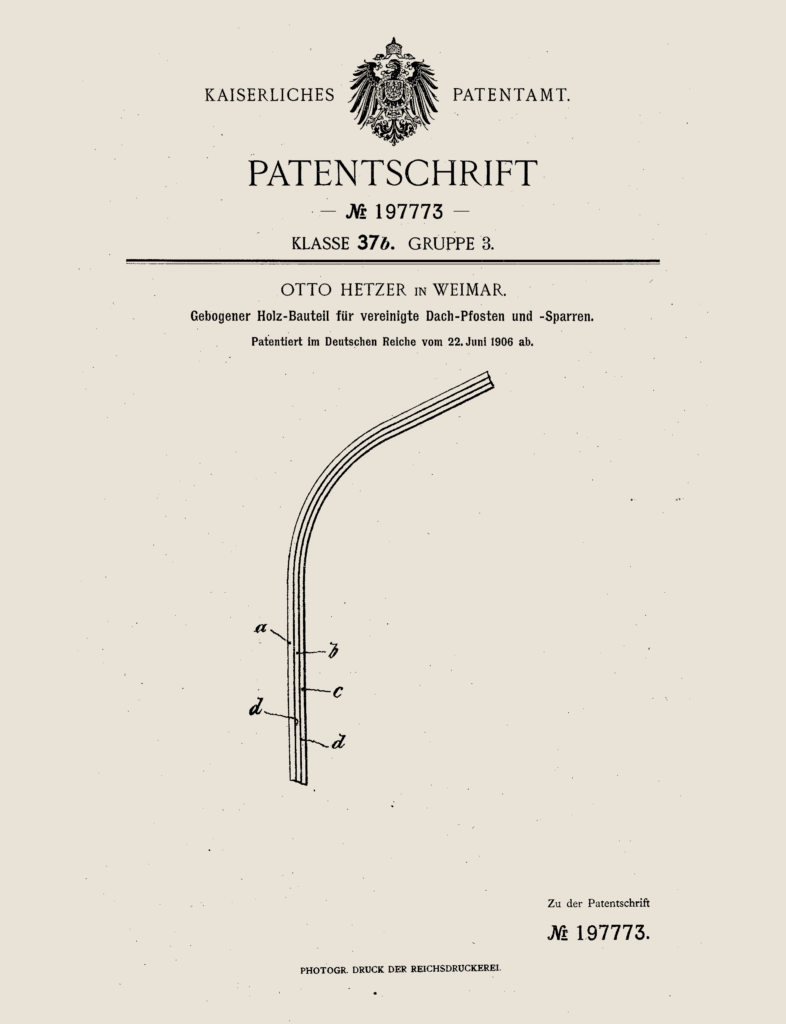
- At the end of the 19th and beginning of the 20th century, new construction methods using iron, masonry and reinforced concrete almost completely replaced traditional timber construction in bridge and hall construction, which until then had been predominantly handcrafted. Nevertheless, the long tradition of sustainable forestry and thus also timber construction remained in Germany. The “Hetzer” halls in Weimar and the process patented in 1906 demonstrated that new techniques in timber construction could be developed through engineering expertise. After the First World War, this innovation enabled economic and ecological reconstruction and led to the emergence of the glued laminated timber beam as we know it today.
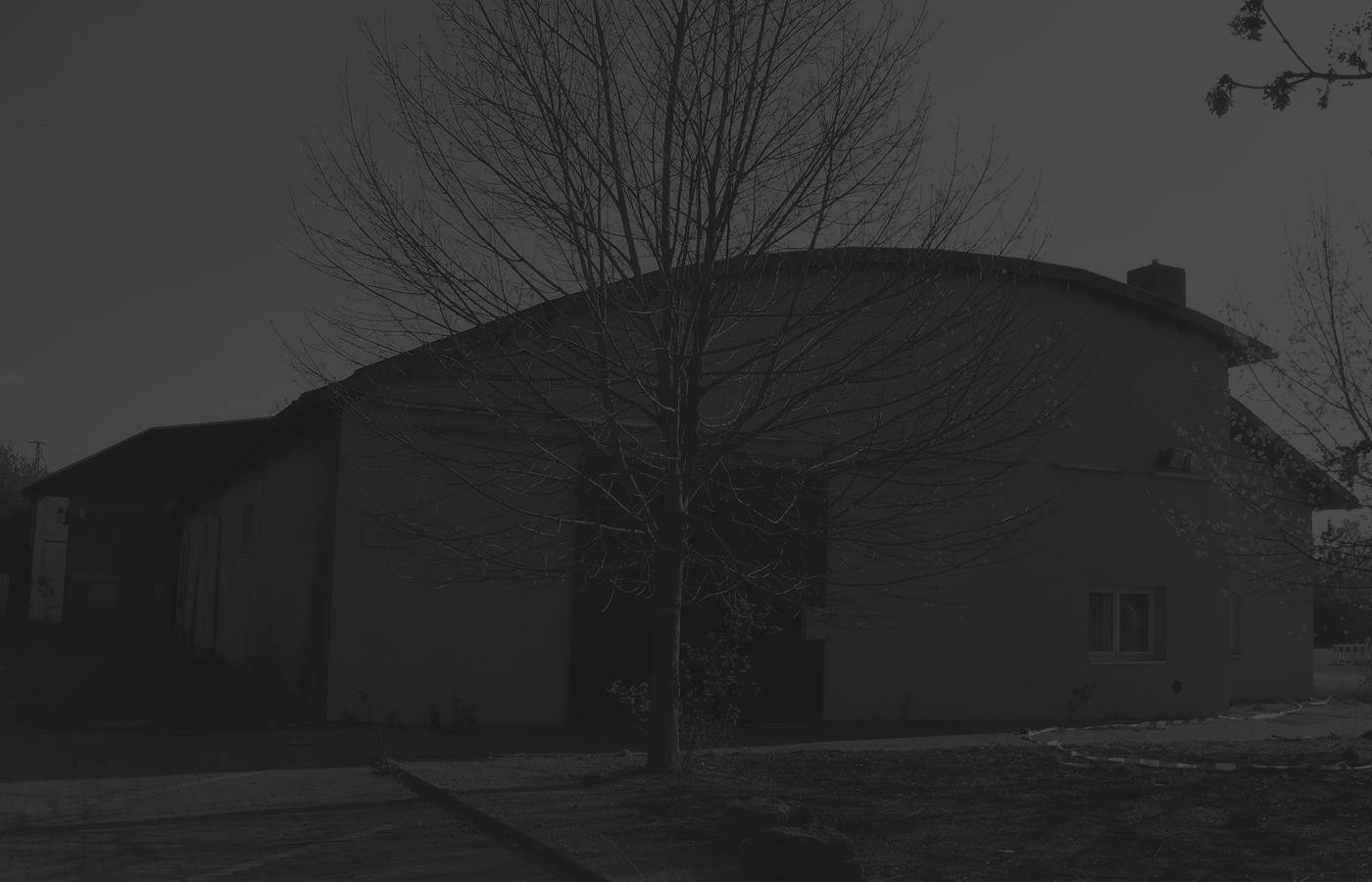
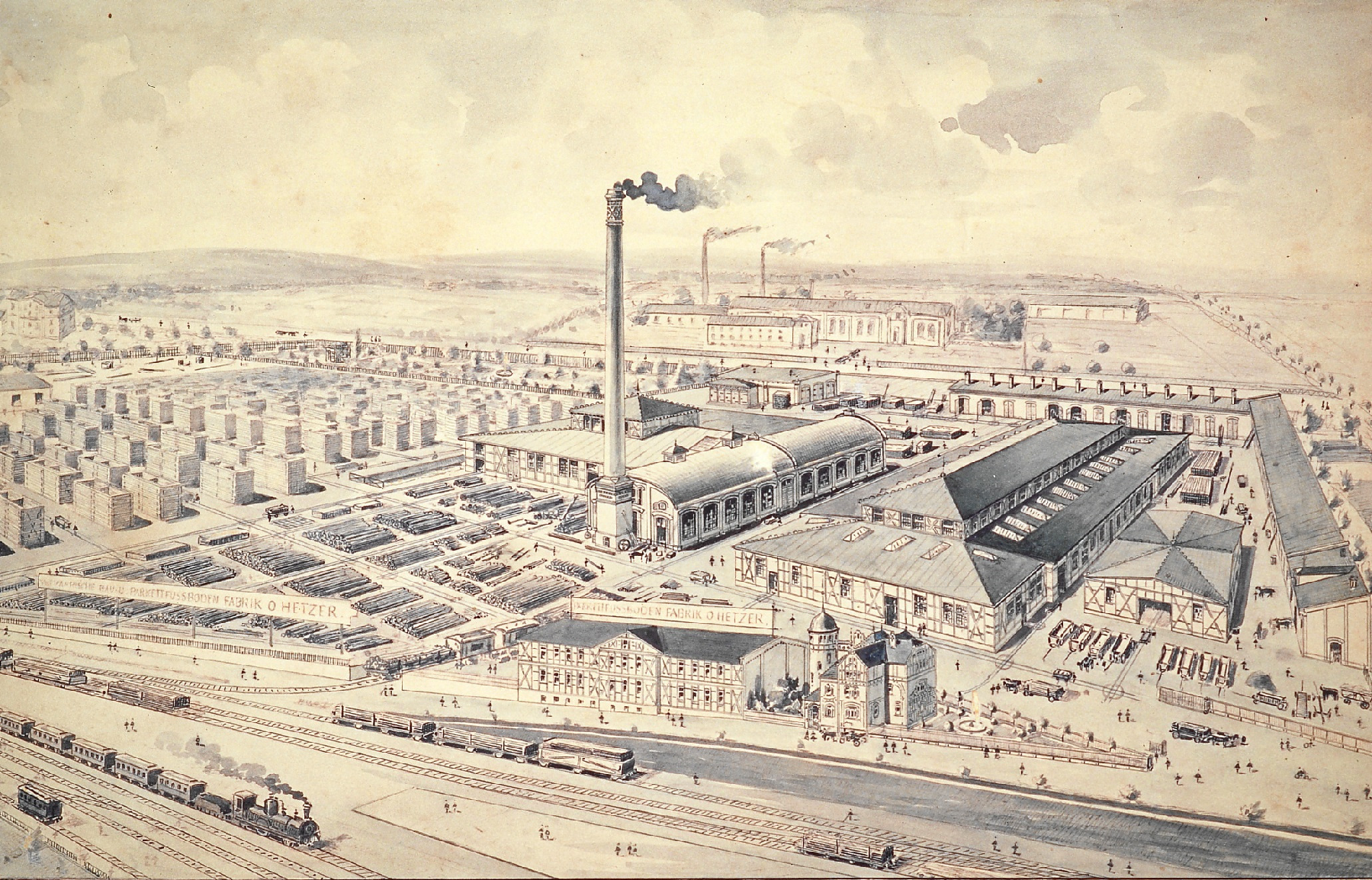
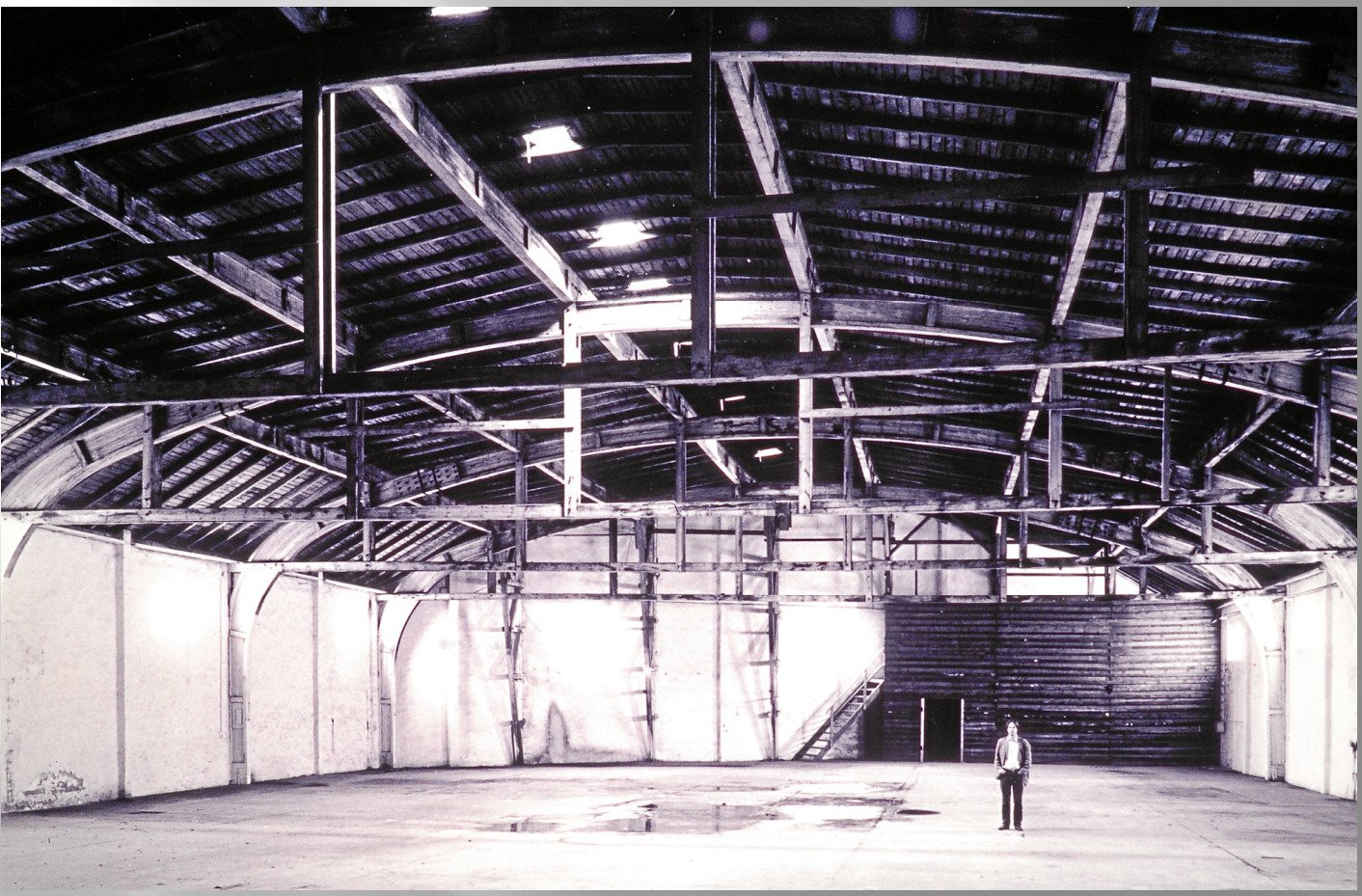
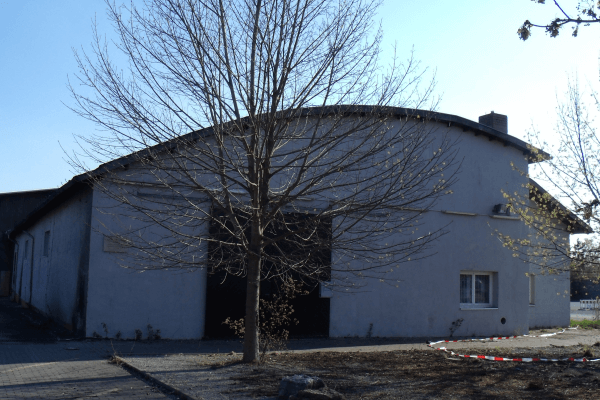
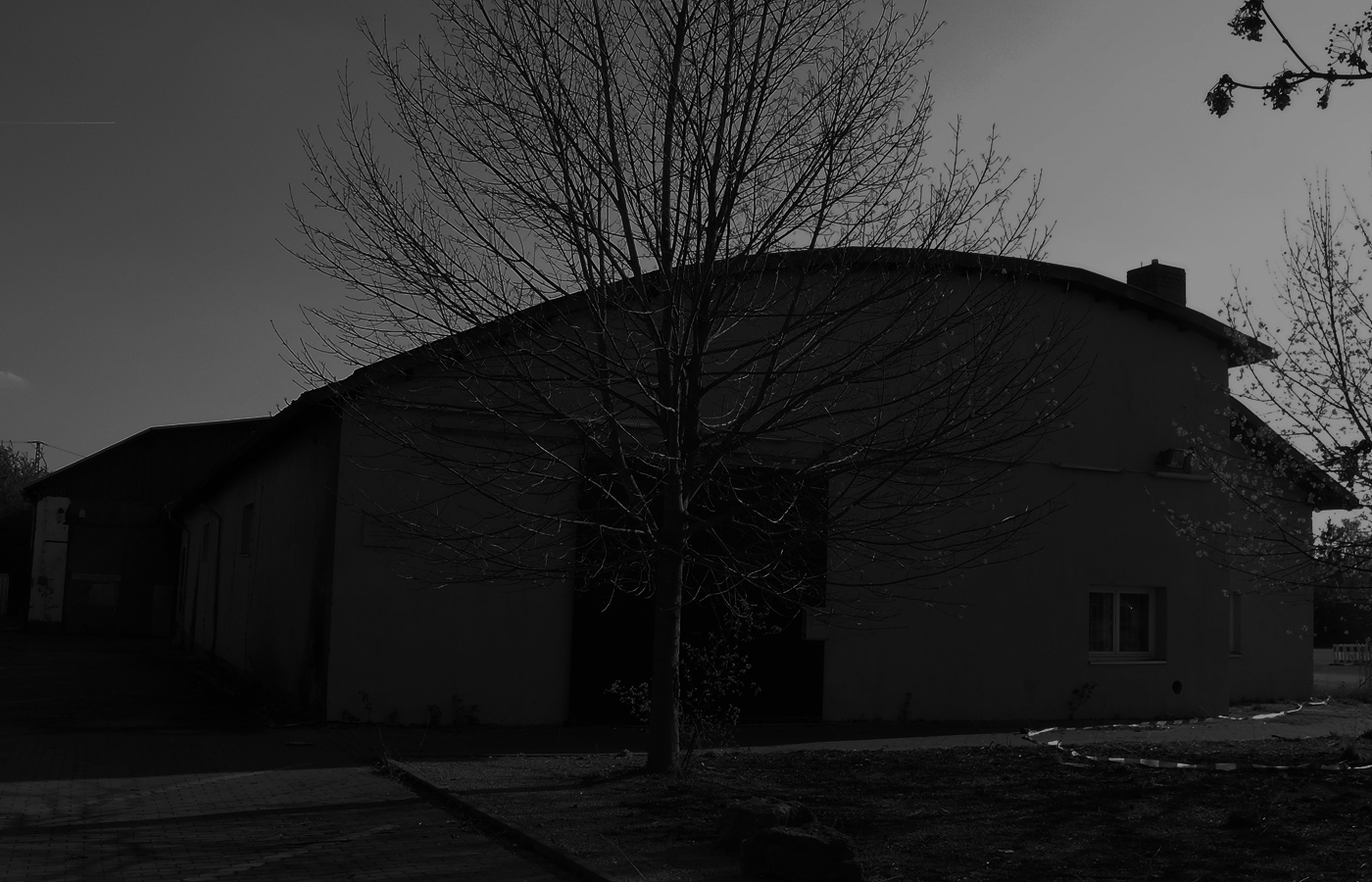
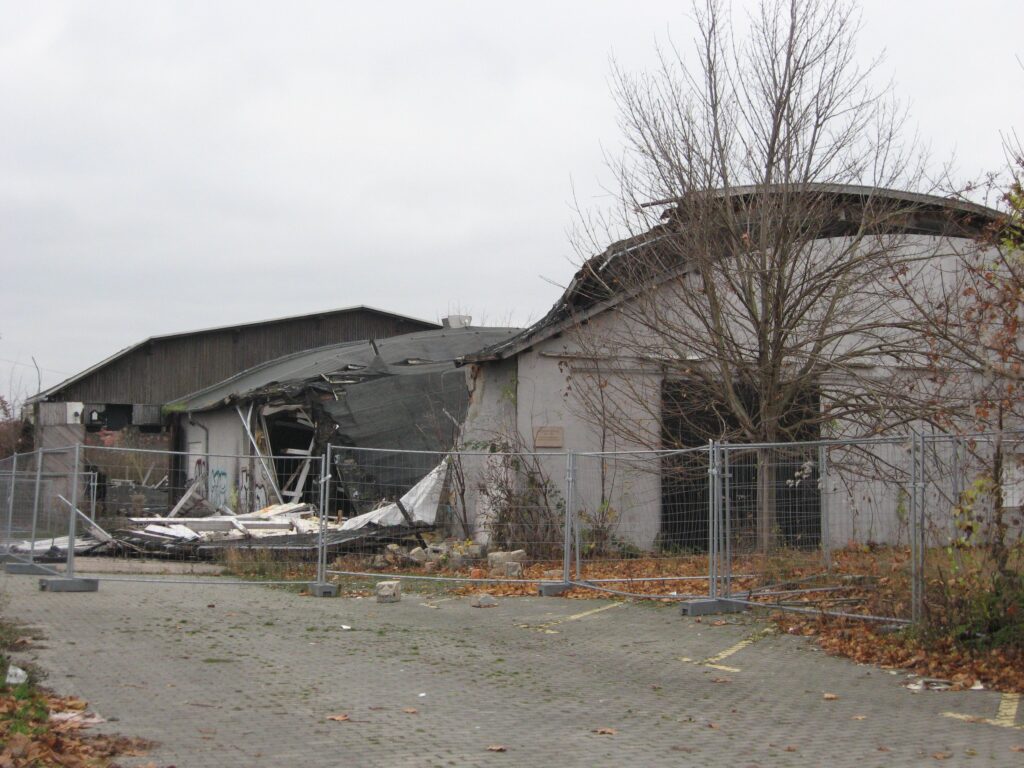
- The two halls in Weimar were originally built by Otto Hetzer as production facilities for his patented glued laminated timber construction method. Presumably used for military purposes during the Nazi era, they served as warehouses and factory buildings for various state-owned industrial companies in the GDR. After reunification in 1990, they stood empty for a time, were used for cultural purposes for a while, and later served as warehouses and sales halls. On 17 February 2021, the large “Hetzer” hall collapsed under heavy snow; the smaller hall, which was damaged in the collapse, was demolished later that year.
- Ownership of the Hetzer halls changed several times over the course of their history. Originally, the buildings were owned by Otto Hetzer Holzbau- und Holzpflege AG. Following the closure of the freight railway yard in the 1990s and the dissolution of the company, the halls passed into private ownership around the turn of the millennium.
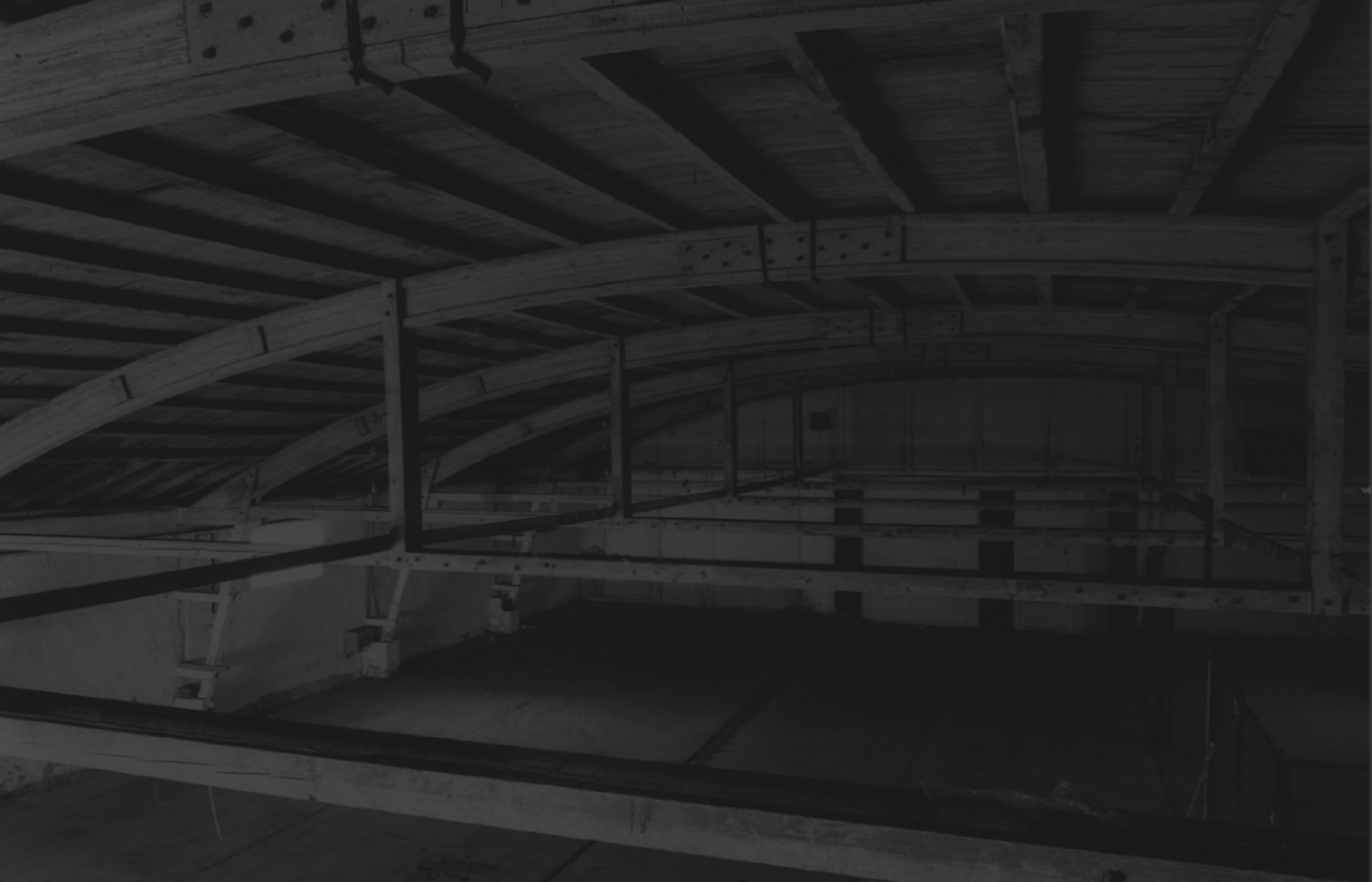
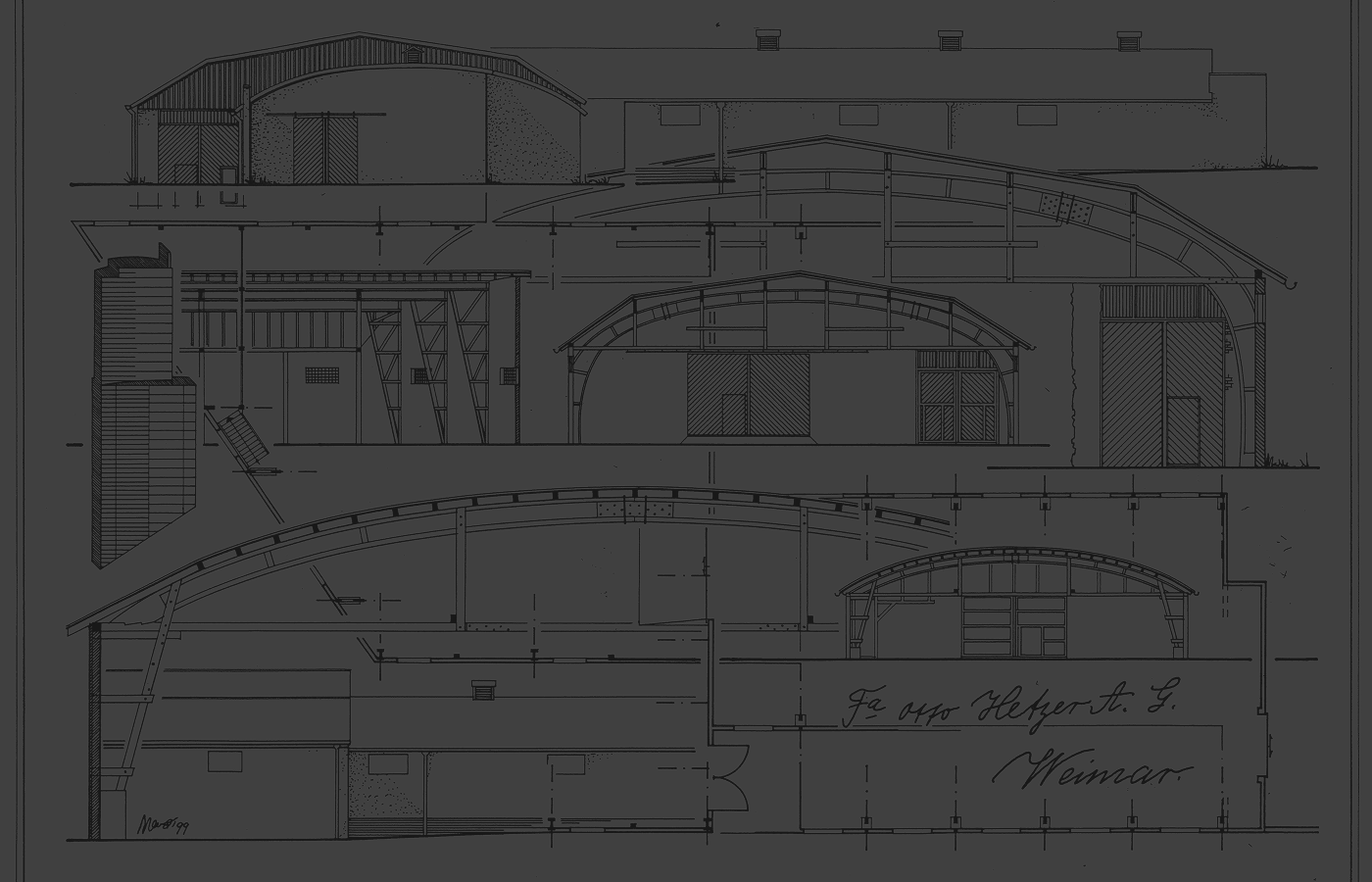
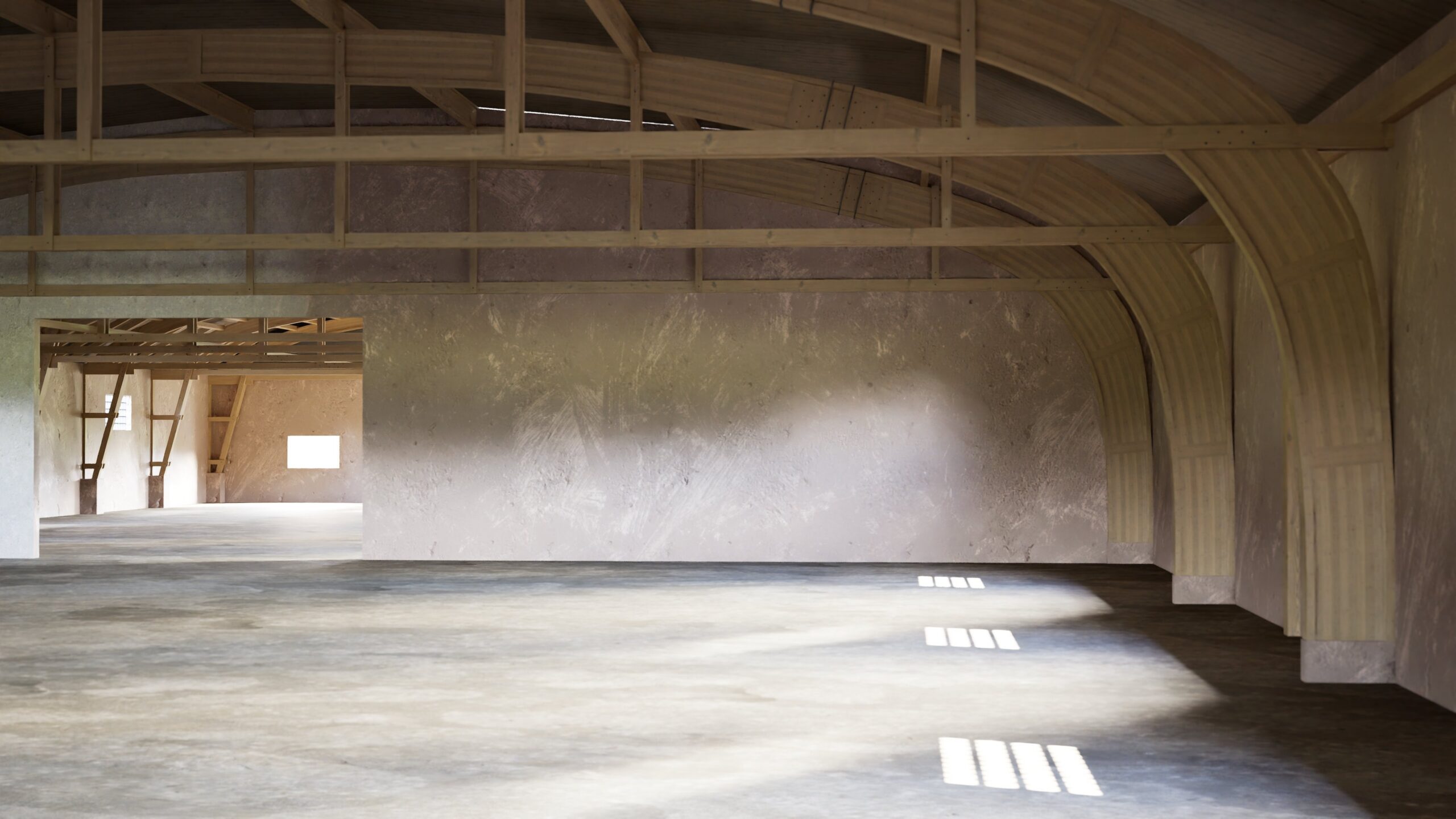
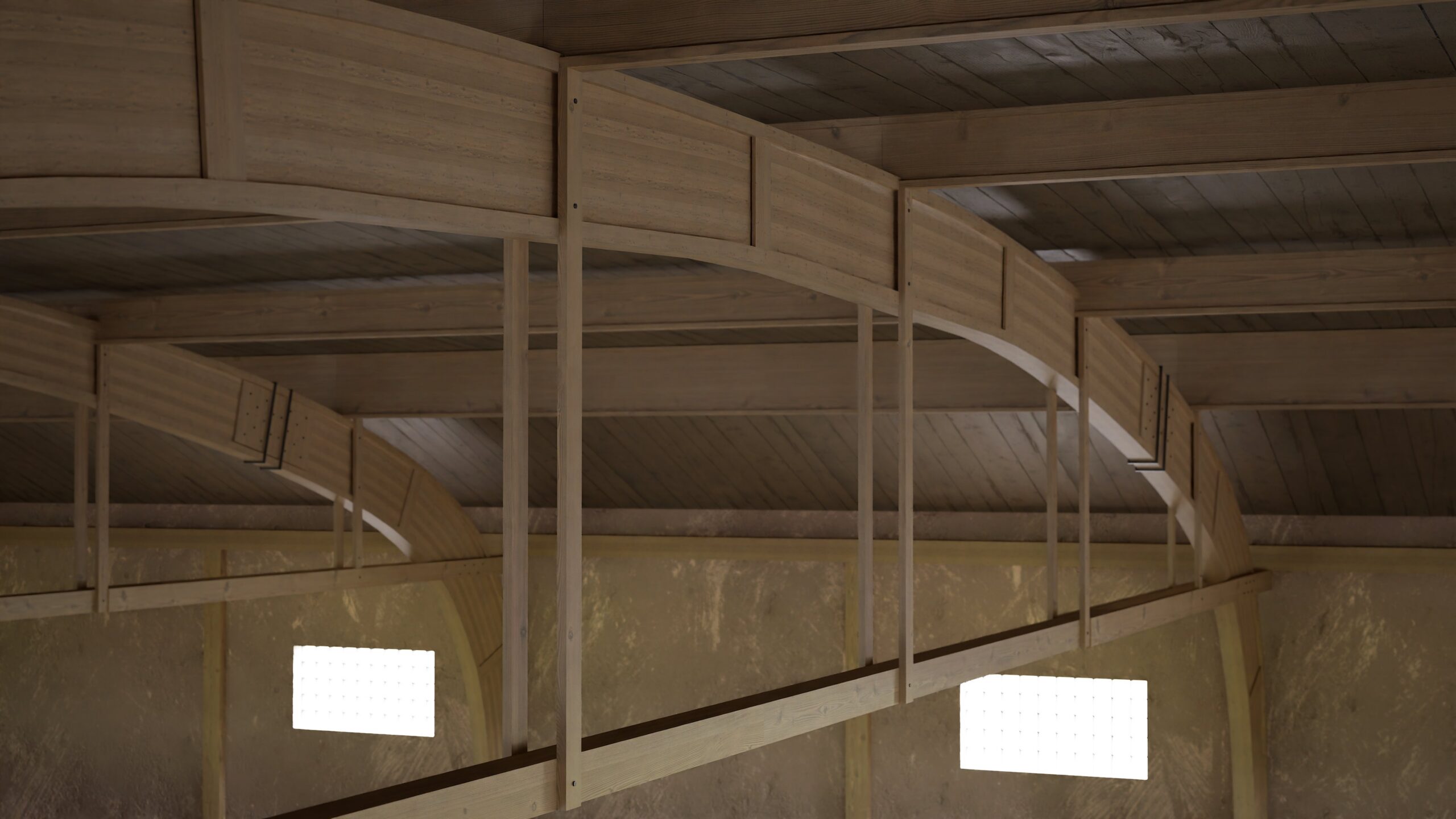
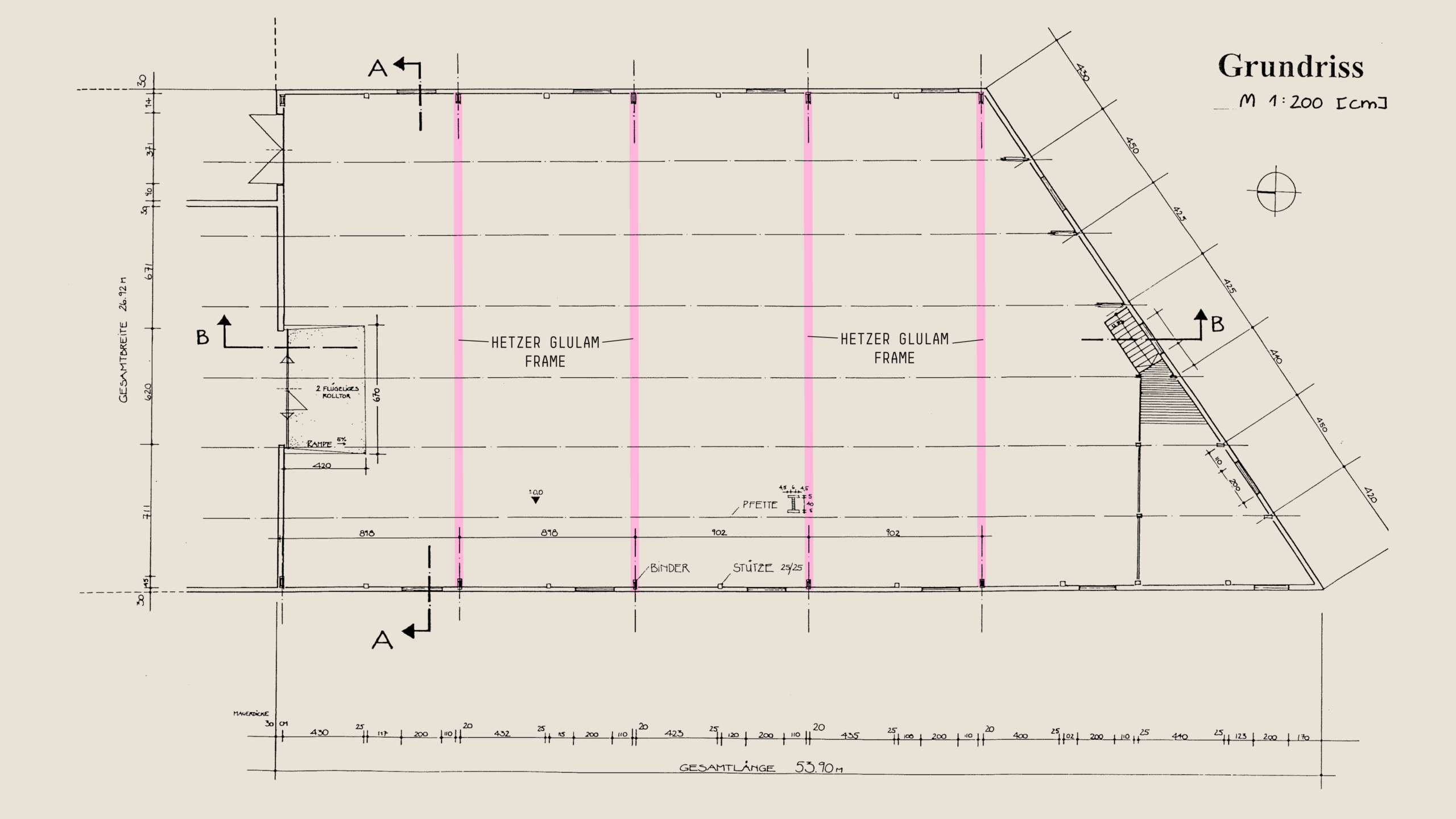
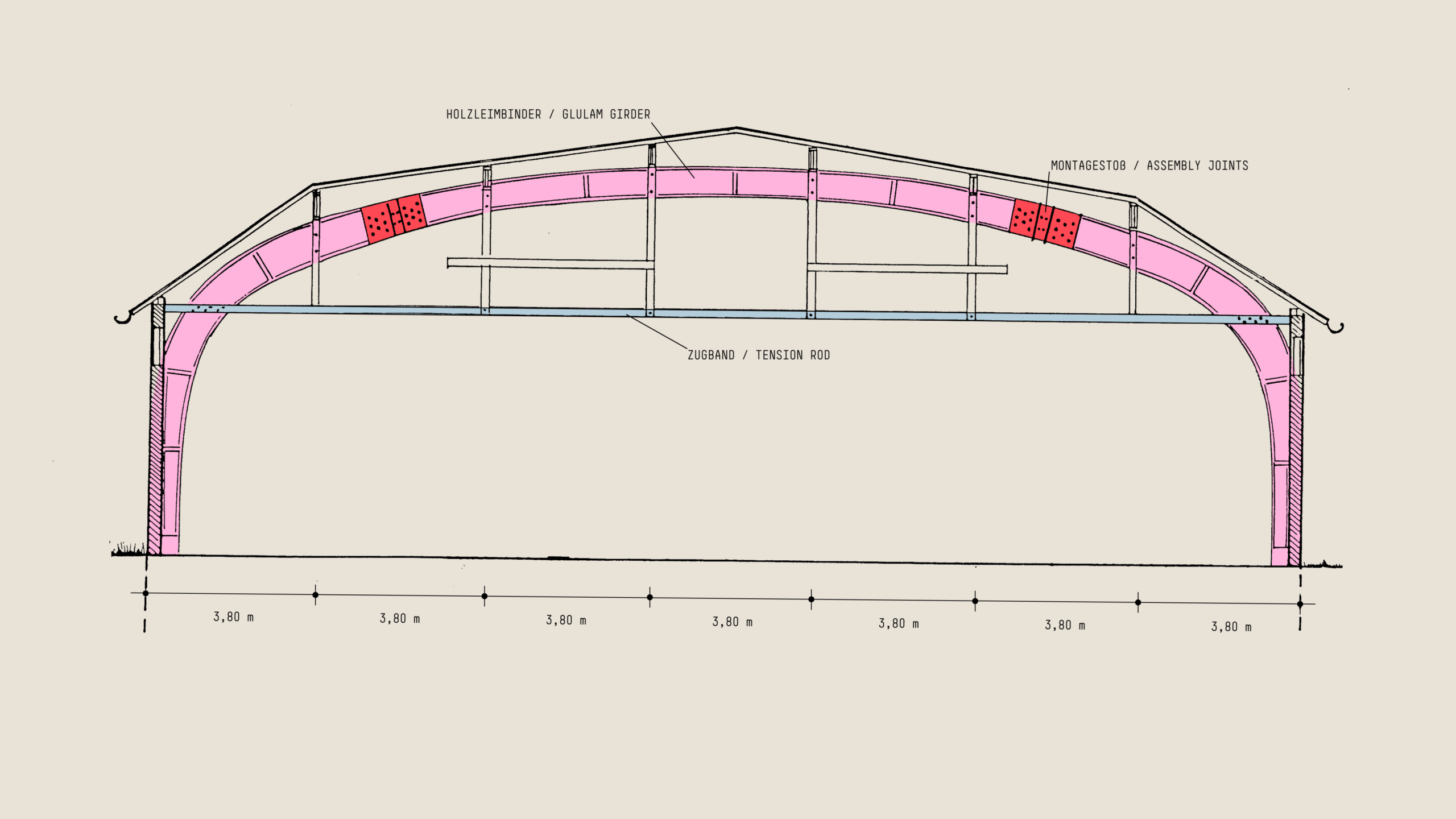
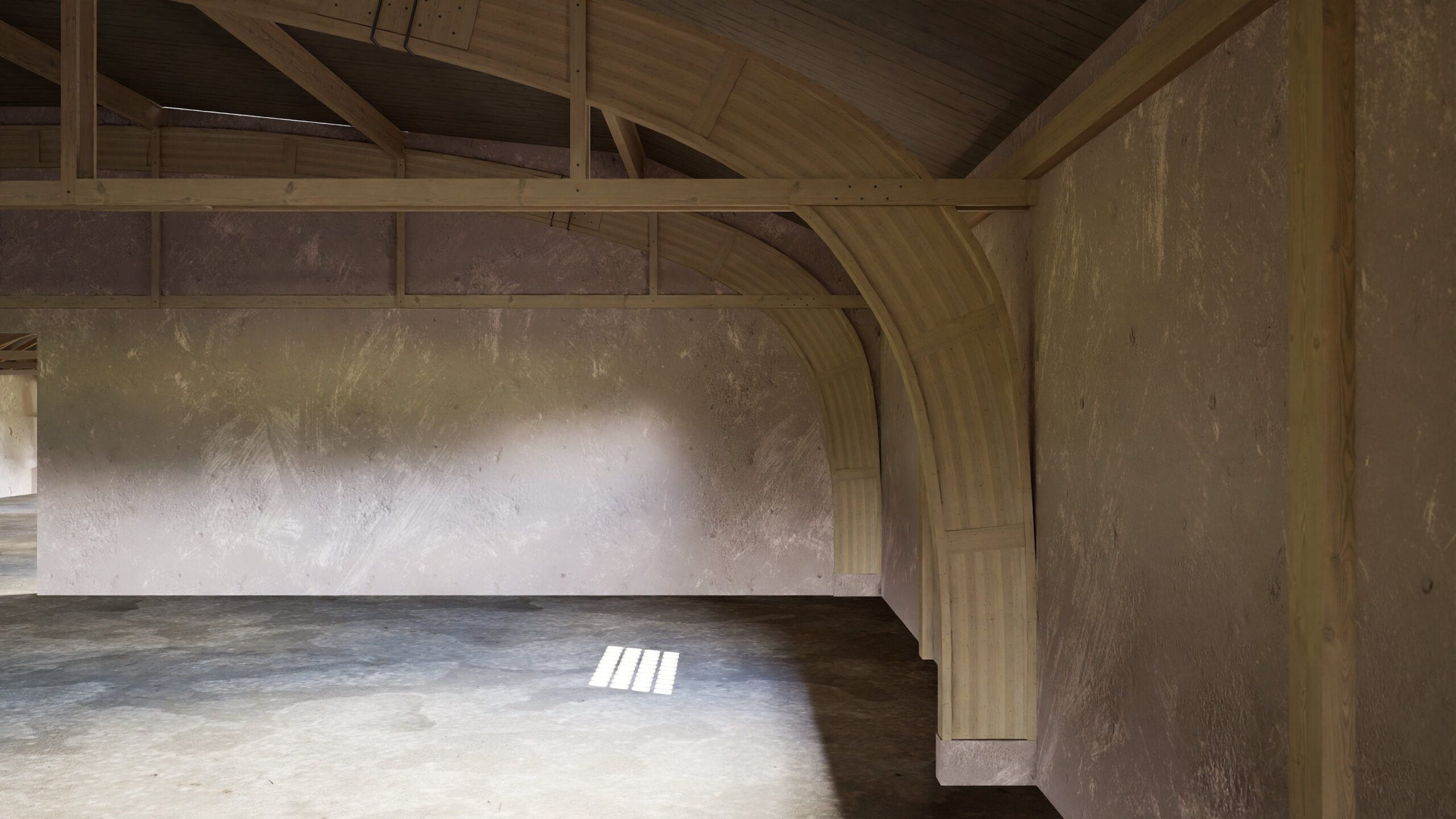
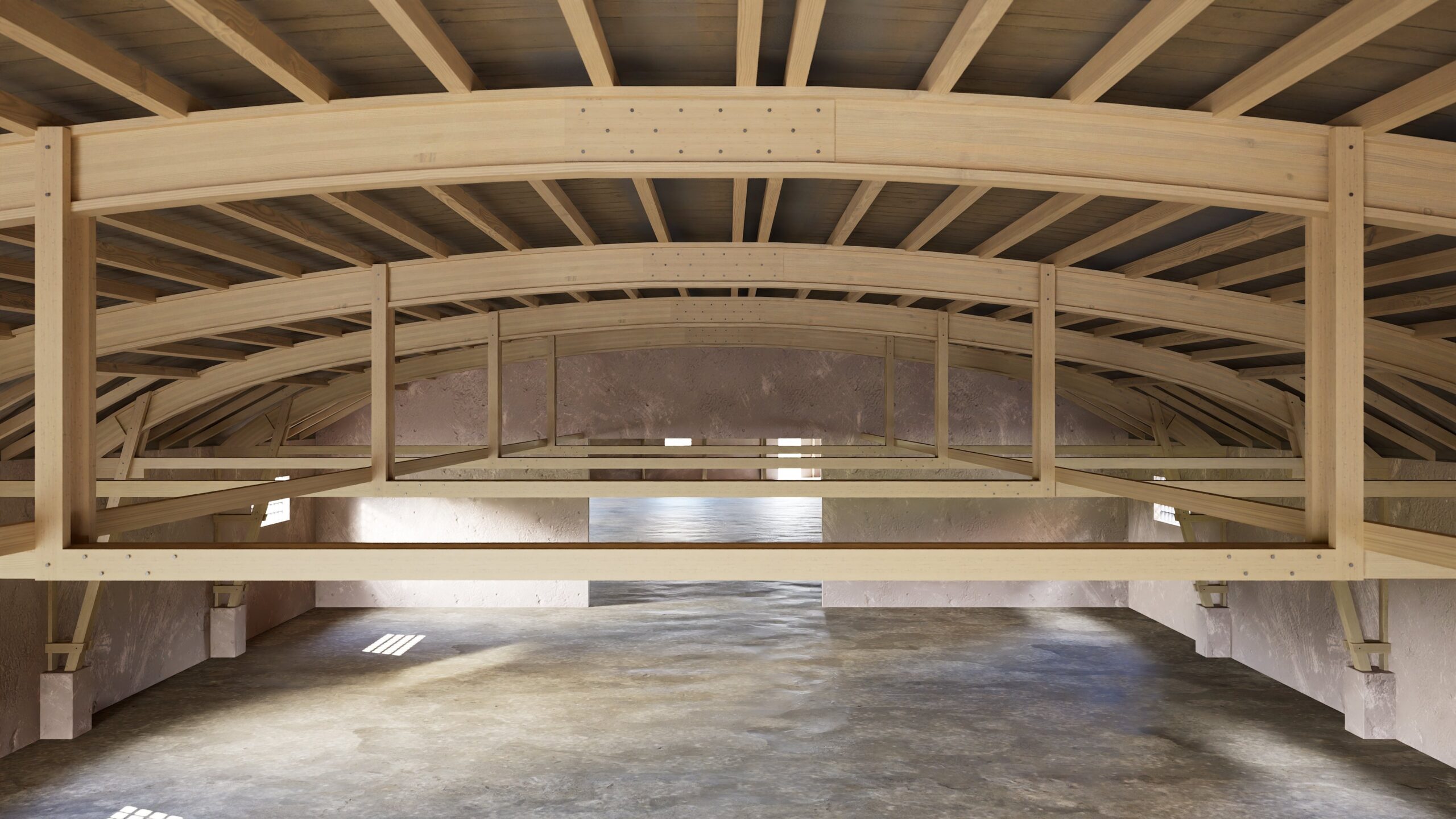
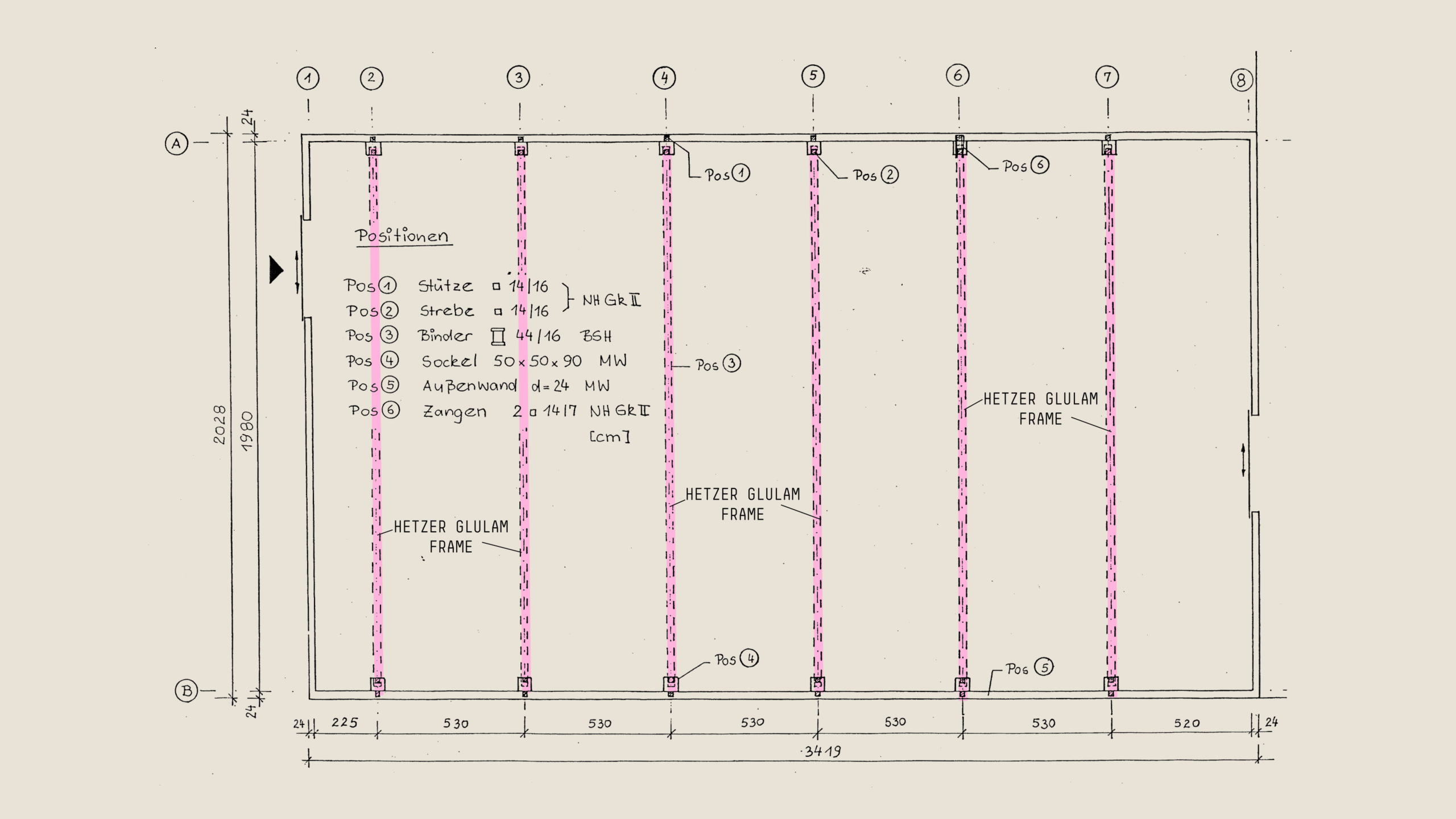
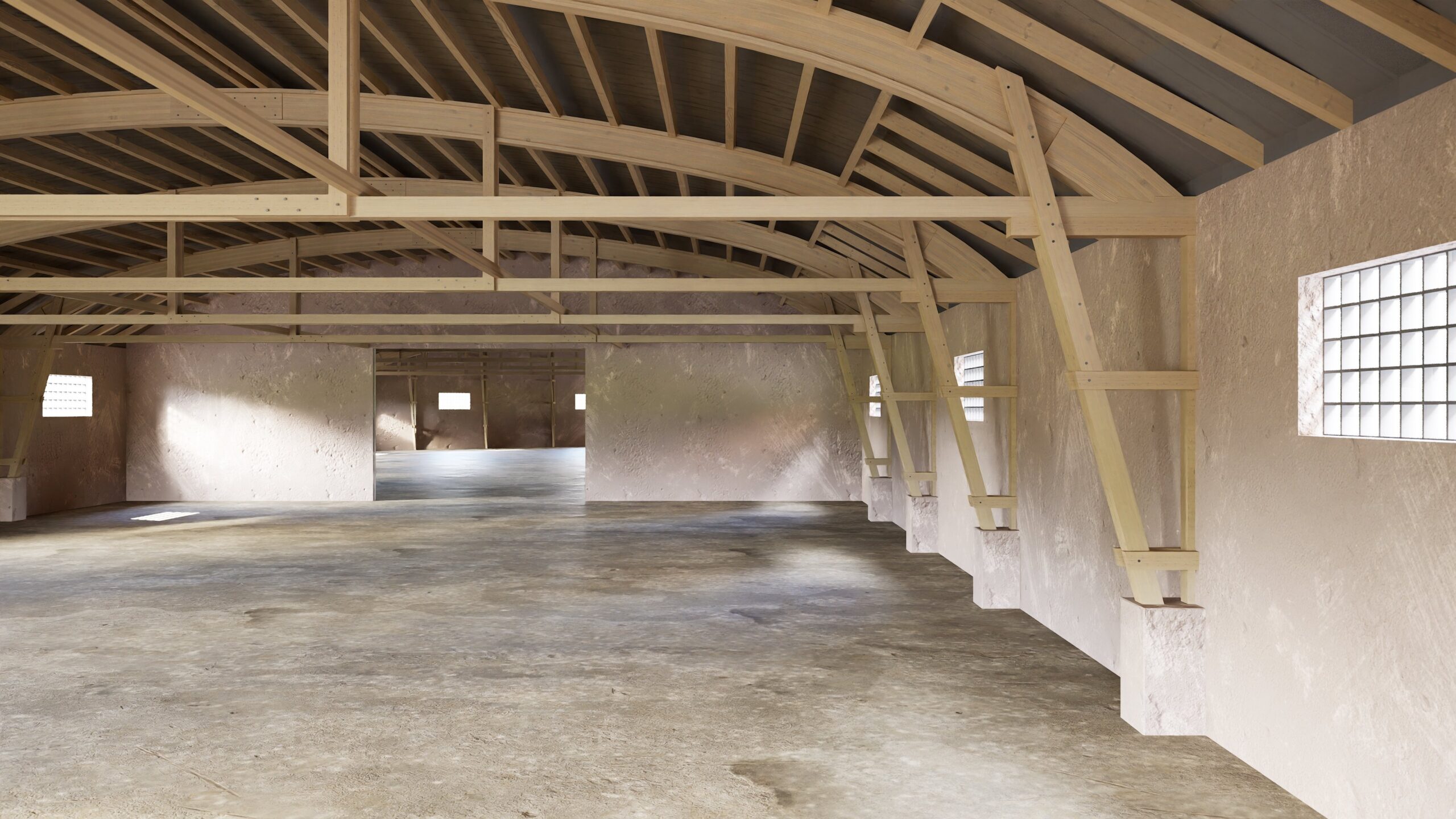
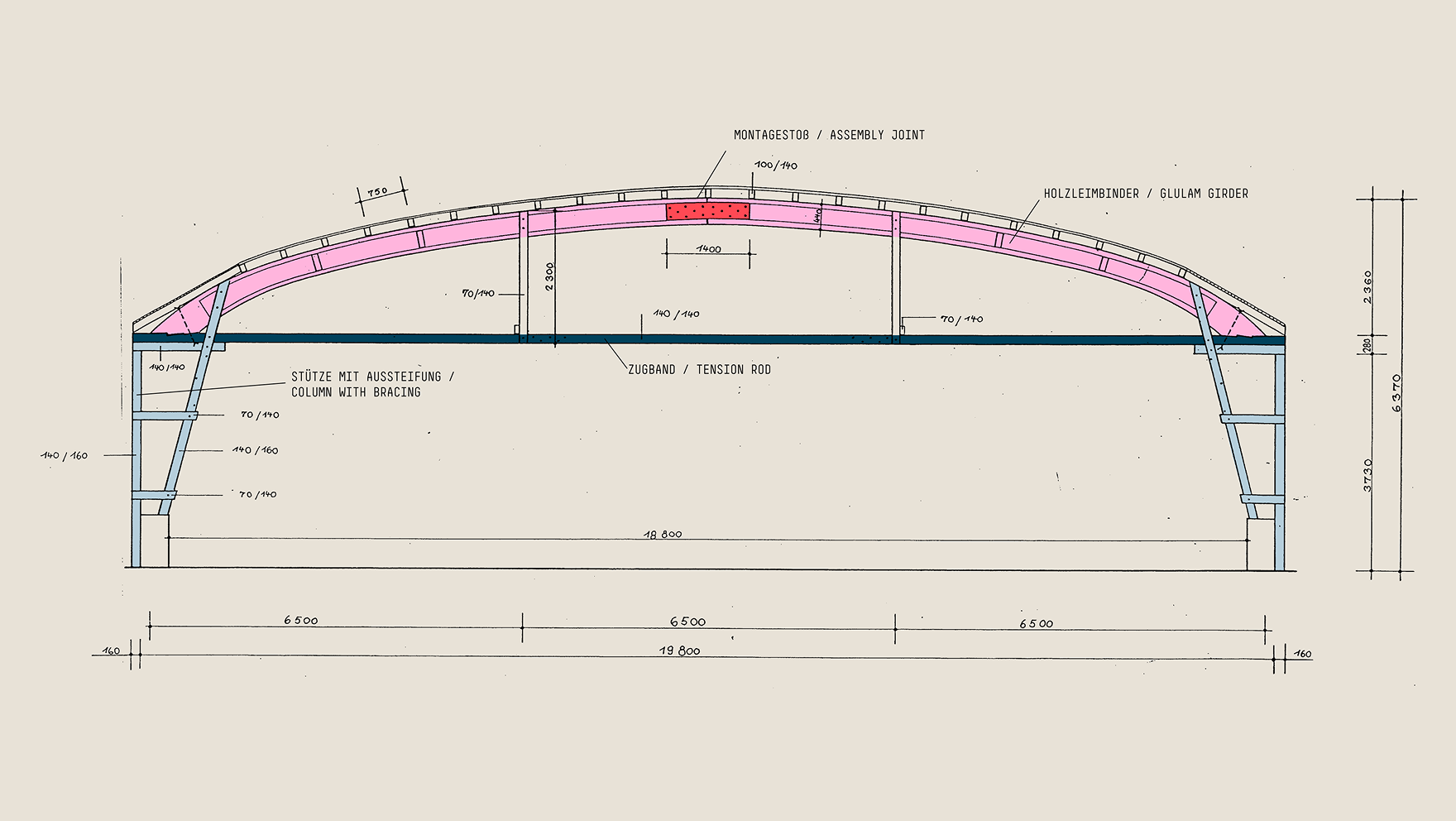
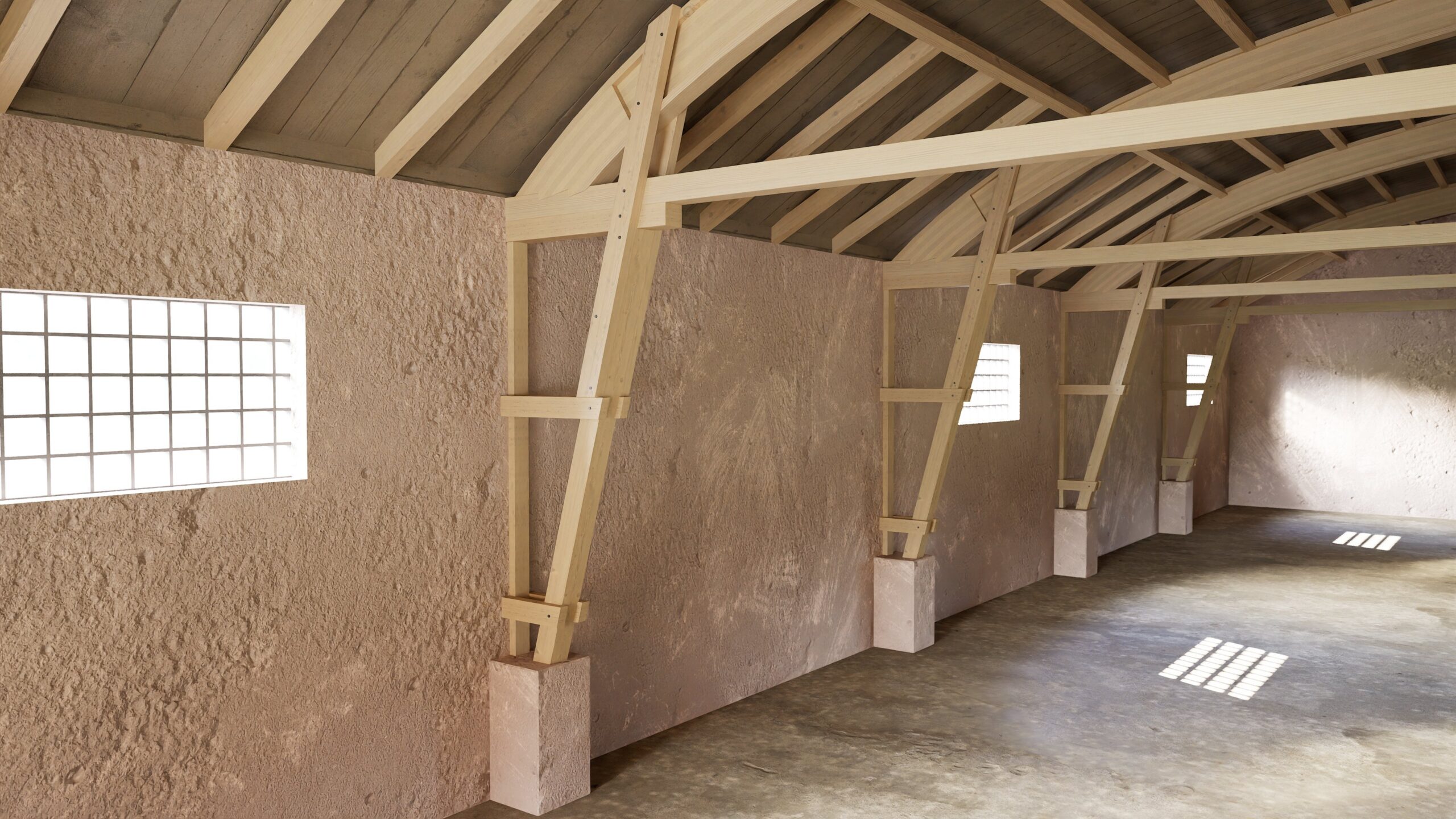
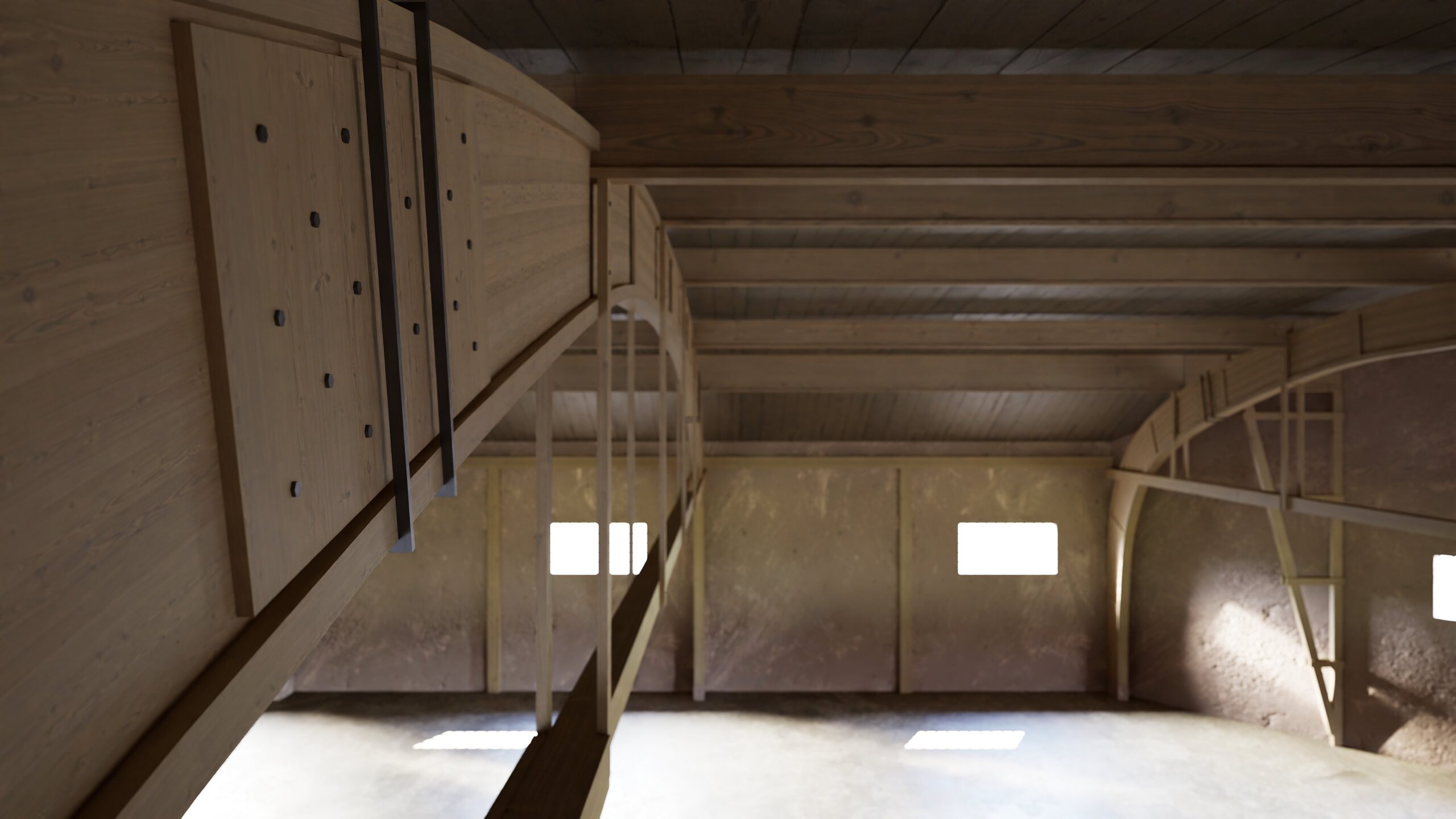
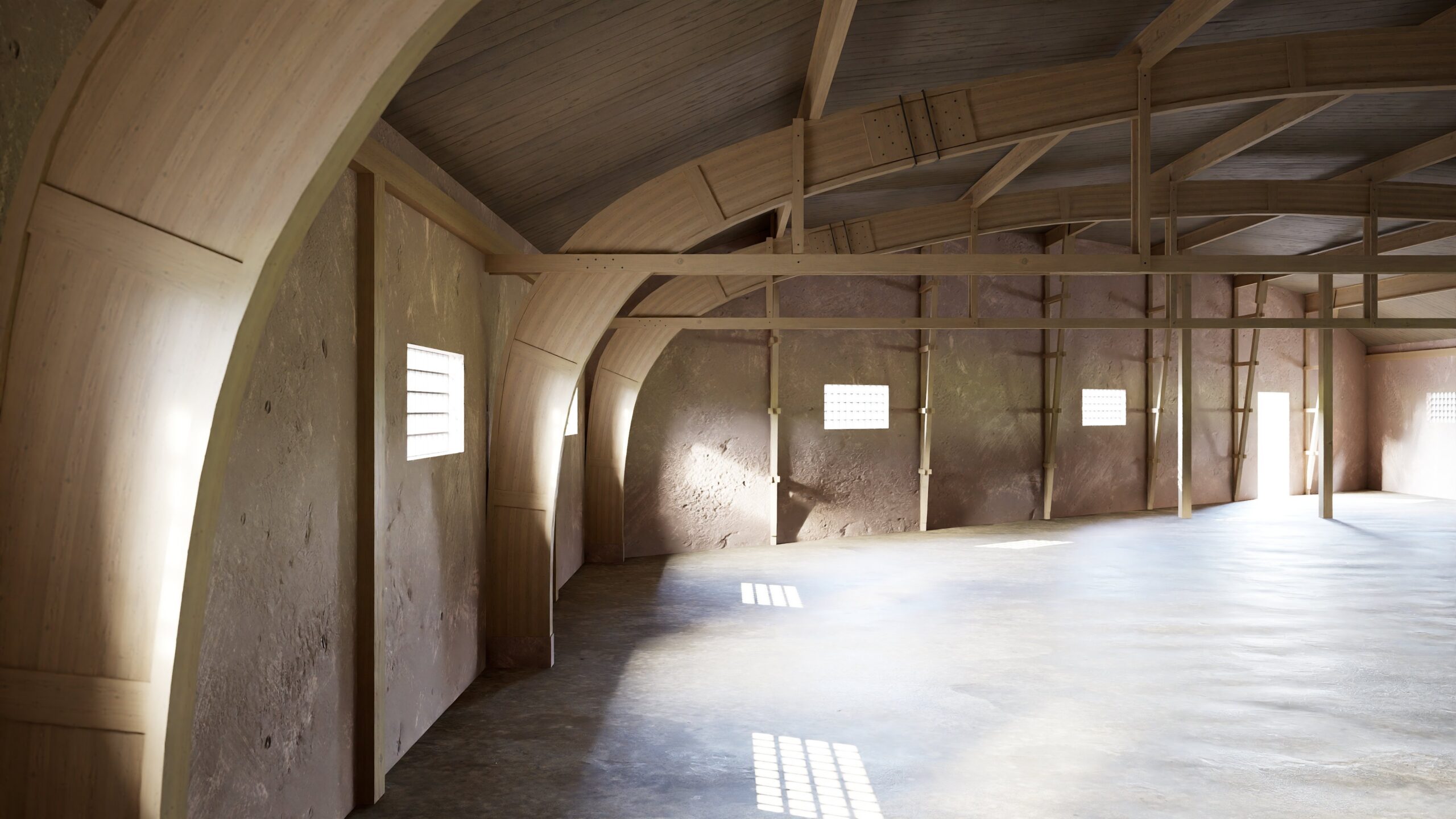
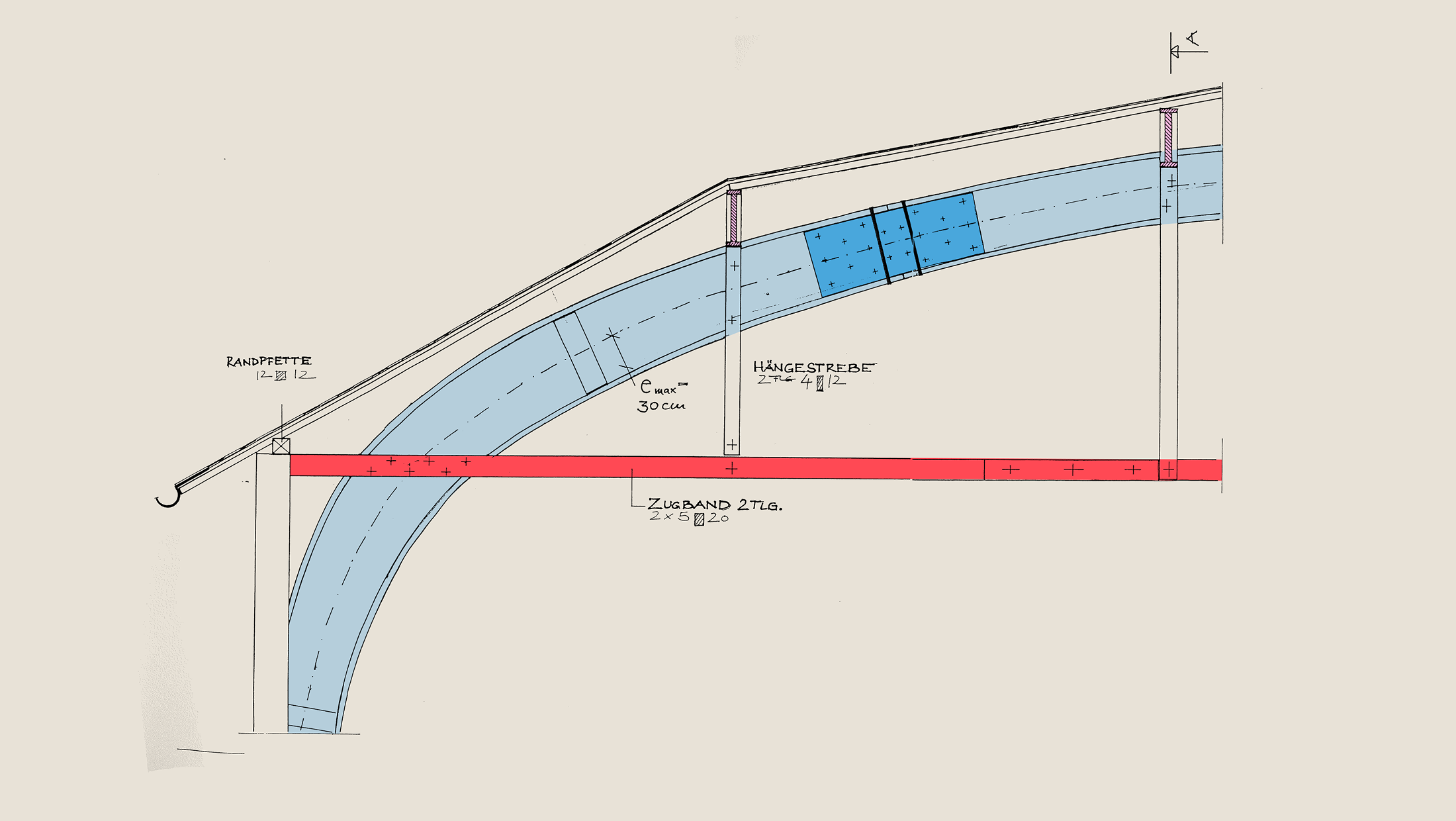
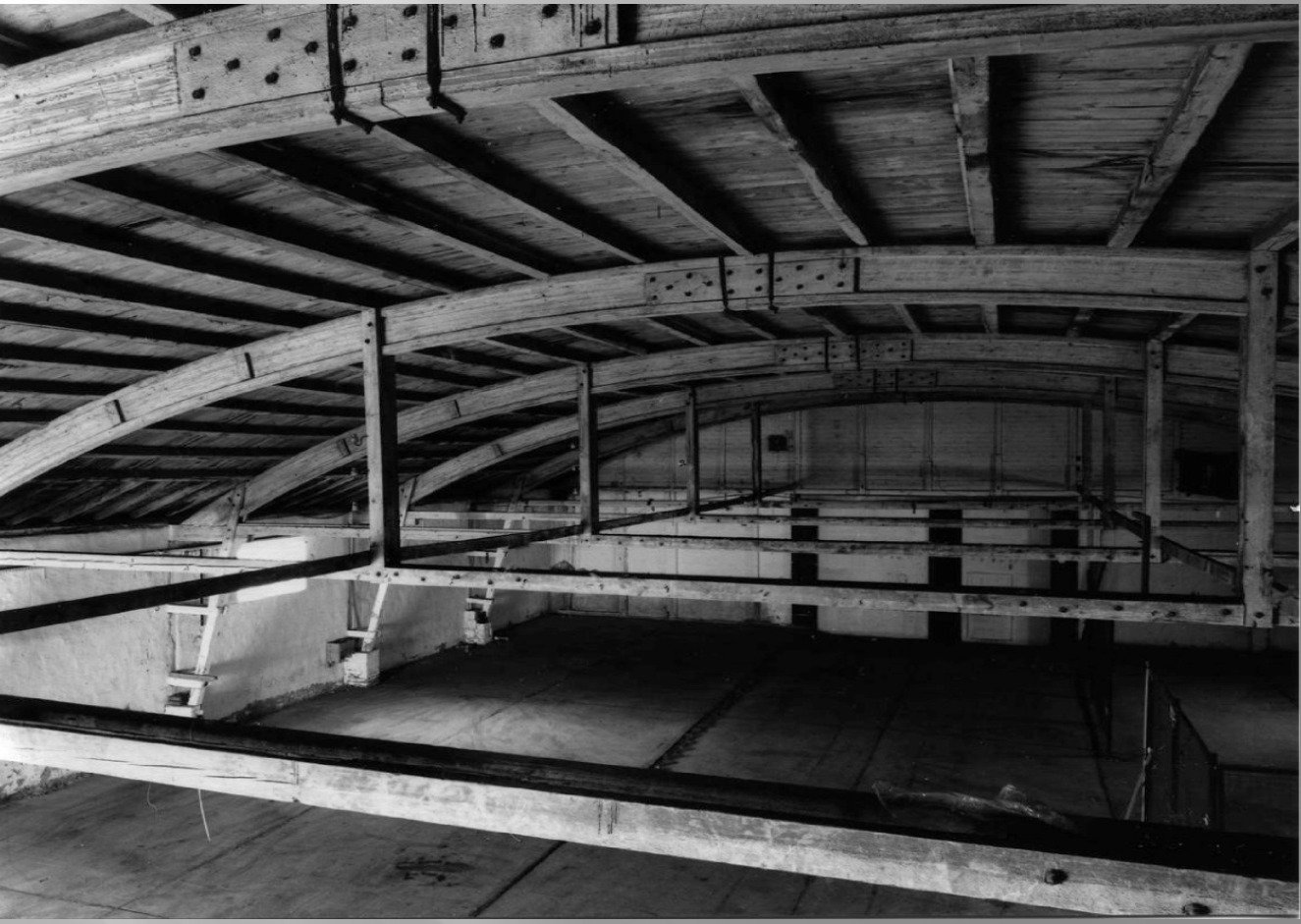
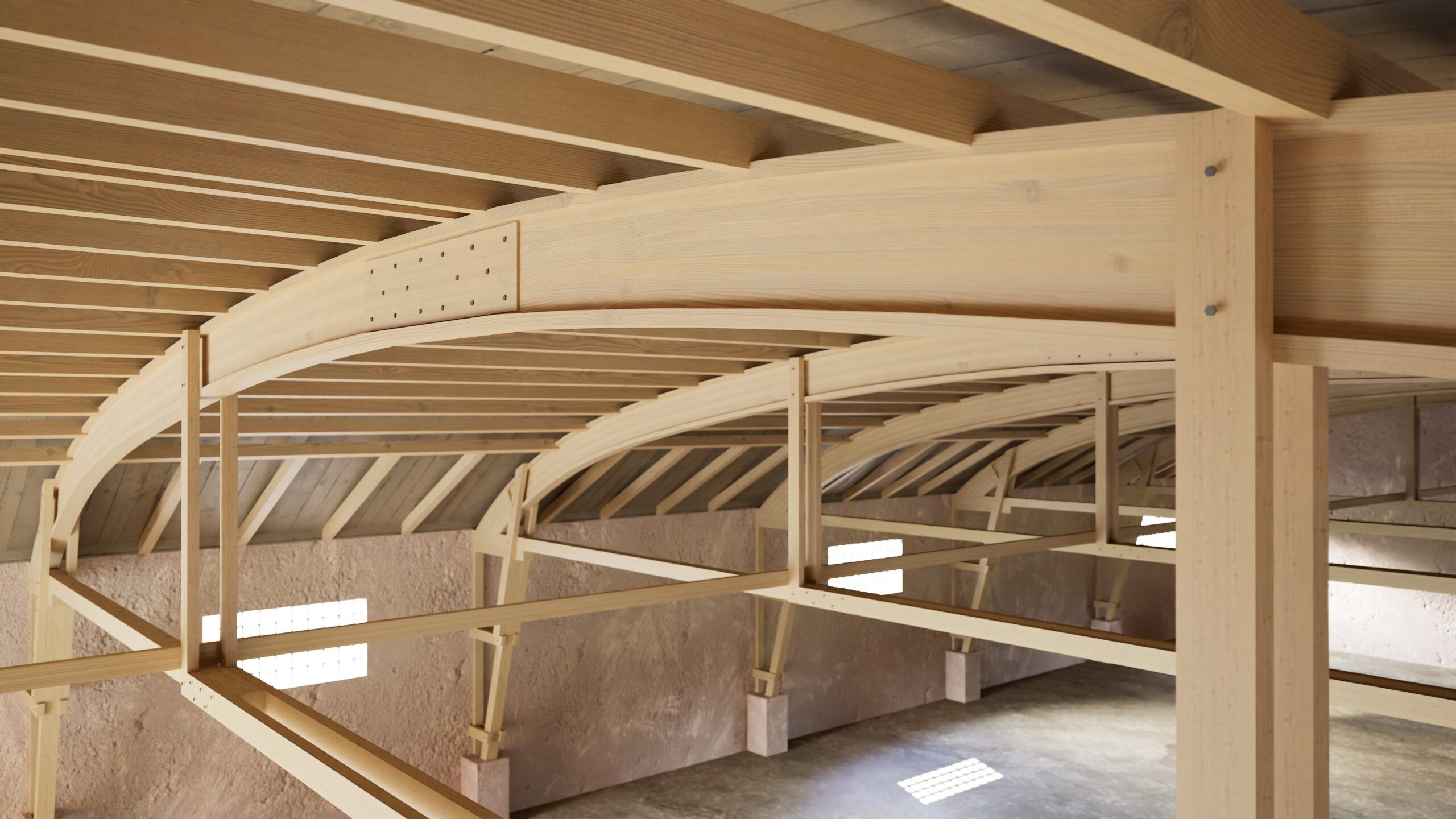
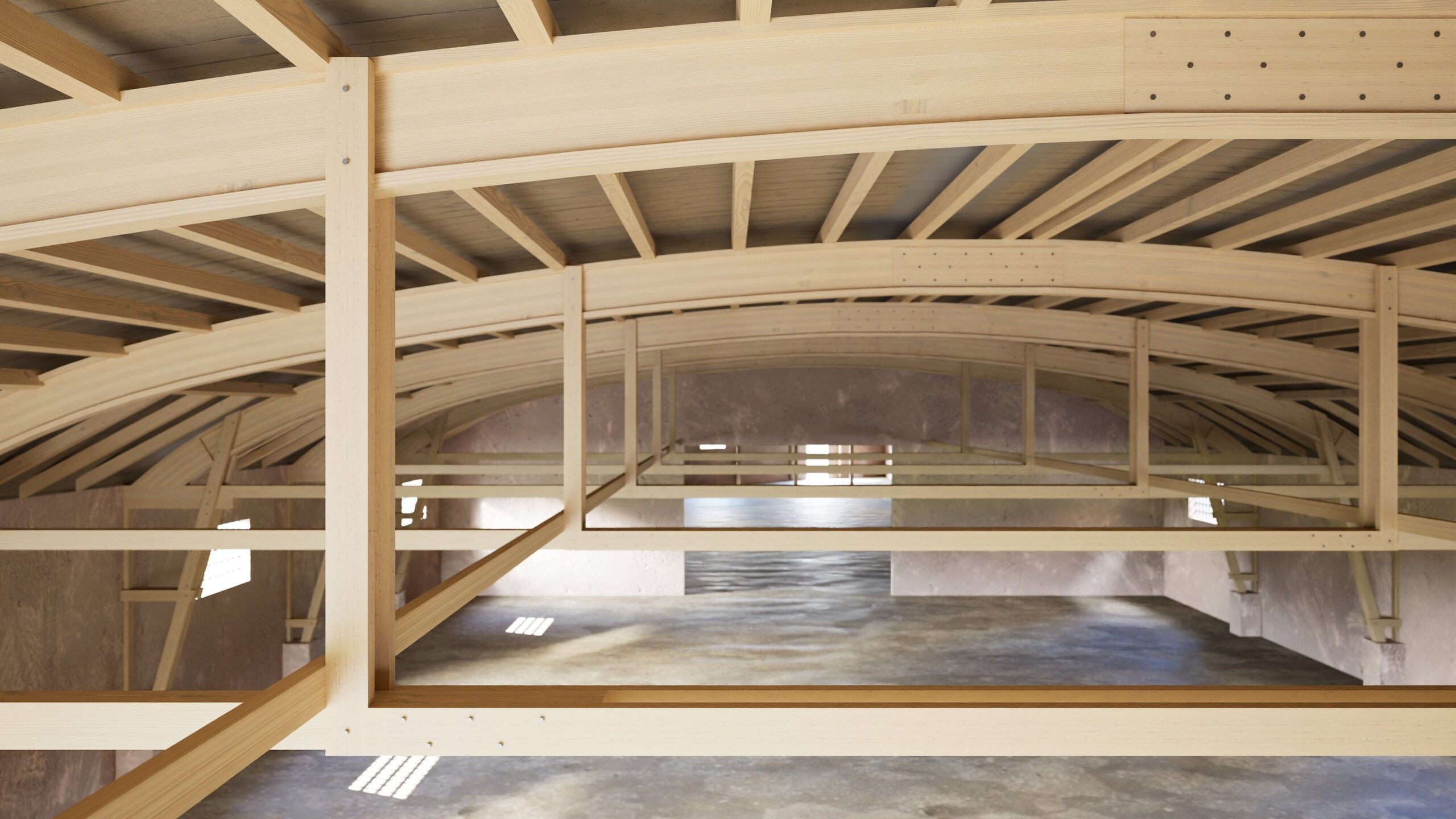
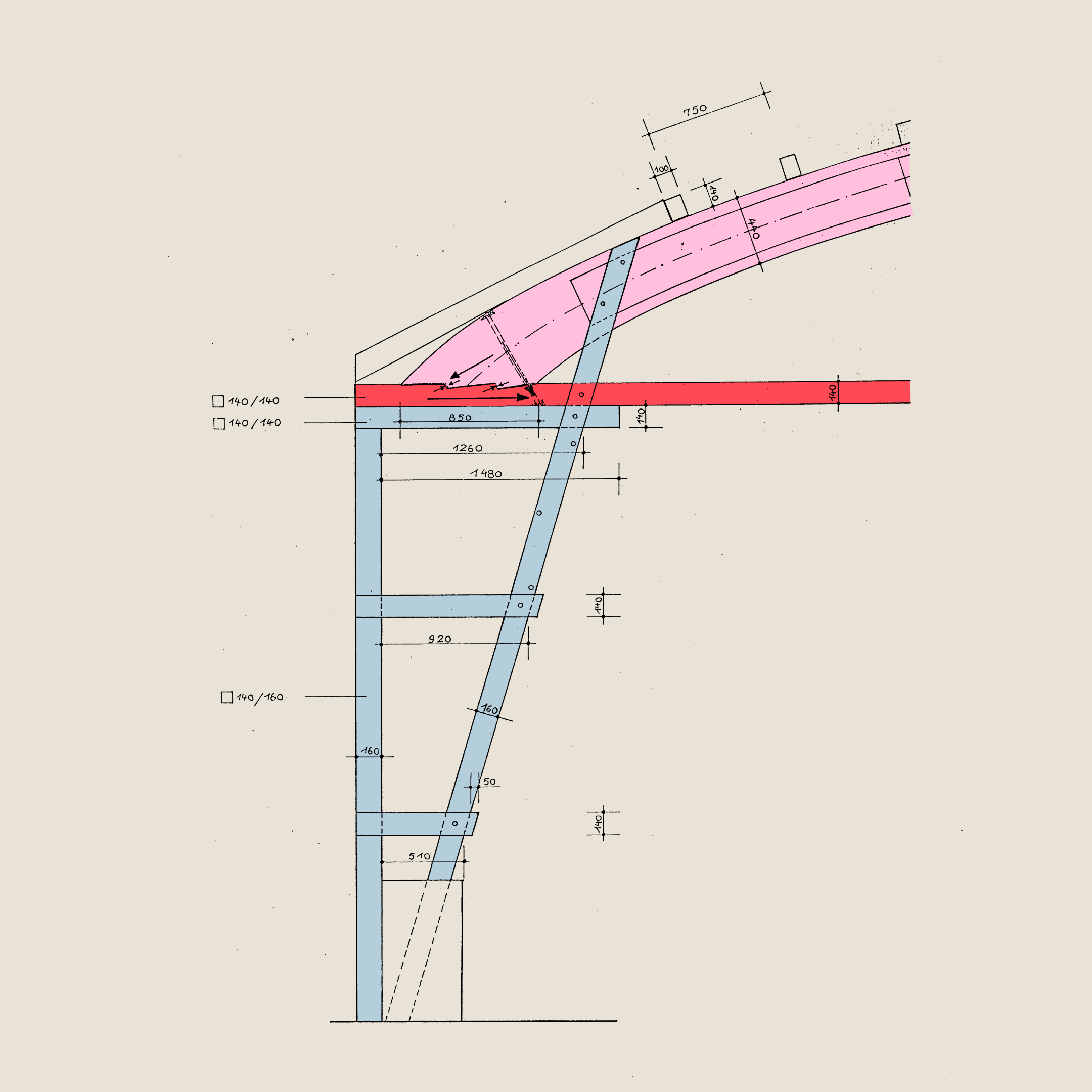
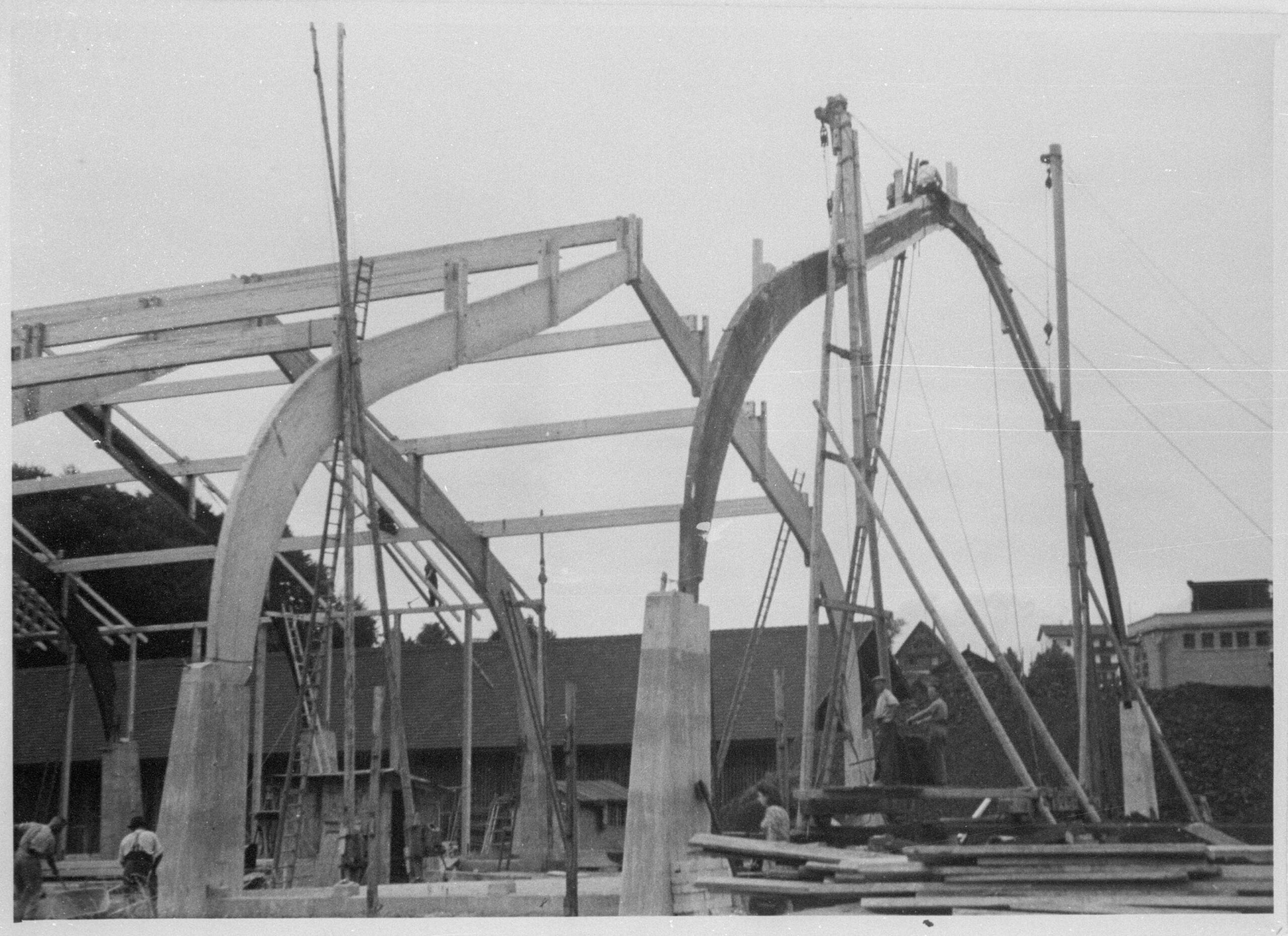
- The halls were one of the first industrially constructed buildings in the world to feature curved glulam beams. The supporting structure consisted of an arched wooden frame construction, while the exterior walls were mostly made of brick masonry. The curved beams gave the interior a clear, elegant and rhythmic structure.