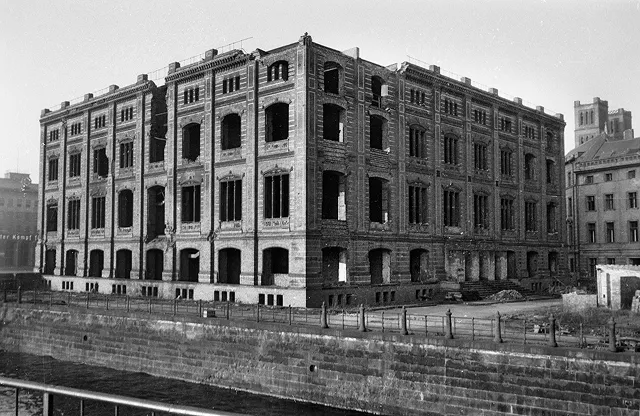
NEW STRUCTURE RECOVERED: The Berlin "Bauakademie" has been online since April 20. Enjoy exploring it!

The

Berlin  
“Bauakademie”

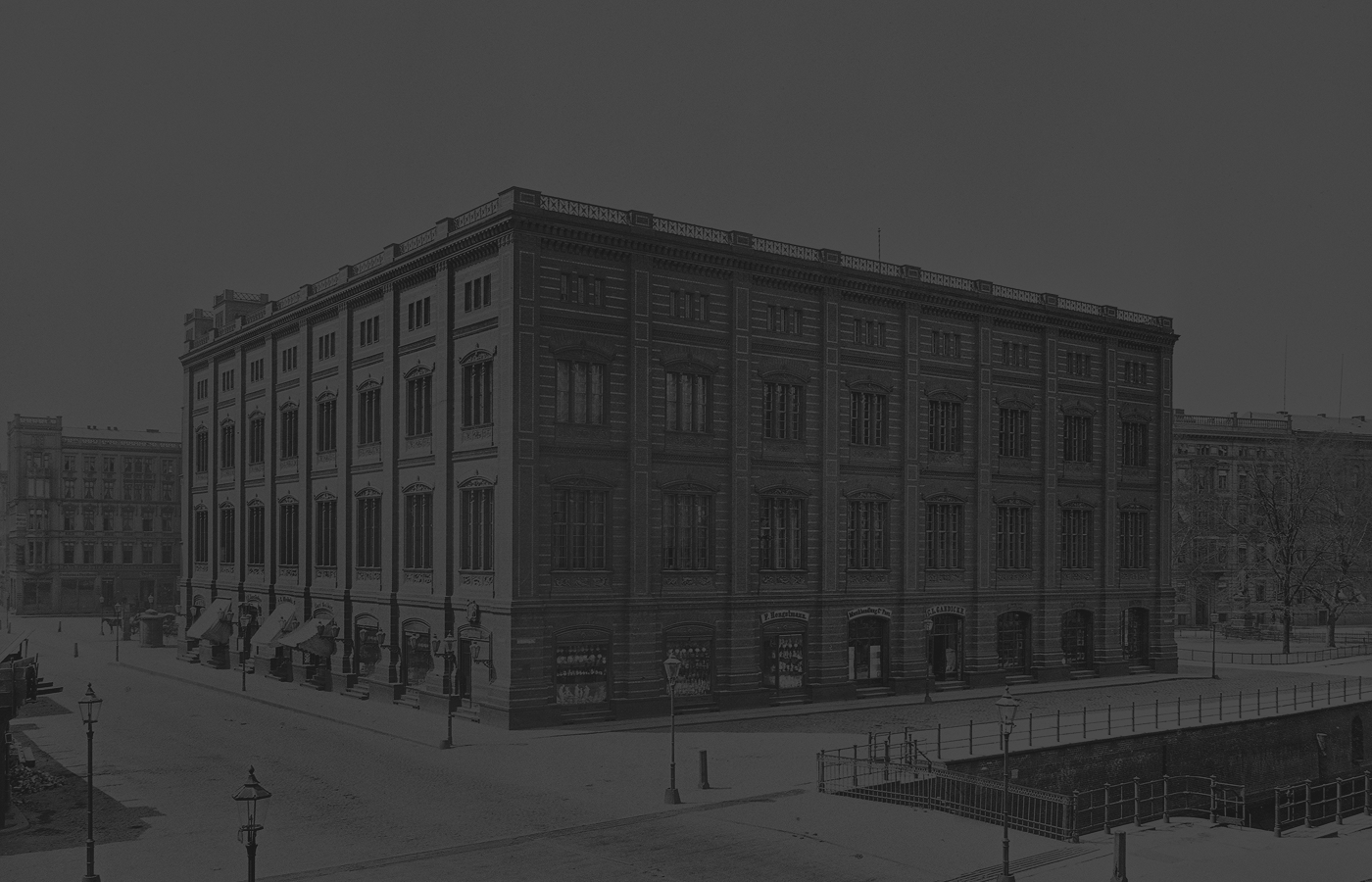
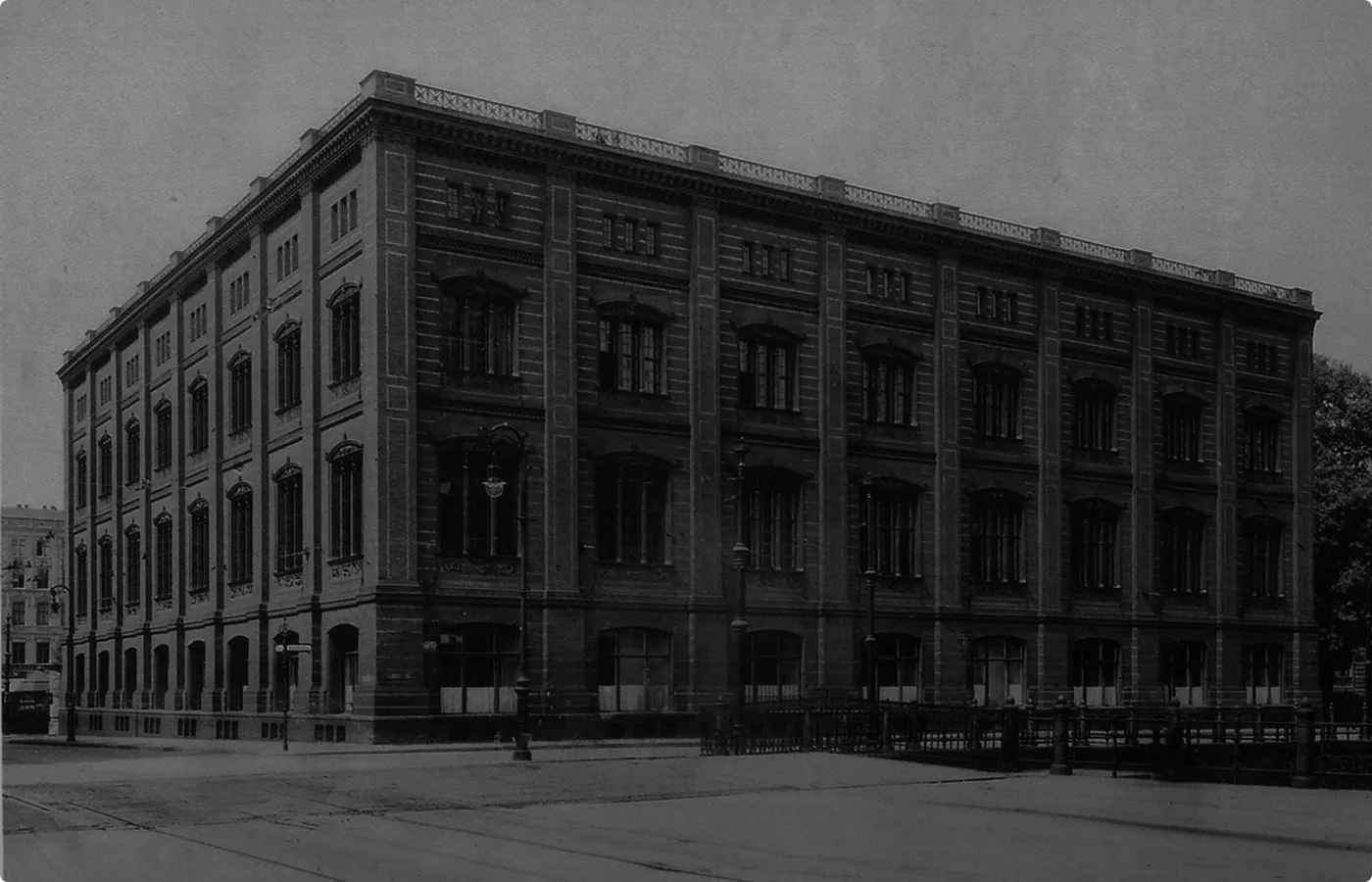
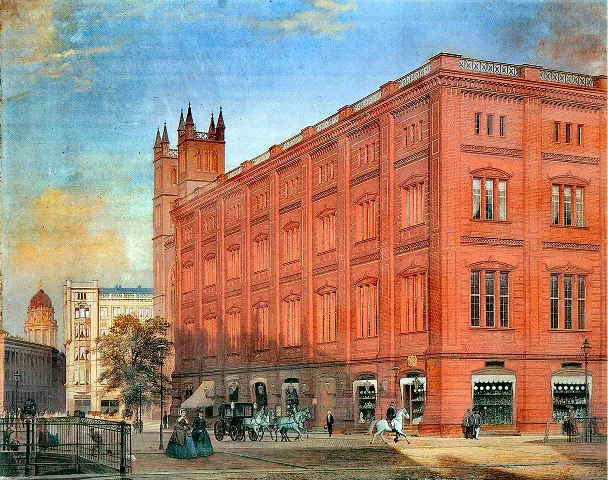
The Berlin Bauakademie was a structurally daring and economically innovative building on difficult ground – without using today’s concept of sustainability, it became a durable, low-maintenance model for future administrative buildings.

1832 - 1836

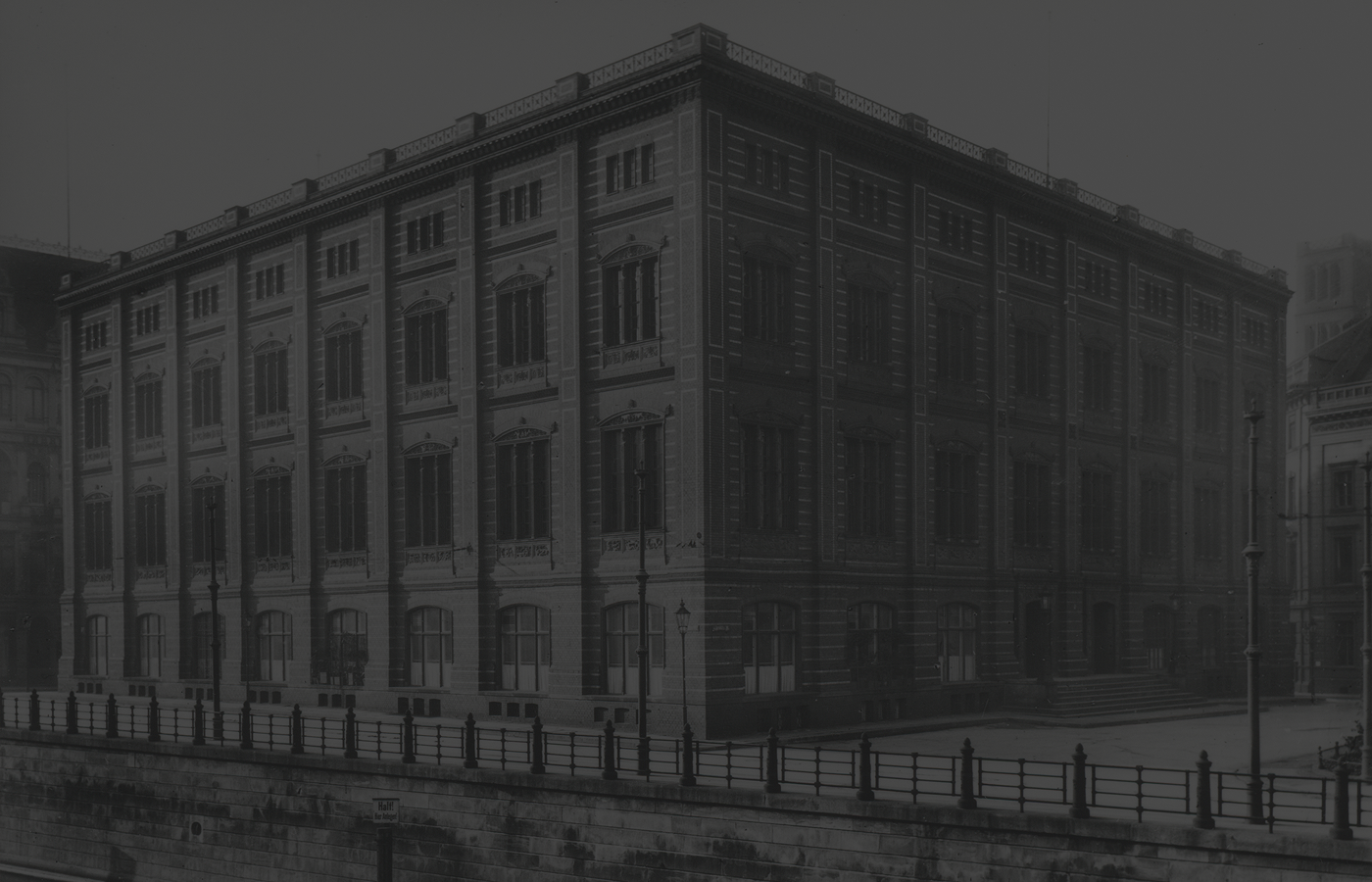
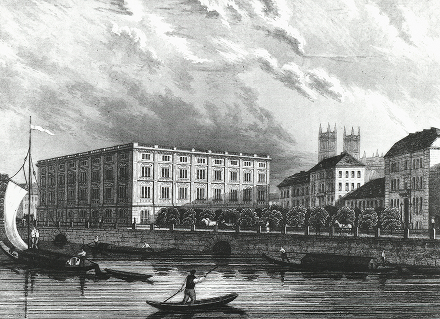
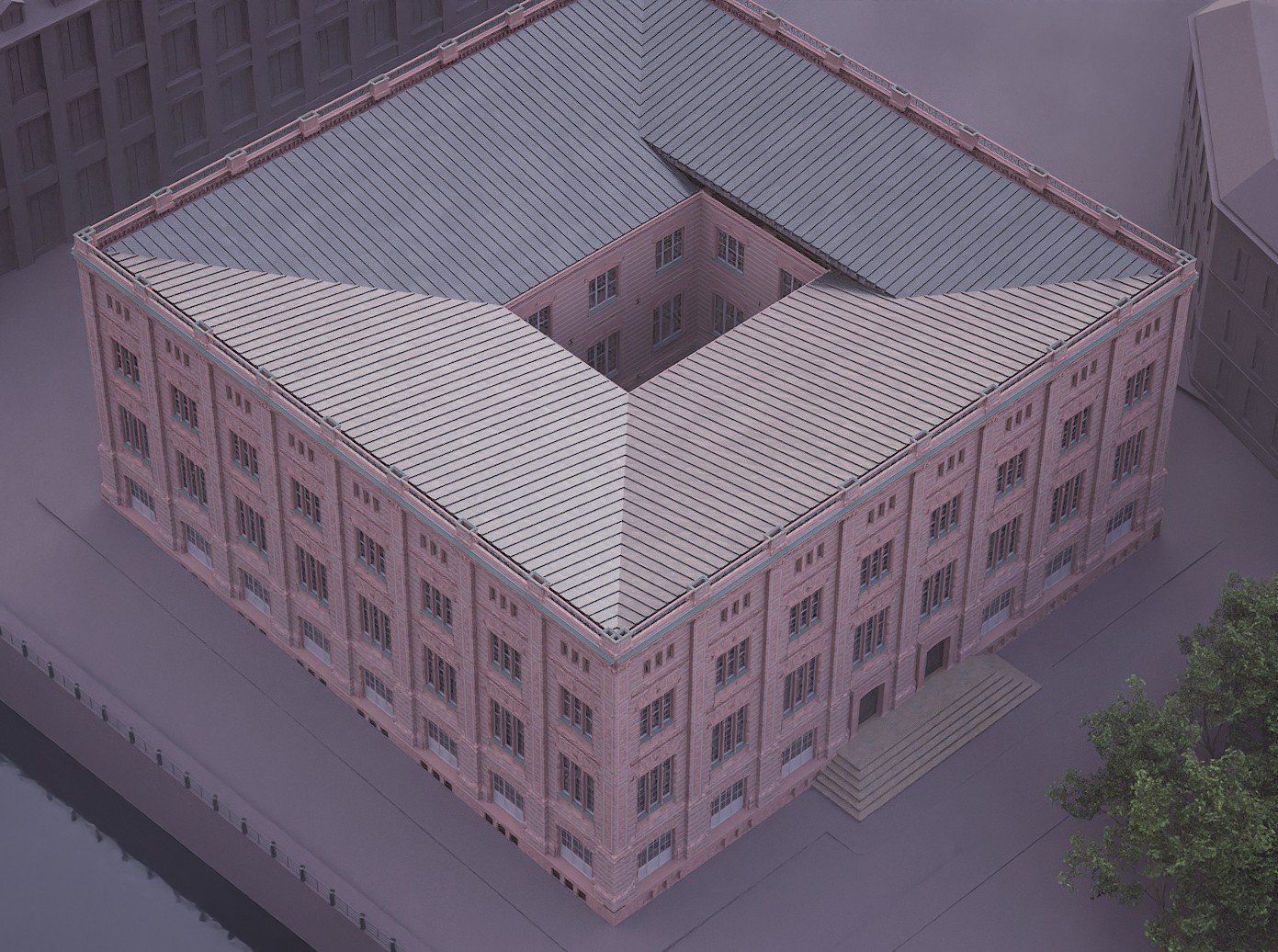
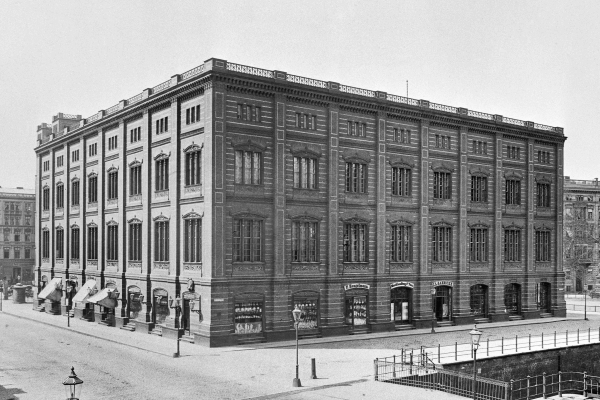
The Berlin Bauakademie is built in just four years and is one of the most important examples of early industrial architecture in Germany. It was designed under the direction of Karl Friedrich Schinkel.

5.53 m

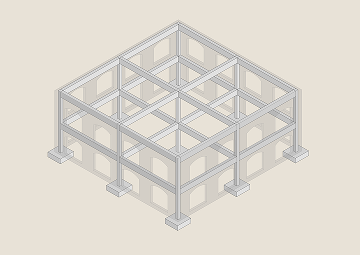
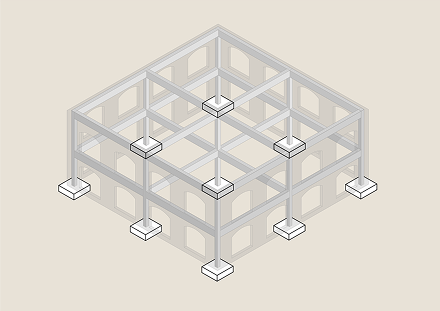
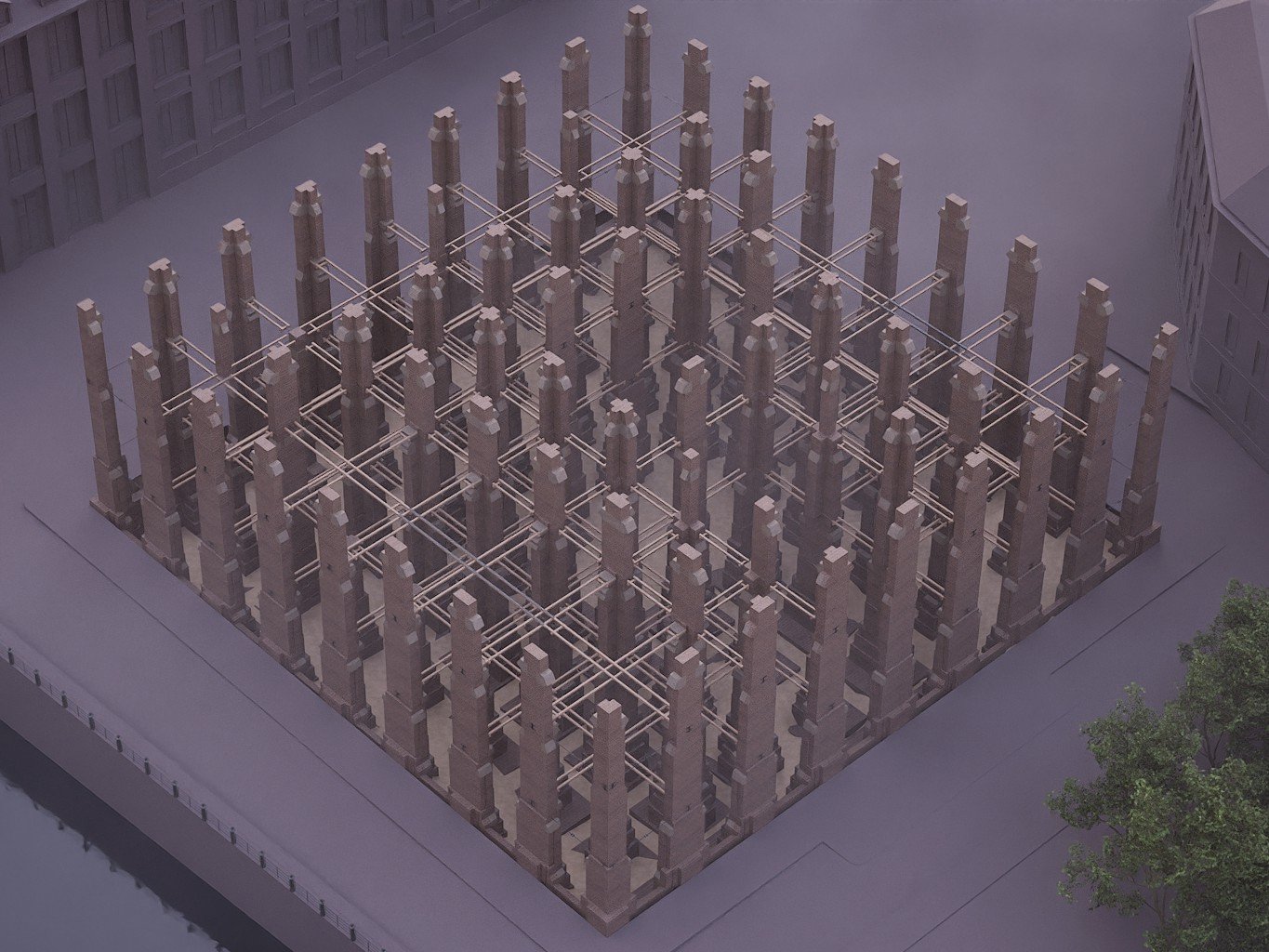
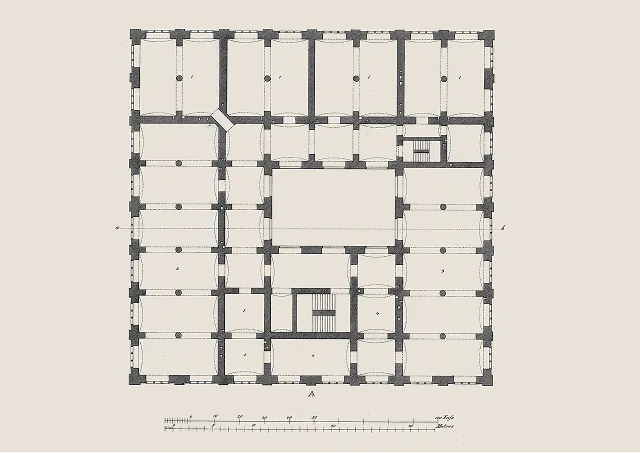
The construction is divided into a square column grid of 5.53 metres. This structure allows for flexible utilisation and clear spatial organisation. And results in a prototype for a skeleton building in the spirit of modernism.

Masonry Skeleton

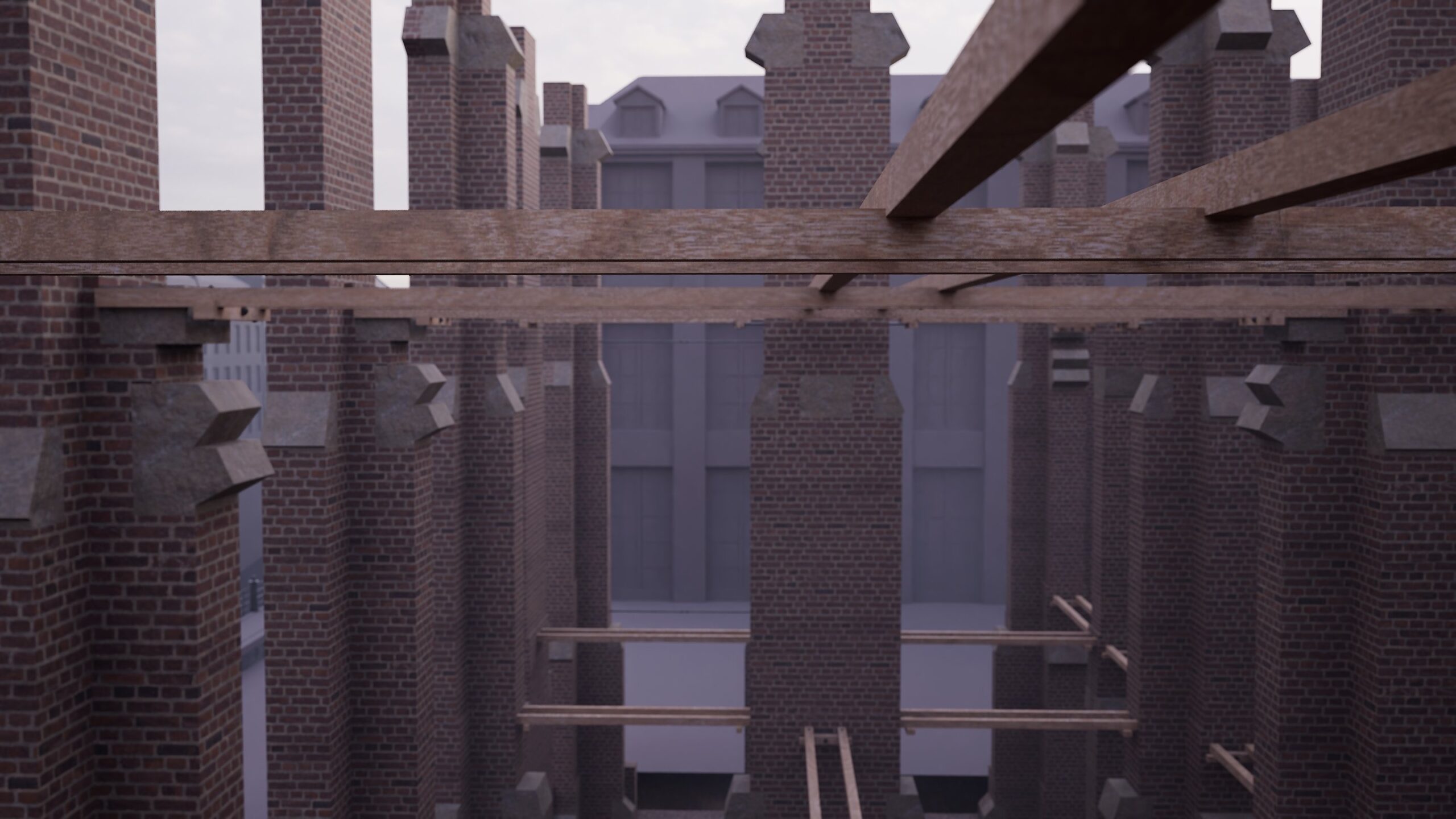
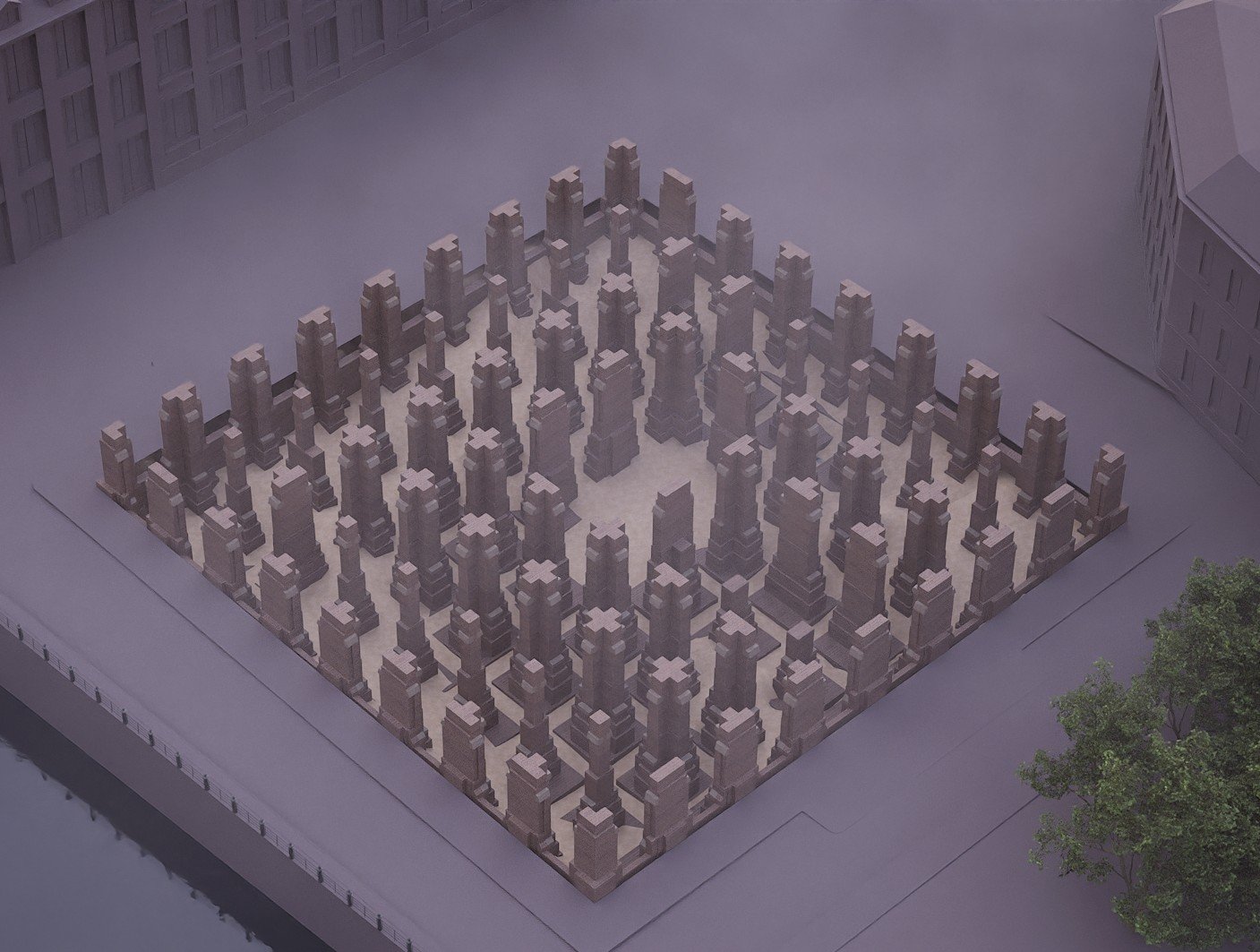
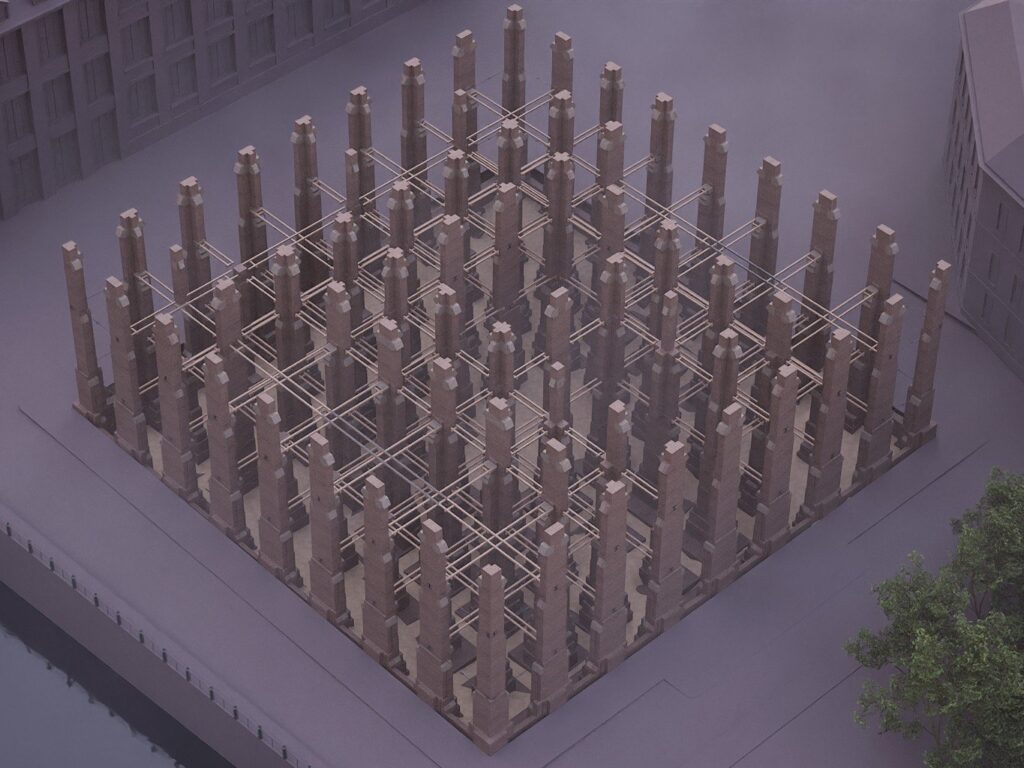
The load-bearing skeleton of brick columns is erected up to the last floor before the actual construction of the storeys. The aim was to minimize settlement caused by the building's own weight at an early stage and prevent damage later on.

1945 & 1962

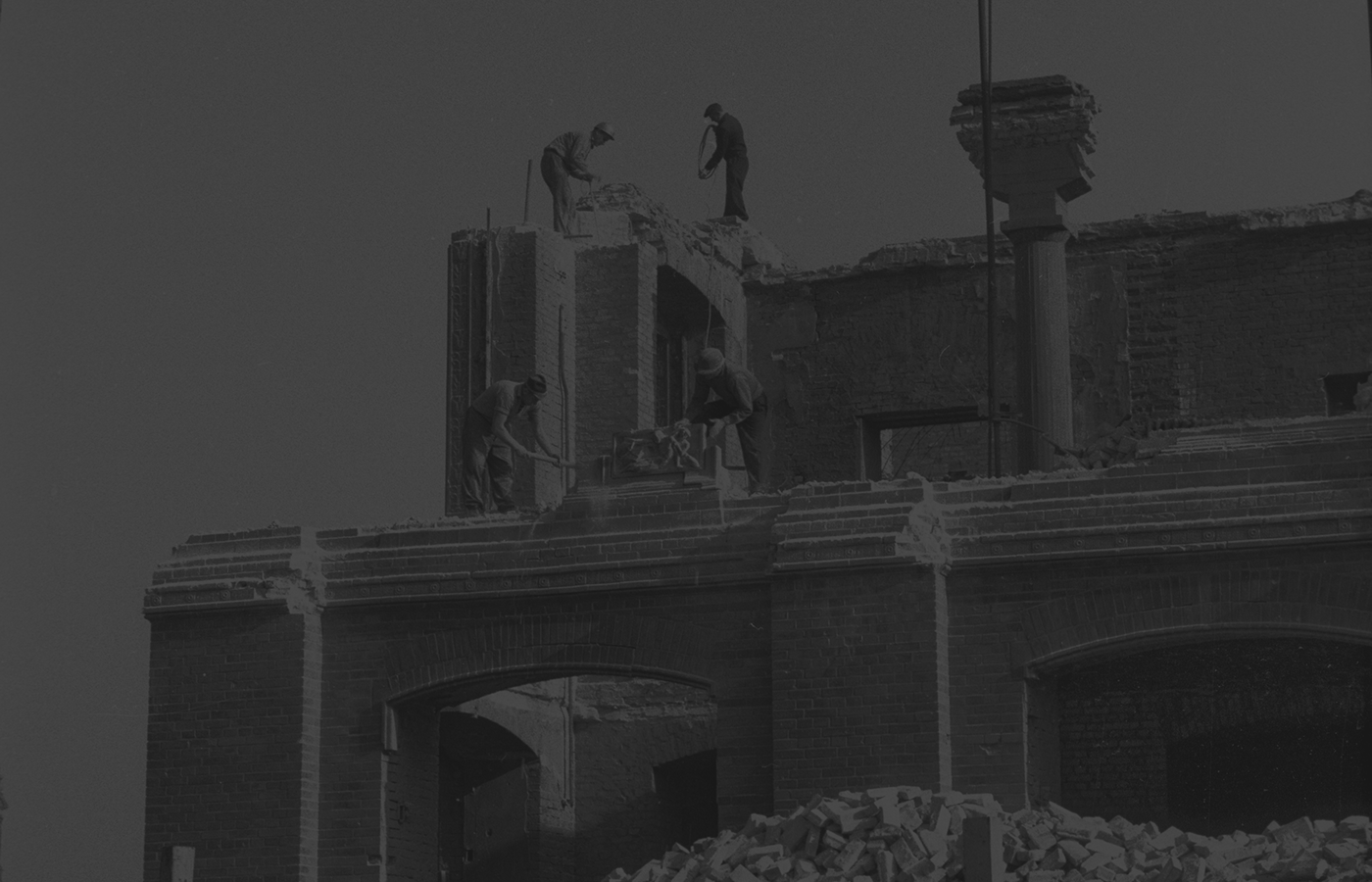
Heavily damaged during the Second World War, the building was completely demolished in the GDR in 1962. Thus, an important piece of Prussian industrial history was lost.

The Berlin Bauakademie was a structurally daring and economically innovative building on difficult ground – without using today’s concept of sustainability, it became a durable, low-maintenance model for future administrative buildings.

The Berlin "Bauakademie"

yr 1836 – 1962

  • Historical Background
  • History of use
  • Ownership History
  • Architectural Features
  • The Berlin "Bauakademie” is built in 1836 based on designs by Karl Friedrich Schinkel and is considered one of the most important buildings of Prussian Neoclassicism. Its creation occurred during a period of major social and technological transformation, when the construction sector was increasingly being professionalized. The goal was to improve the quality and efficiency of public building projects through systematic education.
  • The “Bauakademie” was originally used to train architects and engineers and played a key role in the development of construction in Germany. In 1879, the academic program was transferred to the Technical University in Charlottenburg. The building then served until 1933 as the seat of the Prussian Ministry of Public Works, which also housed the Royal Prussian Photogrammetric Institute. During the Nazi era, it remained in state use. After severe war damage, the burnt-out building was first rebuilt, then demolished in 1962 by political order in the GDR for the construction of the new Foreign Ministry.
  • From 1836 to 1945, the “Bauakademie” was owned by the Kingdom / State of Prussia. After the Second World War, the building came under the ownership of the German state until 1951, when it became the property of the GDR with the founding of the “Deutsche Bauakademie” (German Building Academy) of East Germany.
  • The “Bauakademie” impresses with a brick façade that was revolutionary for its time—one of the first in Berlin to be constructed entirely from exposed brick. Its modular design follows a strict, rational grid that anticipates the principles of later industrial architecture. Schinkel’s design emphasized clean lines and functional elegance, making it an early example of modern architecture.

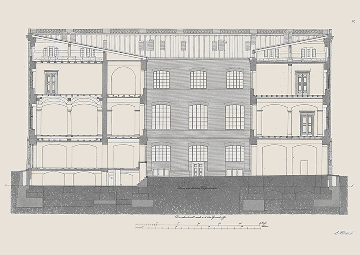
    The four-storey structure, featuring a central courtyard, reflects the building’s clarity and rationality. Particularly innovative was the use of iron in the construction—a progressive and forward-looking choice for that era.
1-4

Dive into the structure of the Berlin “Bauakademie”

Click on the feature buttons and discover original drawings, photos, videos and explanations that tell you a story about the art of engineering.

The skeleton-frame structure
The Ceiling Vault
The tie rod system of the “Bauakademie”
Der besondere Bauzustand
The special timber truss beam

The skeleton-frame structure

The Ceiling Vault

The tie rod system of the “Bauakademie”

Der besondere Bauzustand

The special timber truss beam

The skeleton-frame structure

The Ceiling Vault

The tie rod system of the “Bauakademie”

Der besondere Bauzustand

The special timber truss beam

The skeleton-frame structure

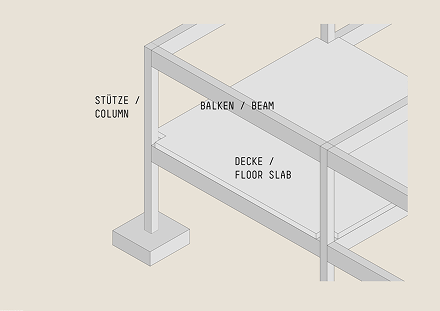
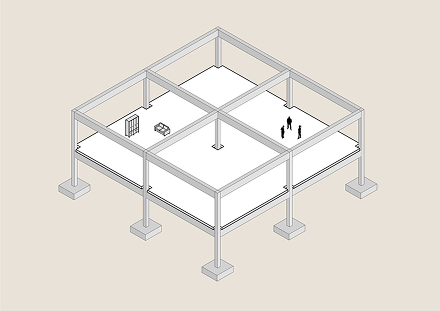
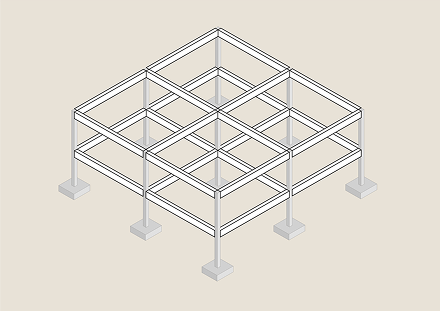
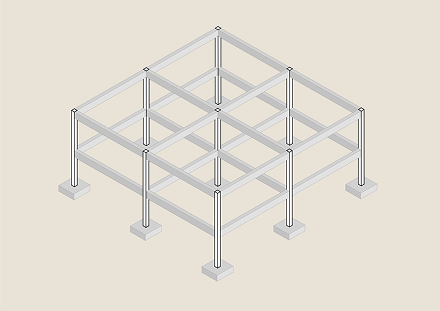
The skeleton frame structure is a modern construction principle: an inner framework of columns and beams supports the building - the walls and façade can be freely designed.
The supporting structure consists of a few, clearly structured elements. This simple basic idea is still changing the way we build today.
The floor slab transfers the loads from the room - people, equipment, etc. - and transmits them to the beams. It is not part of the load-bearing skeleton - but it is crucial for the utilization of the room.
The Beams transfer the loads from the floor slabs to the columns. They create the basis for open spaces without load-bearing walls. At the same time, they form a horizontal support for the columns
The columns bear the main loads of the building. They support the structure - and allow for openness in the design.
The foundations direct the forces into the ground. The façade, on the other hand, is light and flexible - like a curtain that envelops the building.
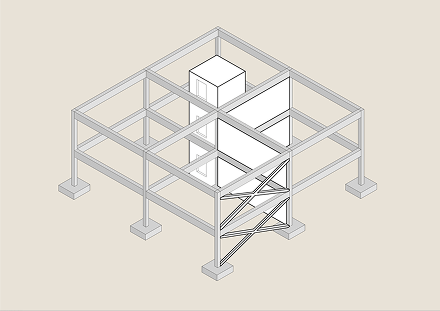
Columns and beams alone do not give the building lateral stability. Bracing elements - such as staircase cores, wall panels or wind bracing - ensure that the skeleton does not tilt or twist.
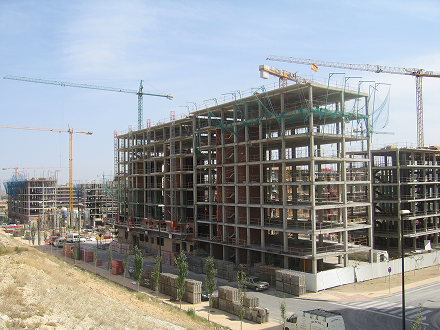
The skeleton frame structure still characterizes architecture today: whether museum, office or school - it enables transparent, adaptable spaces. Steel, reinforced concrete and increasingly wood form the load-bearing structure of modern buildings.
The “Berlin Bauakademie” is an early milestone in skeleton construction in Germany: with a clearly organized grid, prefabricated elements and structural thinking that was far ahead of its time.
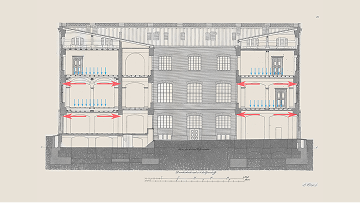
The skeleton of the “Berlin Bauakademie” consists of vaulted brick ceilings, brick arches, and brick columns. The bracing system relies on iron tie rods anchored in the masonry. The non-load-bearing brick façade is attached to the masonry skeleton.
1/7

The Ceiling Vault

„The ceilings of all the storeys, with the exception of a portion of the third and the whole of the attic floor, are formed by flat vaults, devised to secure the valuable collections and the shops against the hazard of fire. All these vaultings (..) were executed in brick, which retains its natural red hue, untouched by either whitewash or plaster.”

*Except from the Allgemeine Bauzeitung of 1836, authored by Emil Flaminius.
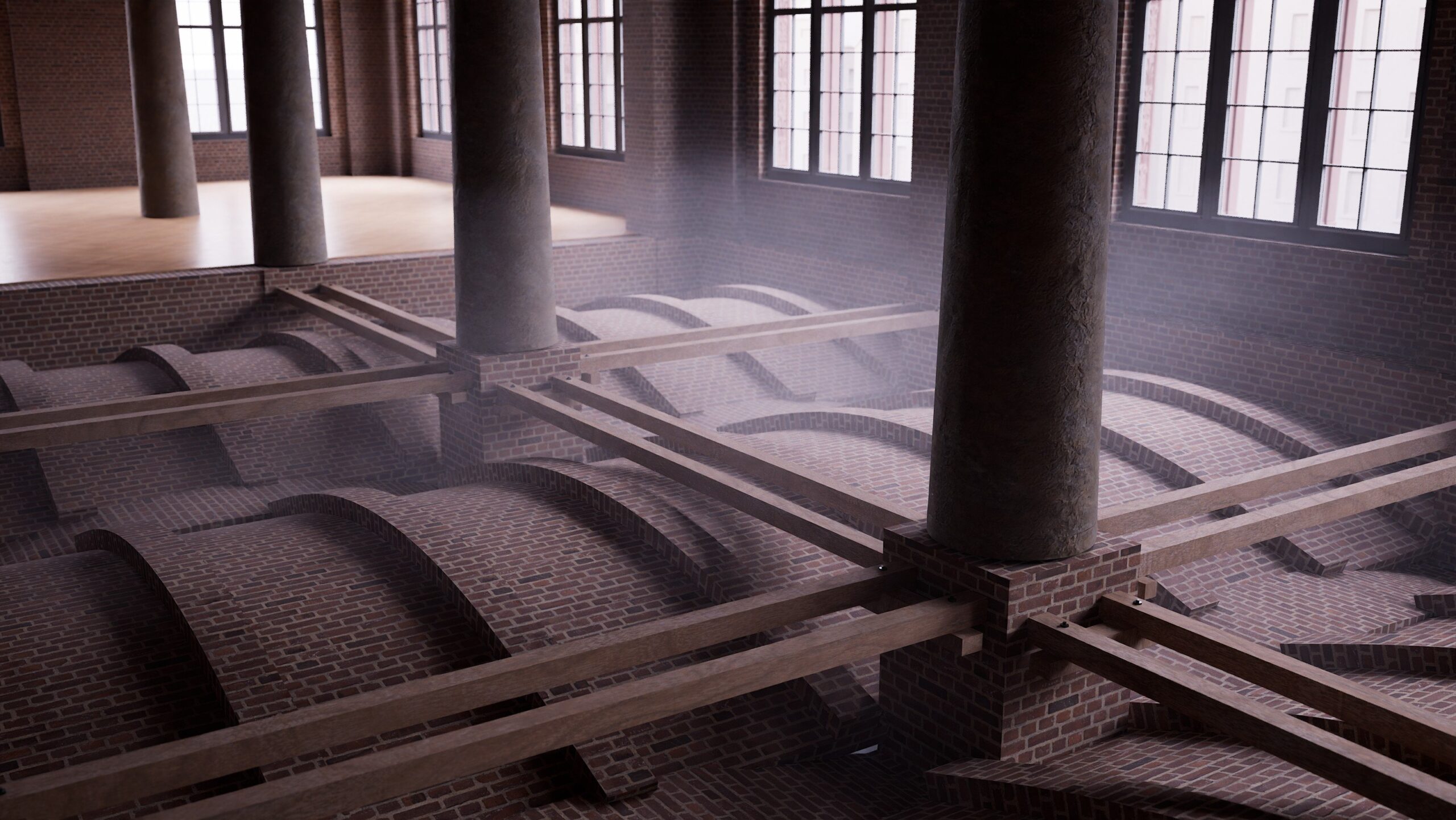
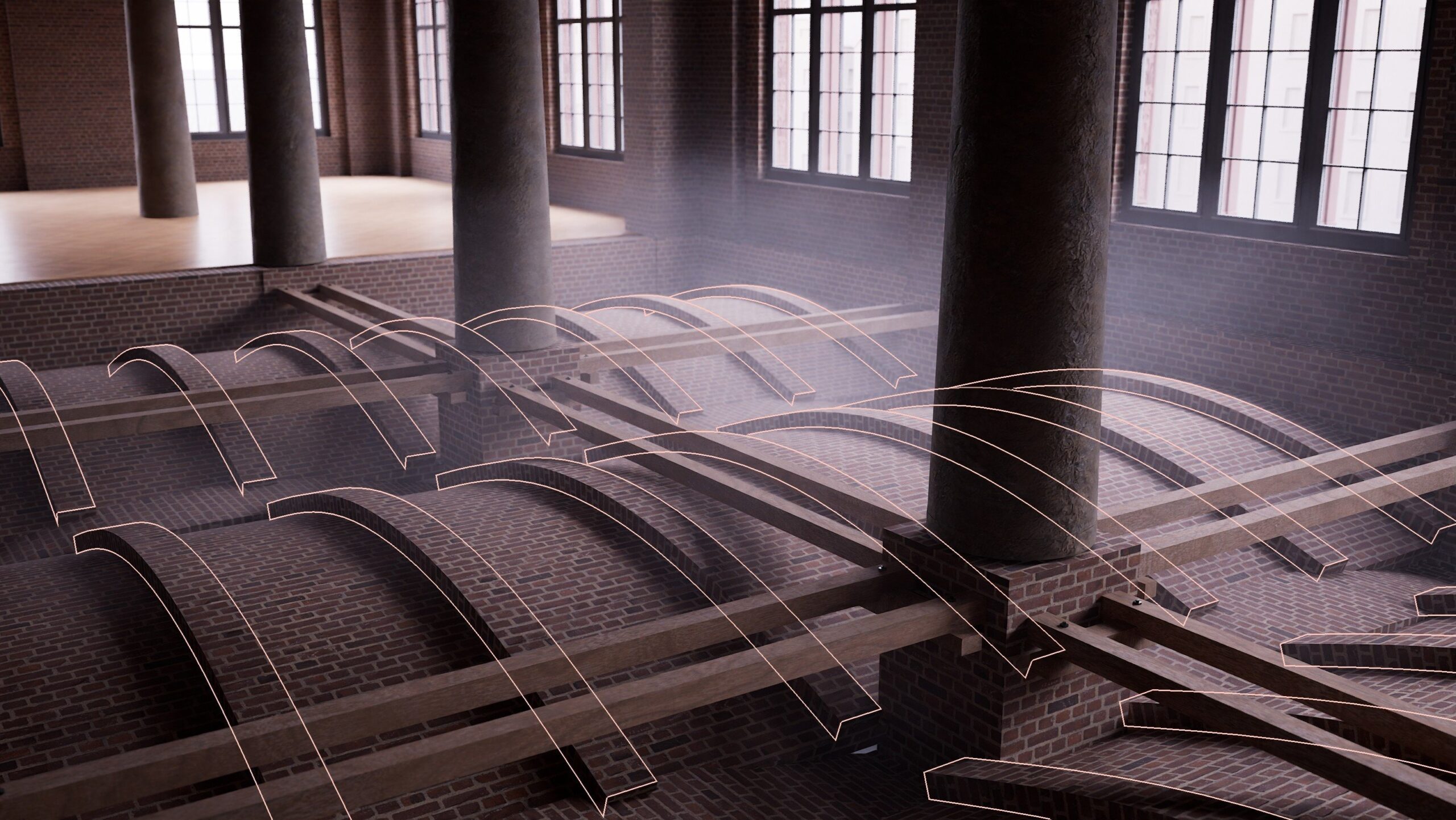
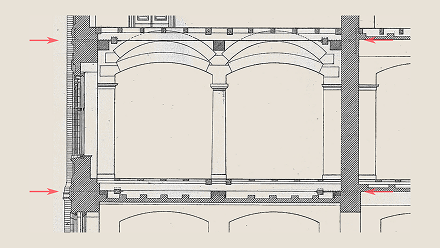
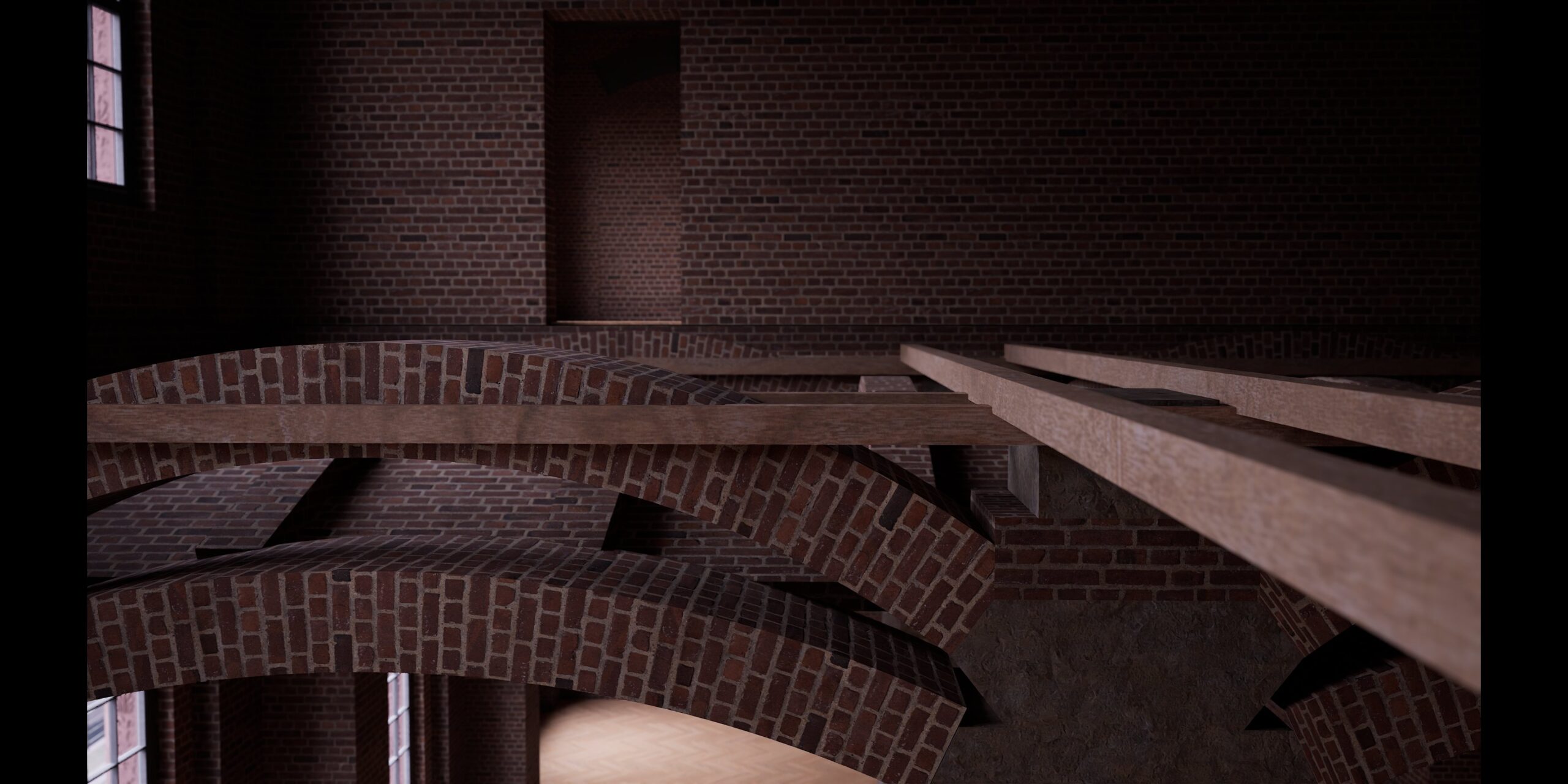
This ceiling structure of the “Berlin Bauakademie” is considered particularly bold, as the span with the chosen support grid measures 5.53 meters — a highly challenging task from a structural standpoint.
Despite the large span and the high dead weight of the stone ceilings, it was only possible to construct them with a single layer of stone. However, at such a span, additional reinforcement was necessary. This was achieved by adding an upper rib every 75 cm.
1/7

The tie rod system of the “Bauakademie”

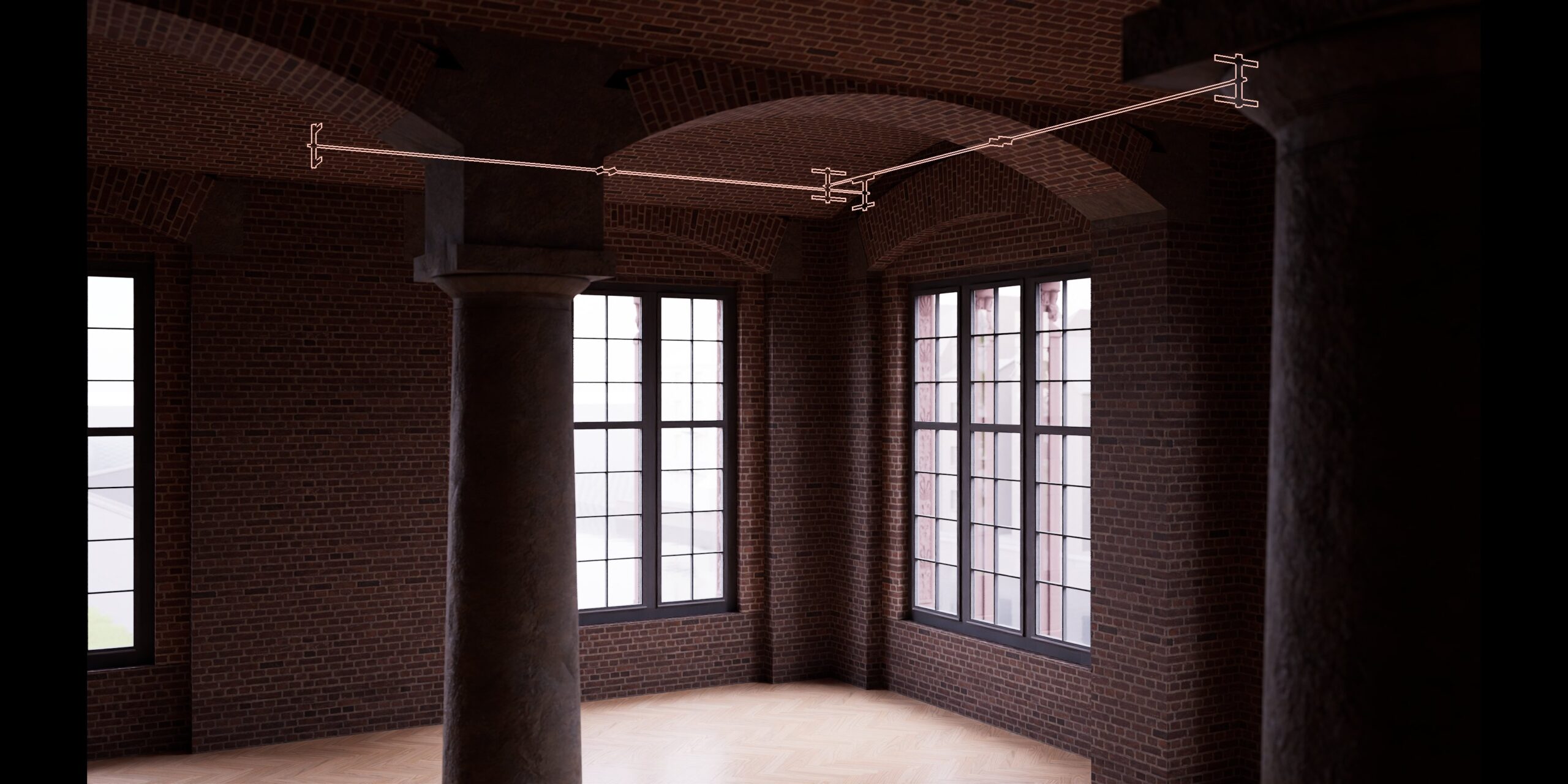
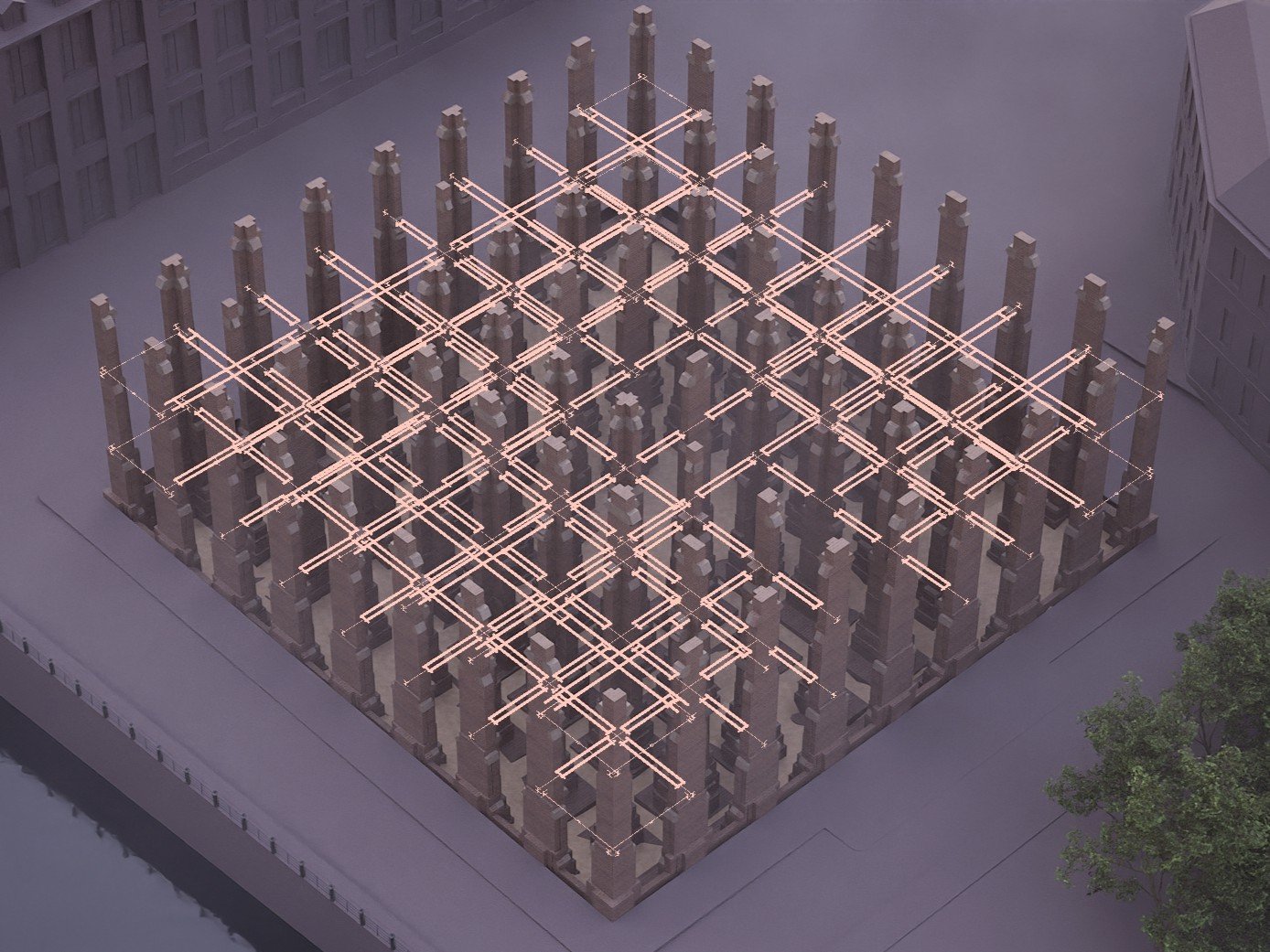
The heavy vaults of the “Bauakademie” exert a lateral thrust that the columns and walls alone cannot safely absorb. For this reason, a system of tie rods is installed in the “Bauakademie” to connect the columns to each other and prevent them from pushing apart.
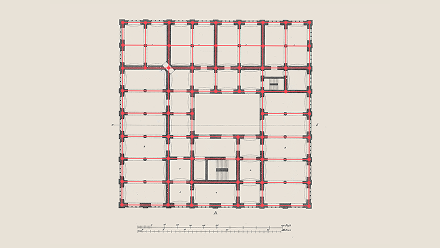
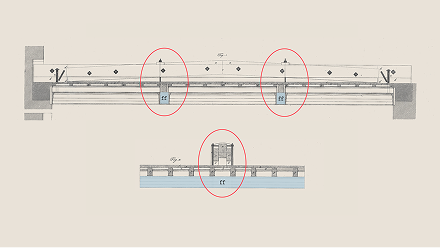
A system of iron anchors is installed above the columns on the main floors. This construction is visible in the original building plans.
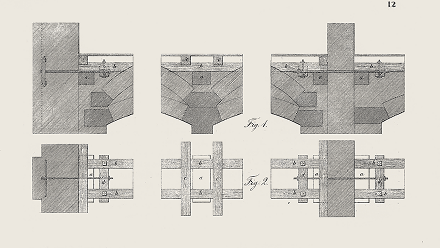
The anchors lie on large sandstones that rest on the walls. Wooden beams are laid on top of them, which fit exactly into the corners of the vaults.
The wooden beams are firmly connected with cross pieces. These crosspieces are secured with pins and bolts so that everything became a stable frame.
An iron rod - the anchor rail - sits on each cross piece and reaches deep into the outer or inner walls. The system is firmly braced with screws and wedges so that the anchors hold the vaults securely together.
There is also a second system of anchors. These run perpendicular to the first system. Together, they form a grid-like anchoring system that stabilizes the building at the ceiling levels.
Corners
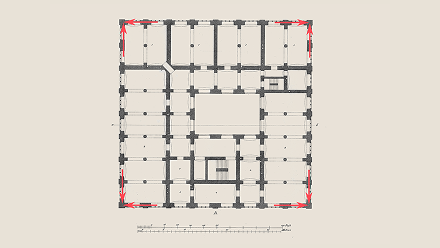
Two directions of force meet at the corners of the front walls. The lateral pressure cannot simply be absorbed by counter walls. The corners therefore must be secured with strong iron anchors to prevent them from being pushed apart.
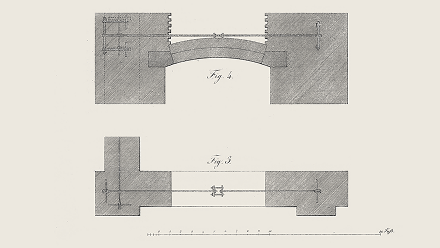
A special anchor construction is installed above the arches of the corner windows. This consists of two iron rods (tie rods) that are anchored deep in the masonry and connected in the centre by plates and bolts.
Screws were used to tighten the entire system during construction. This stabilizes the corner even before the arches were built. And even later, the anchors could be retightened if something should settle.
1/7

Der besondere Bauzustand

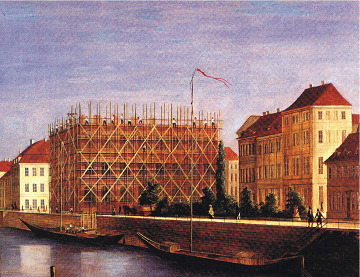
Construction of the “Berlin Bauakademie” began in 1832 under the direction of Karl Friedrich Schinkel and Emil Flaminius. The building site was located on the Kupfergraben, a branch of the Spree. From the very beginning, the building was a pioneering engineering project.
Although the subsoil was stable, the foundation posed major challenges: Old pile remains, springs and unevenly deep, solid sand made the work time-consuming. In the first year, the foundation pillars were completed up to the height of the ground floor - the basis for the future load-bearing system.
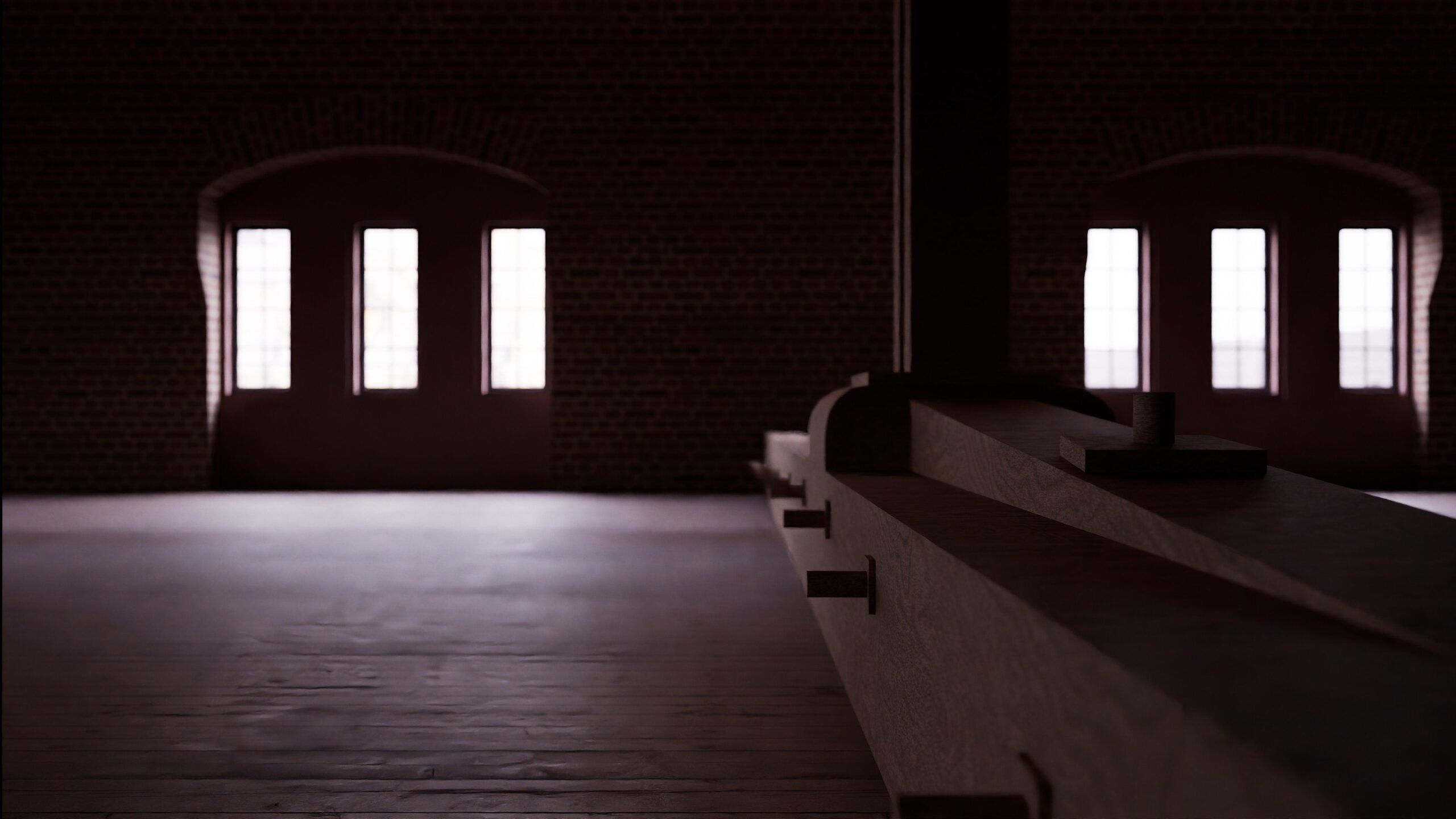
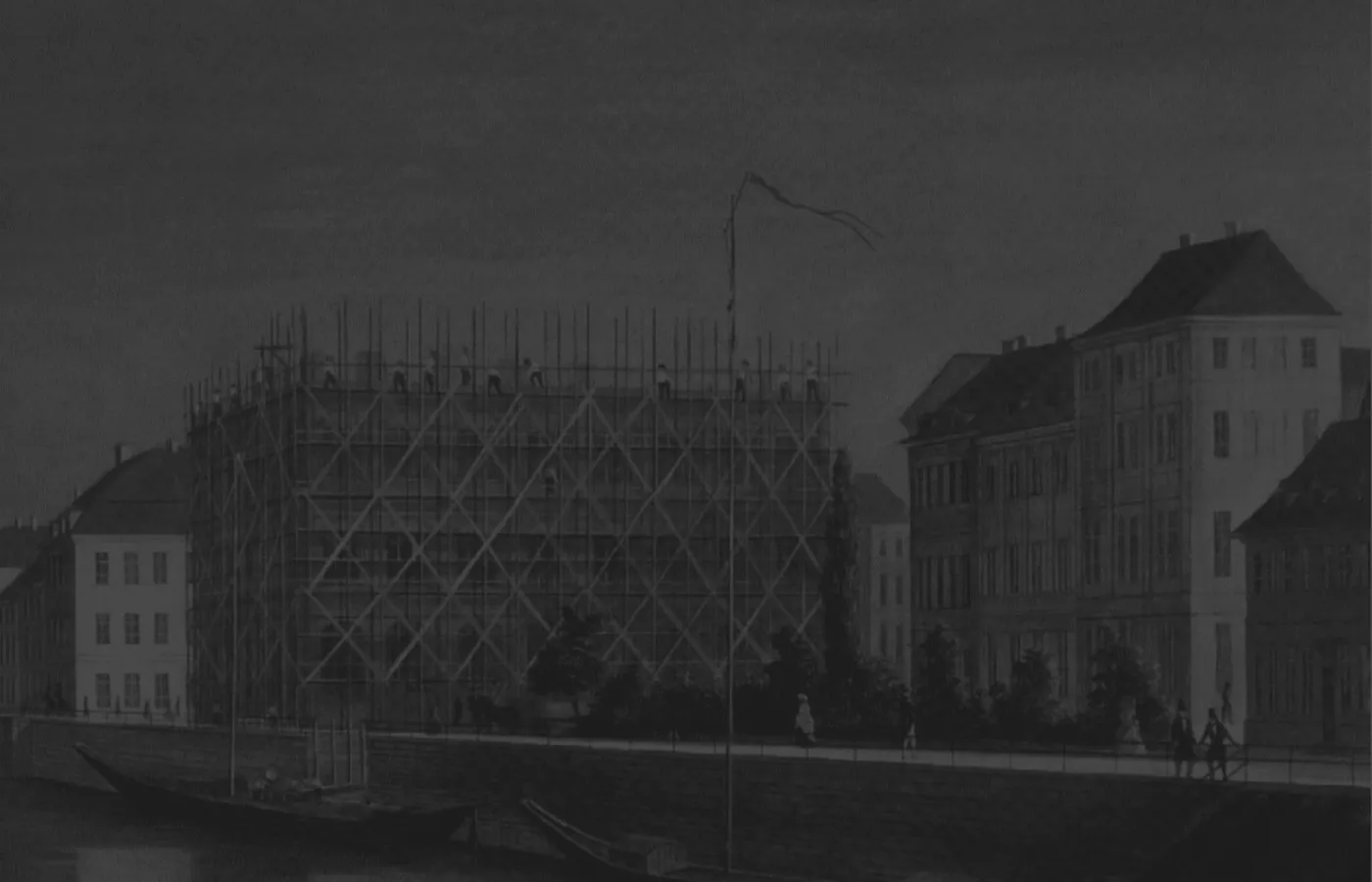
The columns and pillars were already raised to the top floor in the second year of construction - even before the arches, vaults and façades were built. The aim was to ensure that all subsidence in the subsoil was completed in advance. This meant that the sensitive components could be inserted free of internal stresses. A revolutionary approach at the time.
The anchor system already shown to reinforce the load-bearing system had a dual function here: during construction, it stabilized the high, still free-standing columns against fluctuations and vibrations. Only later did it also take on the task of permanently bracing the ceilings and arches.
The vaults and arches were installed in the third year after the settlements had been completed. The façade followed in the fourth year. This well thought-out construction sequence made the “Bauakademie” a technical showcase project of its time.
Immerse yourself in the construction status at the end of the second year: In our VR application, you can experience the brick-laid columns, the anchor system and the special construction method up close. Discover it now!
1/7

The special
timber truss beam

Almost the entire building consists of a solid brick construction - wood is only used where it is structurally necessary. The construction requires few complex timber connections - but where they are needed, the solutions are ingenious!
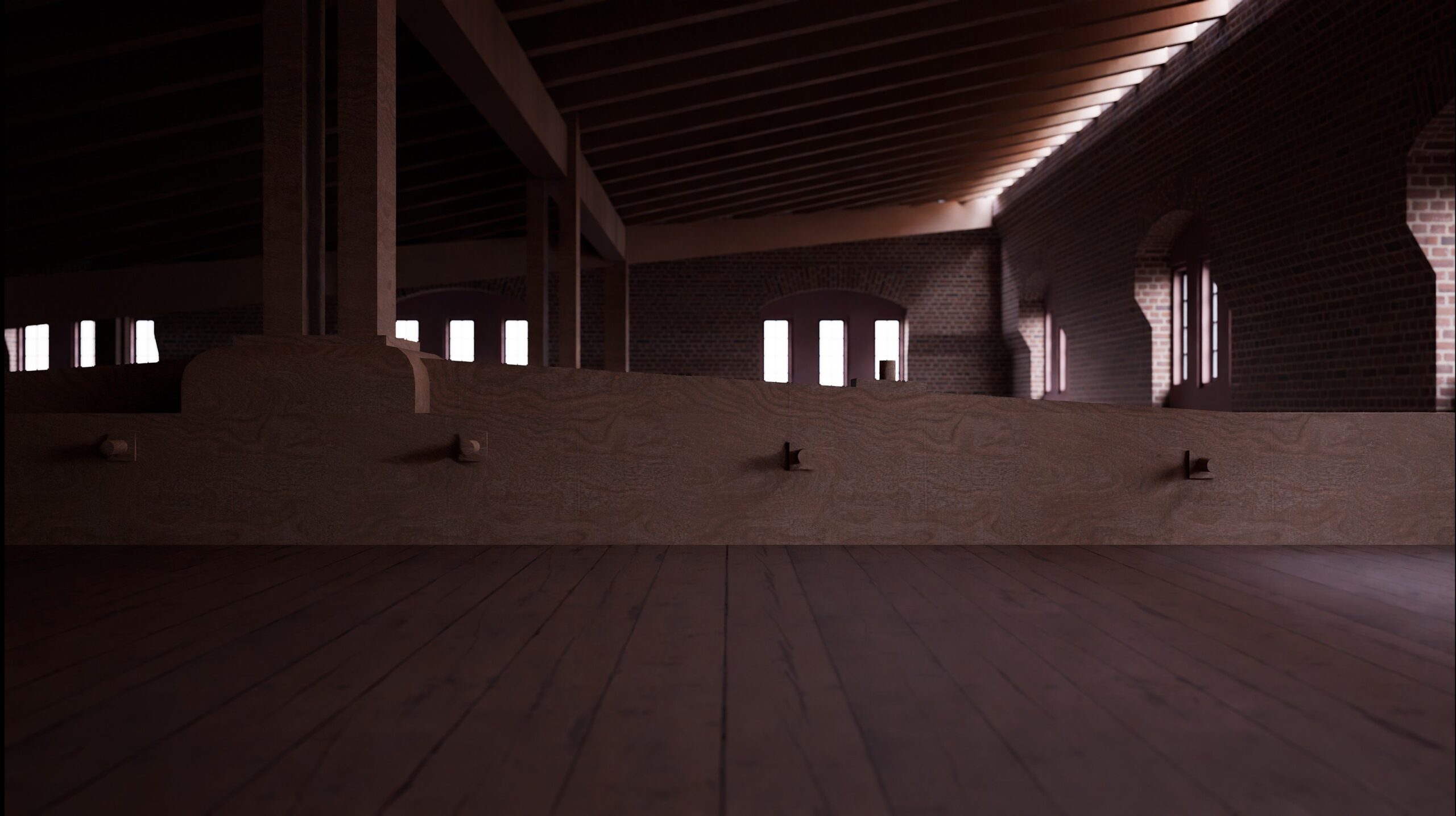
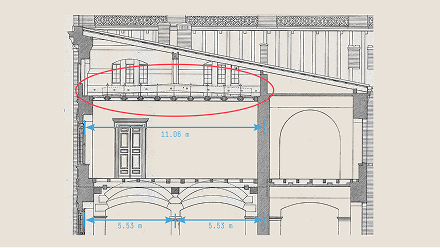
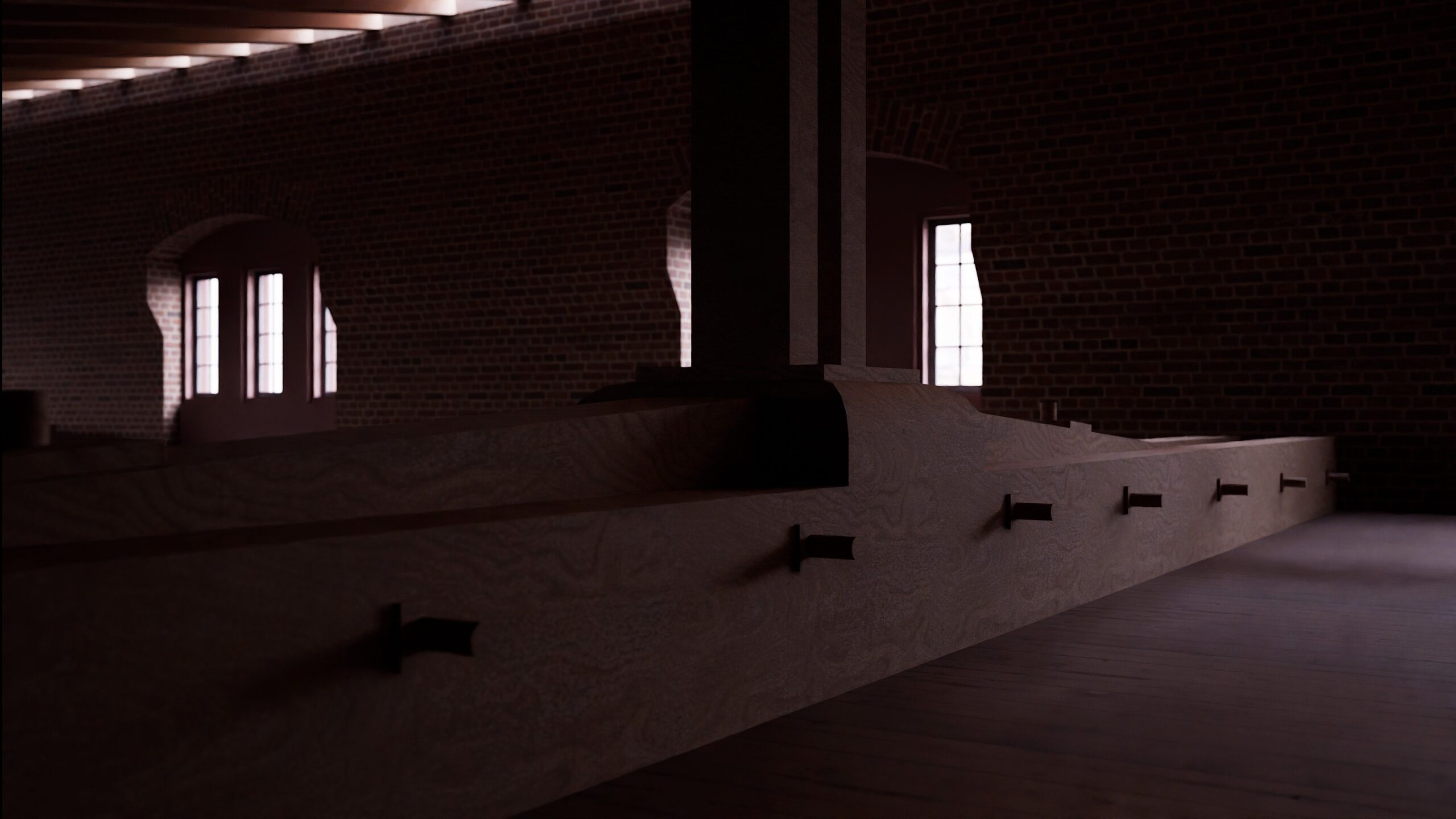
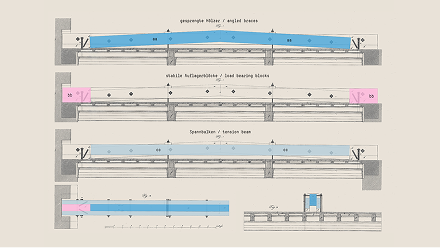
On the 2nd floor, there are areas where the ceilings must span twice the dimensions of the column grid, i.e. just over 11.0 meters. At the same time, supports for the roof construction had to be erected in the attic. The designers came up with a special timber truss system for this purpose.
A truss construction with a suspension system is the solution:
The load-bearing beams of the ceilings are anchored to large tensioning bars, which are anchored in a strong bolted timber truss beam.
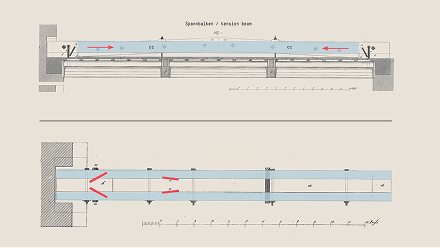
The wooden connection consists of three special timber parts: the angled braces aa, the load bearing blocks bb, and the tension beams cc. These are firmly joined together with iron bolts and clamps, forming a strong and stable unit.
The load-bearing beams ff of the ceilings are suspended from tension anchors. The anchors are prestressed by bolting them to the timber truss girder Those carry the loads of the floor beams. The composite beam is designed precisely for this bending load.
The tension beams cc of the truss girder ensure that the individual parts of the girder cannot shift in longitudinal direction. Additional oak dowels wedge the connection together, making it much more resistant.
Through this clever timber construction, a fascinating load-bearing system of carpentry was created in the hidden roof of the “Berlin Bauakademie”.
1/7

Explore this building
in the comfort of your home

Lorem ipsum dolor sit amet, consectetur adipiscing elit, sed do eiusmod tempor incididunt ut labore et dolore magna aliqua.

Pause

WHO MADE THIS PROJECT POSSIBLE?
WE GRATEFULLY THANK

Funding

Click here to access the complete image credits of this structure.

Where were the lost structures located? Find them on the map.

Berlin

The “Ahornblatt” Restaurant

This double-curved concrete shell structure enables large spans with minimal material use. Its futuristic form shapes the Berlin cityscape beyond the GDR era.
Berlin

The Berlin “Bauakademie”

This masonry skeleton construction is a prototype building with a uniform column grid, consisting of rib-reinforced vaulted ceilings, masonry columns , and arches, which set standards for economical and functional construction throughout Prussia.
Berlin

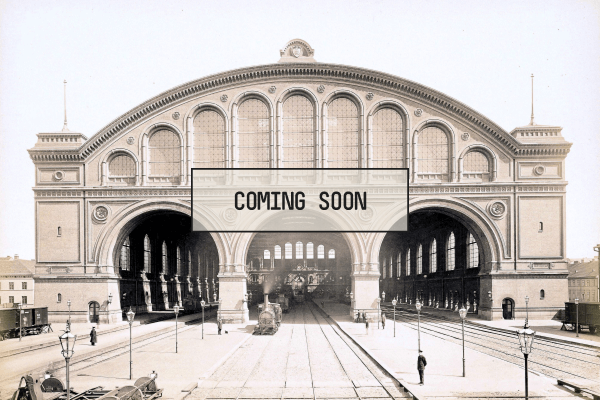
The “Anhalter” Train Station

This masonry structure with pin-jointed iron truss arches connects Berlin to the world. A train station whose innovative roof structure, at the time, featured the largest span in Europe.

Berlin

The Old “Kaisersteg”

This iron truss bridge with an arch and central hinge connects two districts of Berlin. With a main span of 86 meters, it was a technical masterpiece of its time and represents innovative bridge engineering of the late 19th century.

Schmehausen

The Cable Net Cooling Tower

The cable-net cooling tower of the Hamm-Uentrop nuclear power plant in Schmehausen is globally unique in its design. The load-bearing network of steel cables replaces traditional concrete structures, enabling an exceptionally lightweight and efficient construction.

Munich

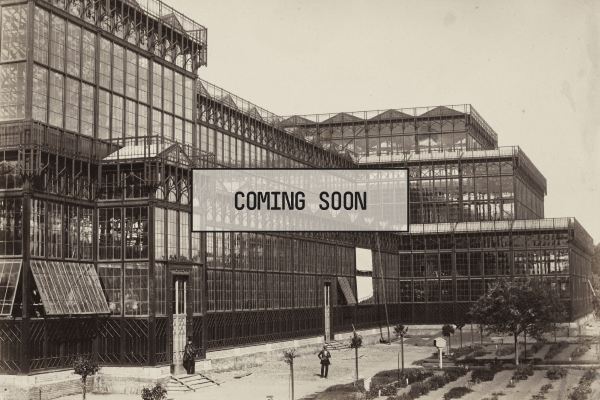
The Munich Glass Palace

This cast steel and glass structure is built in 1854 using innovative industrial manufacturing processes in a very short time. Although intended as a temporary building, it shaped Munich’s reputation as a city of art for over 75 years through its exhibitions.

Weimar

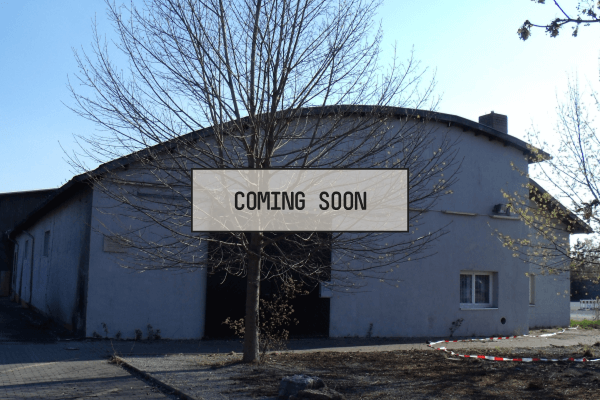
The Hetzer Timber Halls

The timber halls of the company Otto Hetzer AG were based on a construction principle patented in 1906: glued and curved timber elements that enabled large spans – a groundbreaking innovation in timber construction.

Awareness information

Berlin Bauakademie

For decades, Berlin has been engaged in an intense debate over the reconstruction of Schinkel’s Bauakademie. Some voices advocate for an authentic reconstruction of the original façade, while the specially founded federal “Bundesstiftung Bauakademie” foundation pursues a more modern interpretation – a stance that has sparked massive controversy.

In 2016, the German Bundestag decided in favor of the rebuilding and allocated several million euros for the project. Today, the Bauakademie represents one of the largest and most contentious reconstruction projects in Germany – caught between the demand for historical authenticity, the challenges of modern building regulations, and the desire to create a symbol of sustainable innovation.

The current situation remains marked by political dispute, social polarization, and an uncertain future for what was once a model of architectural and engineering excellence

Let’s talk

Collaborate
with us

You have ideas for the content development of the museum and would like to exchange thoughts with us? We’d love to hear from you!

Collaborate as a Museum

Your museum is interested in a partnership? We offer a curated exhibition that we’d be happy to bring to your institution. Get in touch – we look forward to working together!

Become
a Partner

You’re passionate about structural engineering and believe in the importance of sharing it with others? We have big plans and are looking for committed partners. We’d love to hear from you!