
NEW STRUCTURE RECOVERED: The Munich Glass Palace has been online since May 3. Enjoy exploring it!

The Hetzer

Timber  
Halls

The Hetzer halls represent the beginning of modern timber construction: the principle of curved glued laminated timber beams, patented in 1906, made it possible to build economical, flexible and durable structures with large spans. This invention revolutionized timber construction and laid the foundation for the timber construction methods we know today.

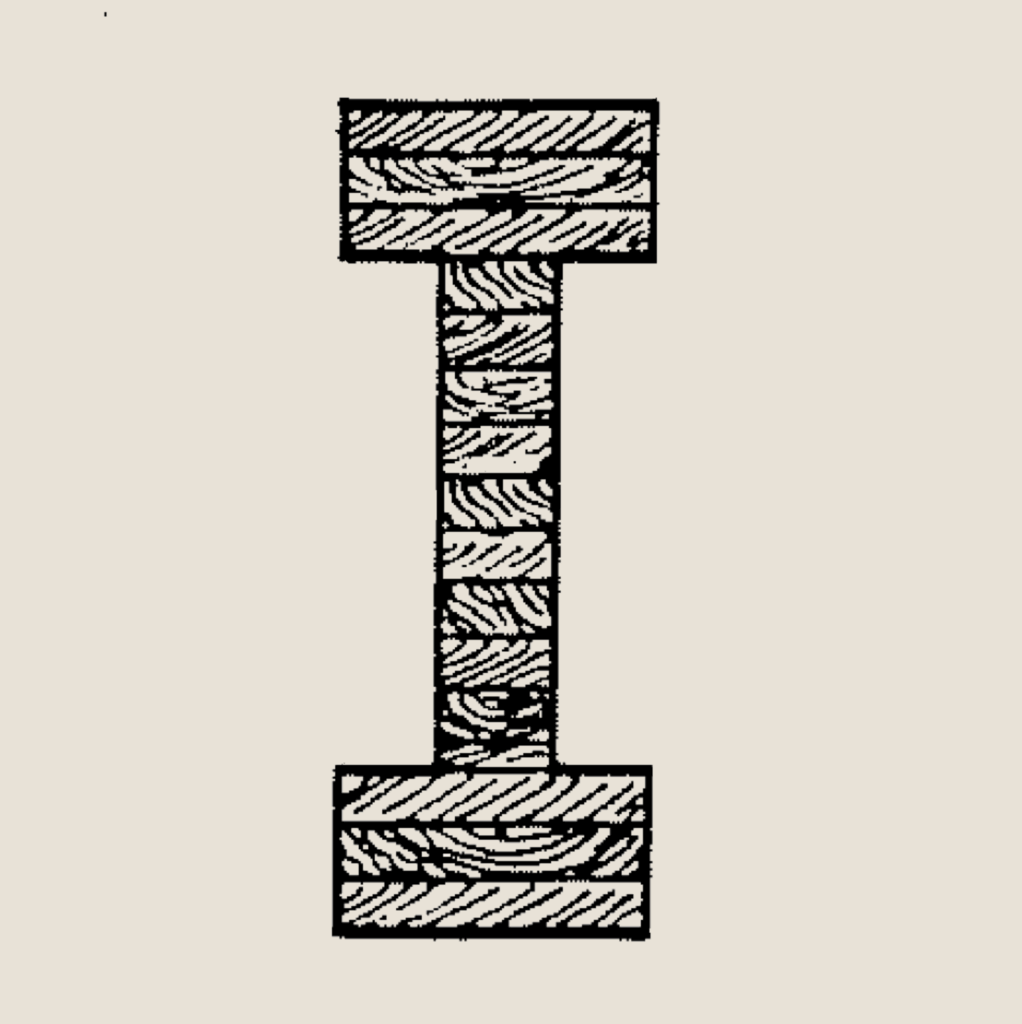
I-cross section

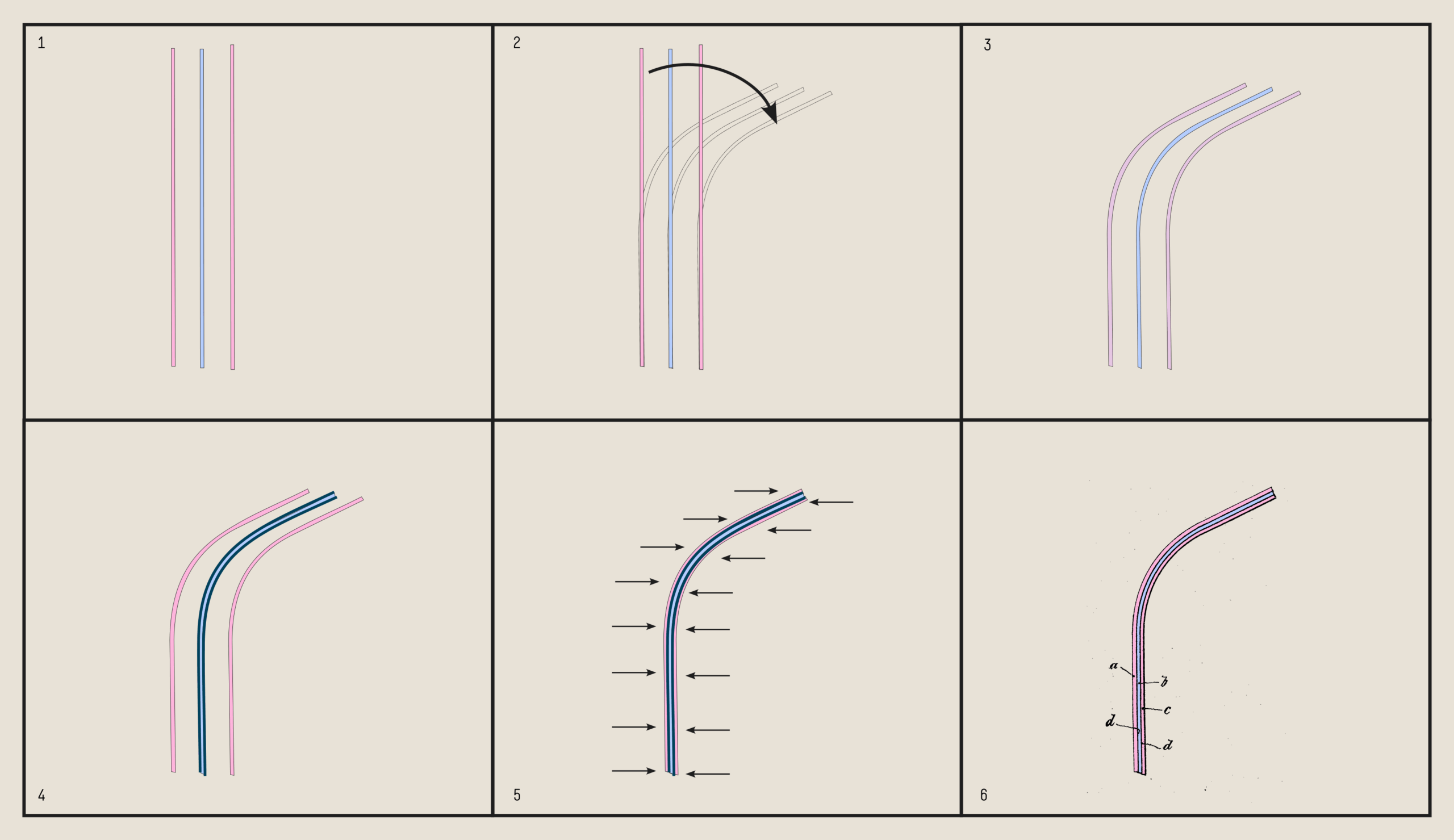
The „Hetzer” construction method revolutionised timber construction: by gluing together thin layers of boards (15–45 mm), beams could be freely designed in terms of shape and length – even parabolic or arched. The cross-section was always an I-profile with balanced proportions between the web and flanges, ideal for wide-span structures.

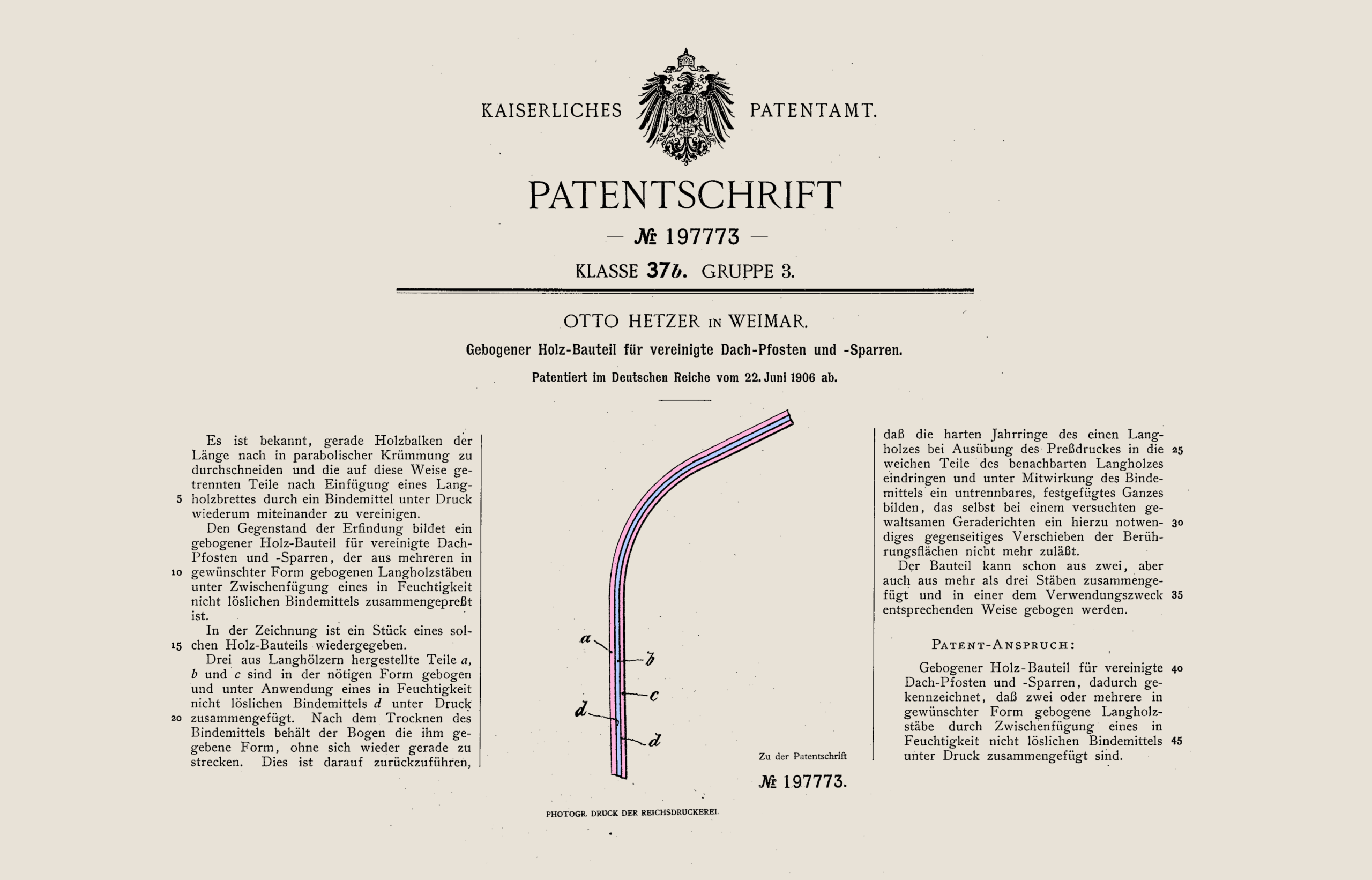
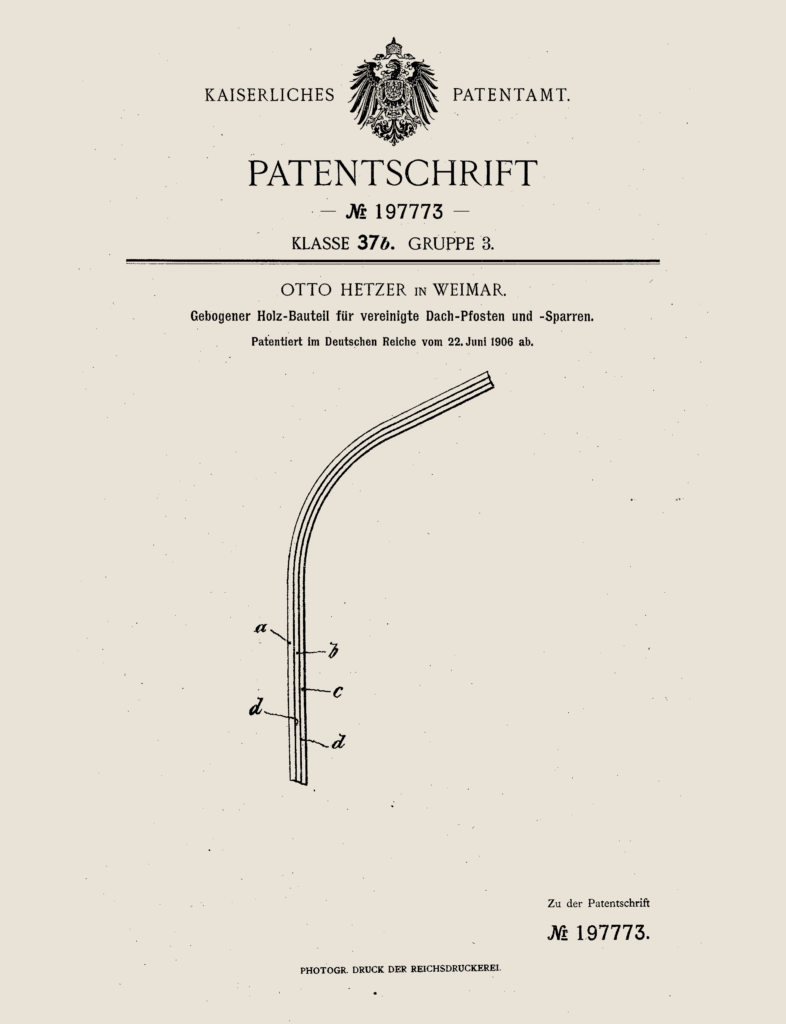
197773

On 22 June 1906, Otto Hetzer announced “Deutsche Reichspatent“ No. 197773. It describes the manufacture of curved wooden components from several long wooden rods, which are bent into the desired shape and glued together under pressure using a moisture-resistant adhesive. This process forms the basis of the “Hetzer” construction method.

136 N/mm²

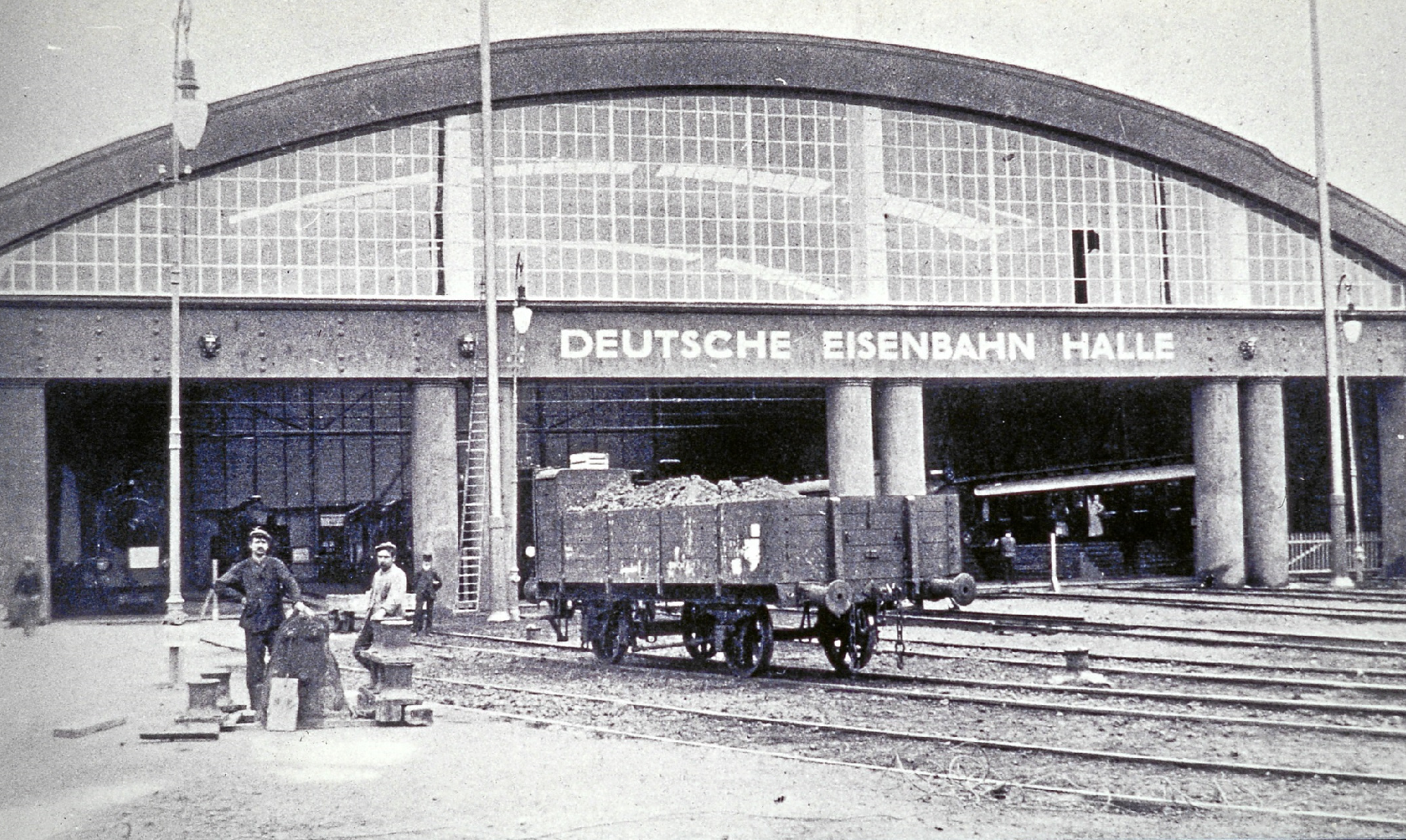
During the construction of the German railway hall at the 1910 World's Fair in Brussels, the “Hetzer” construction method made it possible to achieve a span of 43 m, which resulted in a bending stress of 136 N/mm² for the wood cross-section used. The bending stress of solid wood cross-sections, which had been standard until then, was only approx. 60–70 N/mm².

17 February 2021

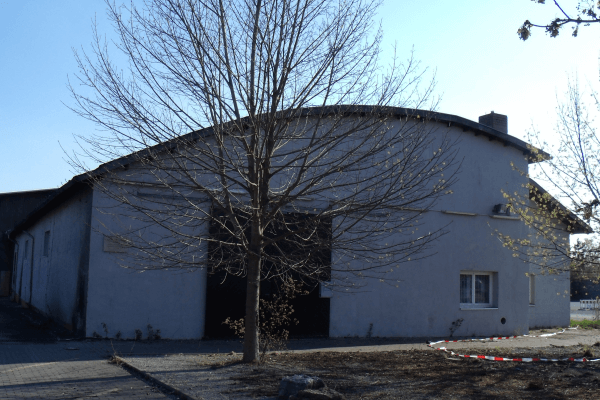
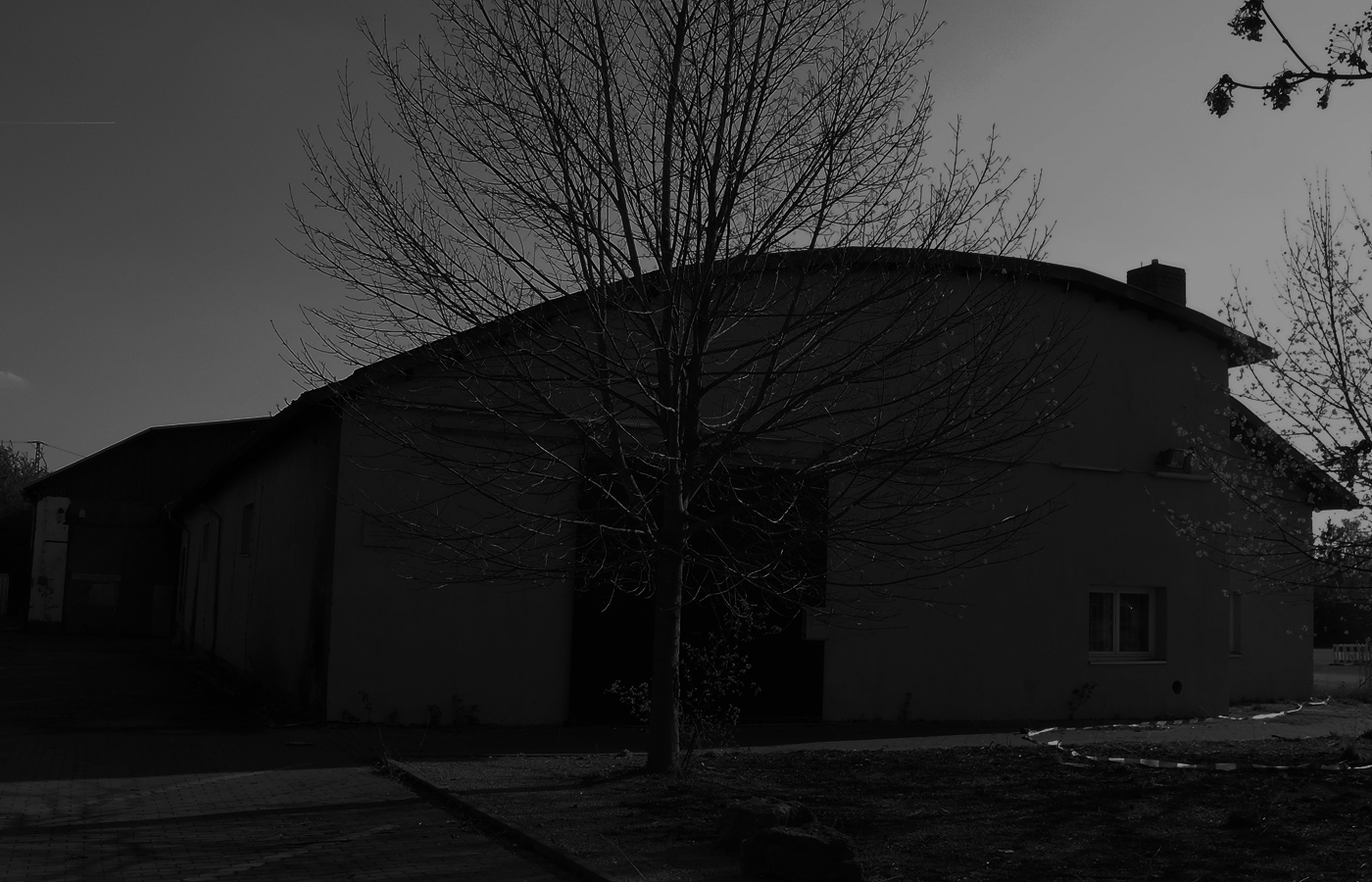
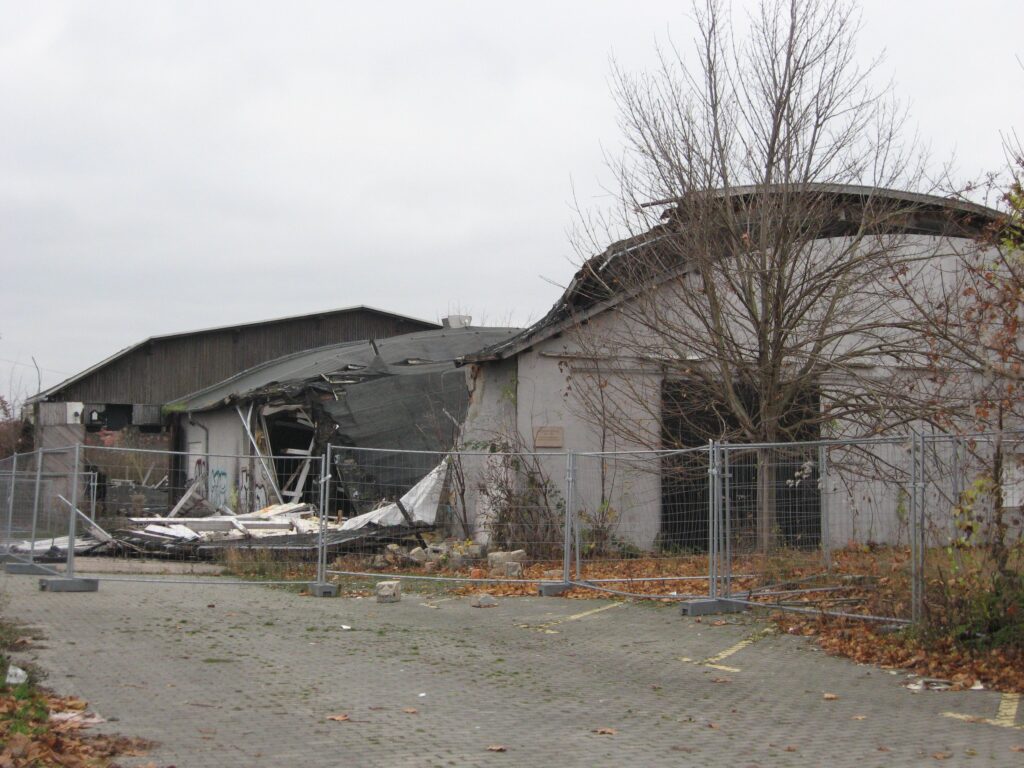
On 17 February 2021, the listed “Great Hetzer Hall” in Weimar collapsed – presumably due to heavy snow loads and significant pre-existing damage. The hall, was built at the beginning of the 20th century and had recently been standing empty.

The Hetzer Timber Halls

1907-2021

  • Historical Background
  • History of use
  • Ownership History
  • Architectural Features
  • At the end of the 19th and beginning of the 20th century, new construction methods using iron, masonry and reinforced concrete almost completely replaced traditional timber construction in bridge and hall construction, which until then had been predominantly handcrafted. Nevertheless, the long tradition of sustainable forestry and thus also timber construction remained in Germany. The “Hetzer” halls in Weimar and the process patented in 1906 demonstrated that new techniques in timber construction could be developed through engineering expertise. After the First World War, this innovation enabled economic and ecological reconstruction and led to the emergence of the glued laminated timber beam as we know it today.
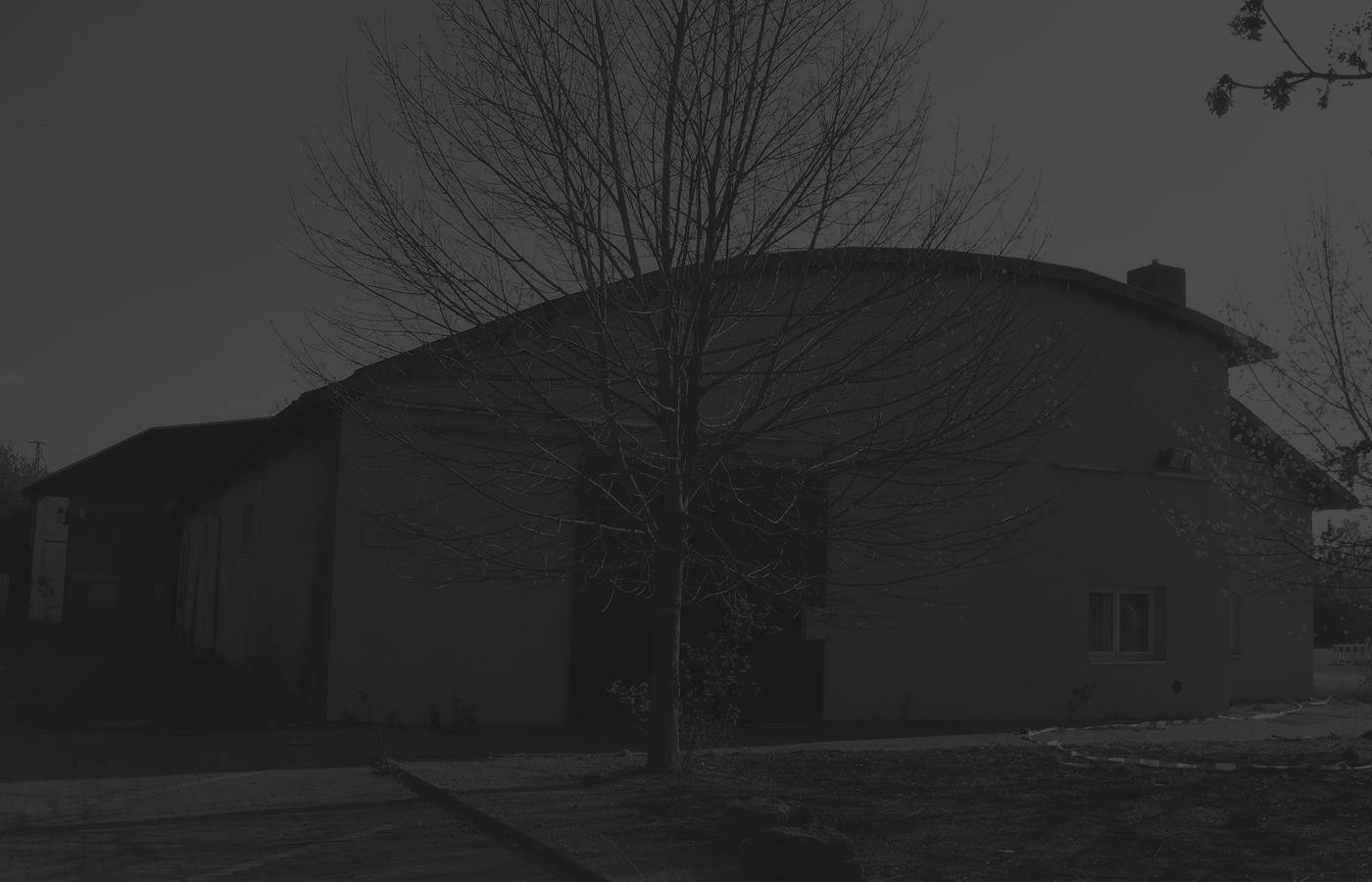
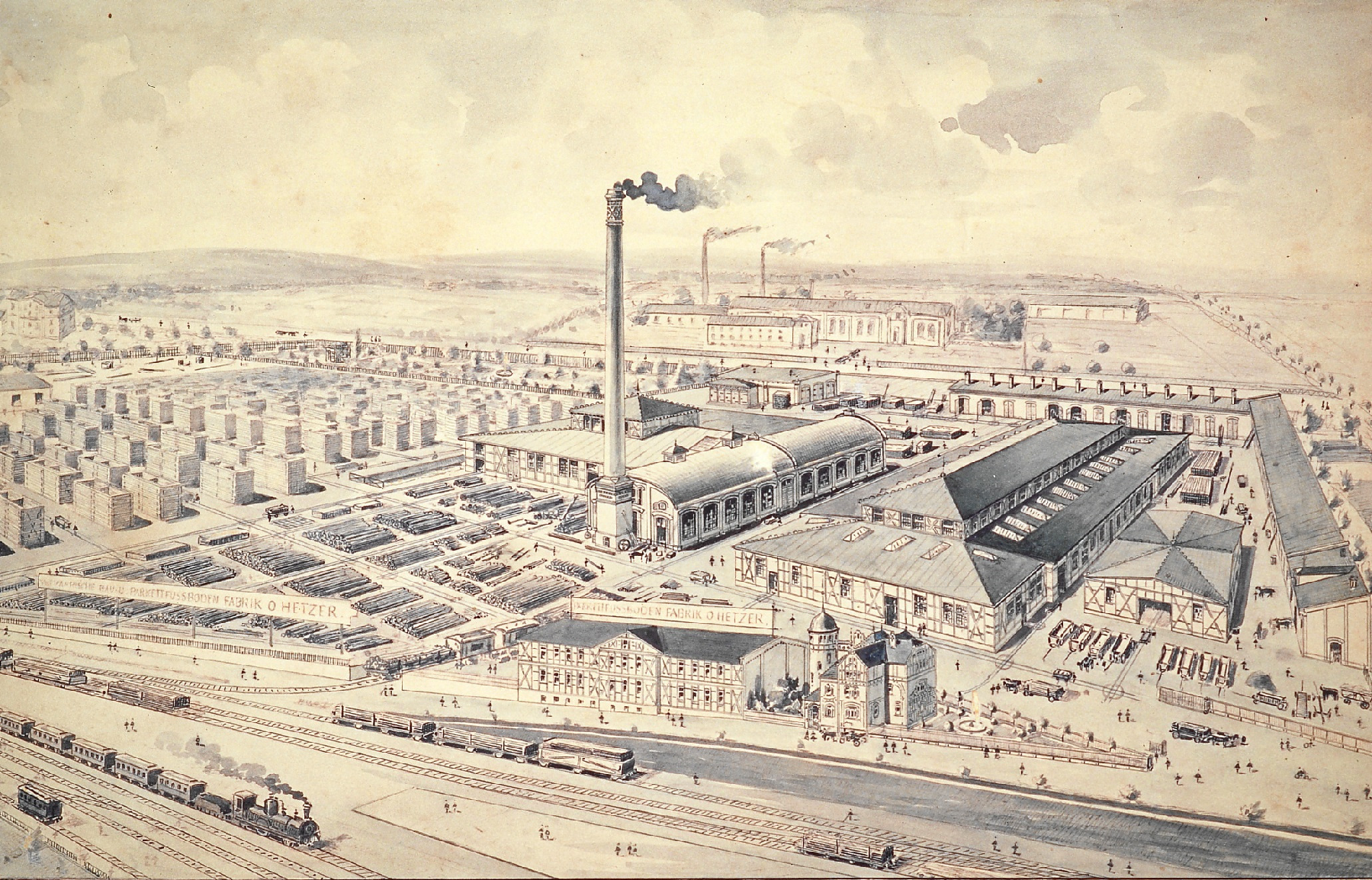
  • The two halls in Weimar were originally built by Otto Hetzer as production facilities for his patented glued laminated timber construction method. Presumably used for military purposes during the Nazi era, they served as warehouses and factory buildings for various state-owned industrial companies in the GDR. After reunification in 1990, they stood empty for a time, were used for cultural purposes for a while, and later served as warehouses and sales halls. On 17 February 2021, the large “Hetzer” hall collapsed under heavy snow; the smaller hall, which was damaged in the collapse, was demolished later that year.
  • Ownership of the Hetzer halls changed several times over the course of their history. Originally, the buildings were owned by Otto Hetzer Holzbau- und Holzpflege AG. Following the closure of the freight railway yard in the 1990s and the dissolution of the company, the halls passed into private ownership around the turn of the millennium.
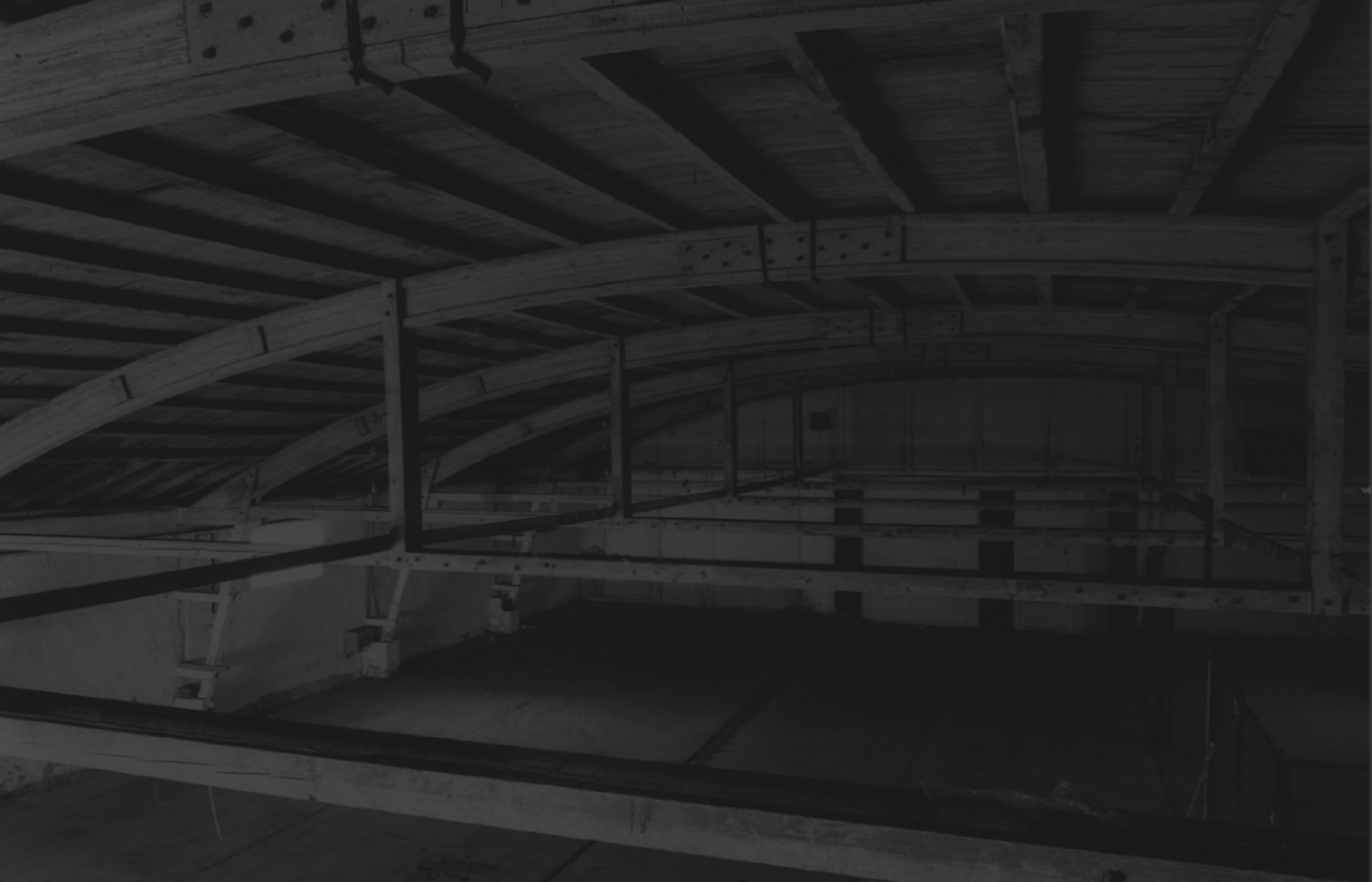
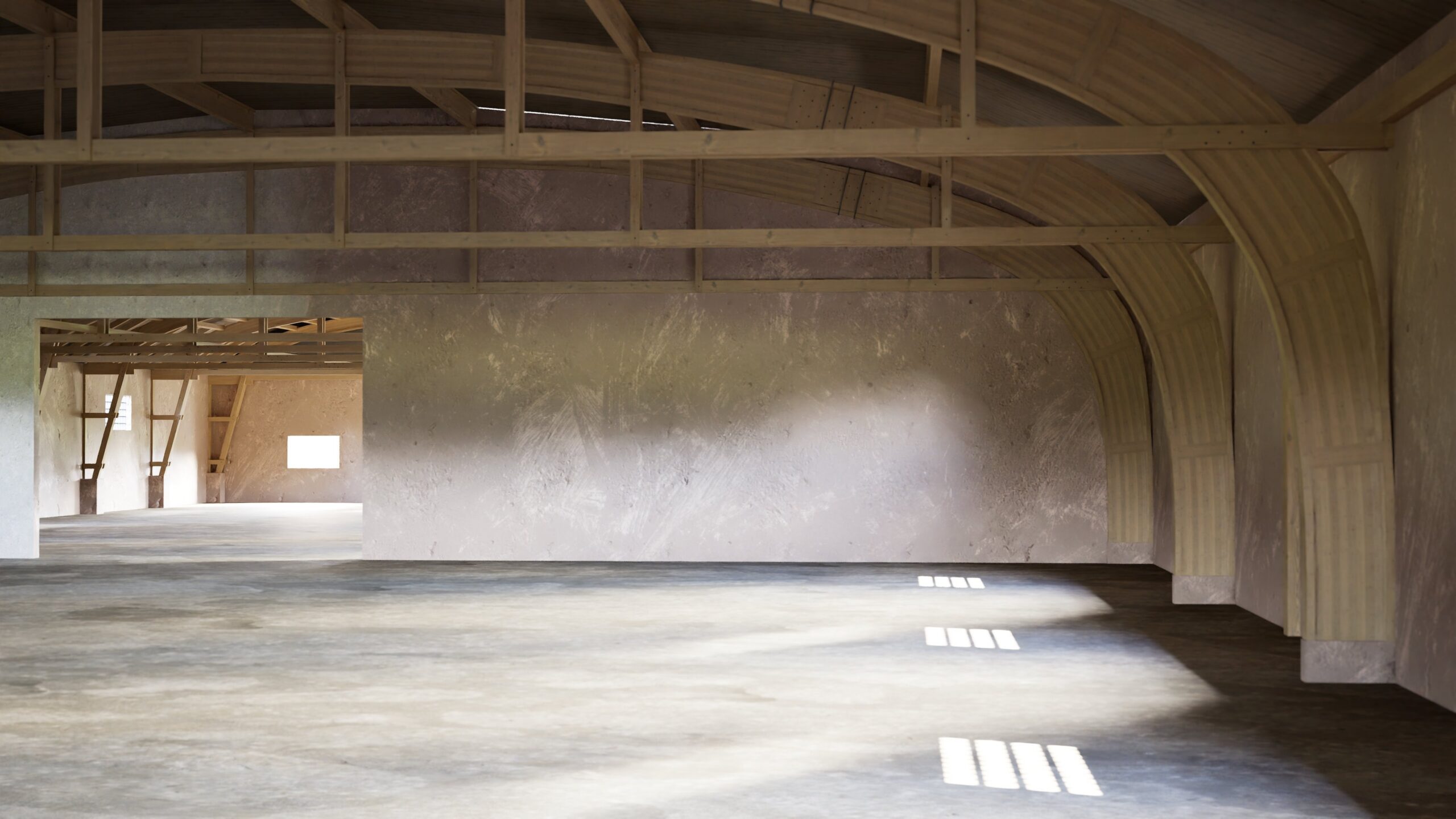
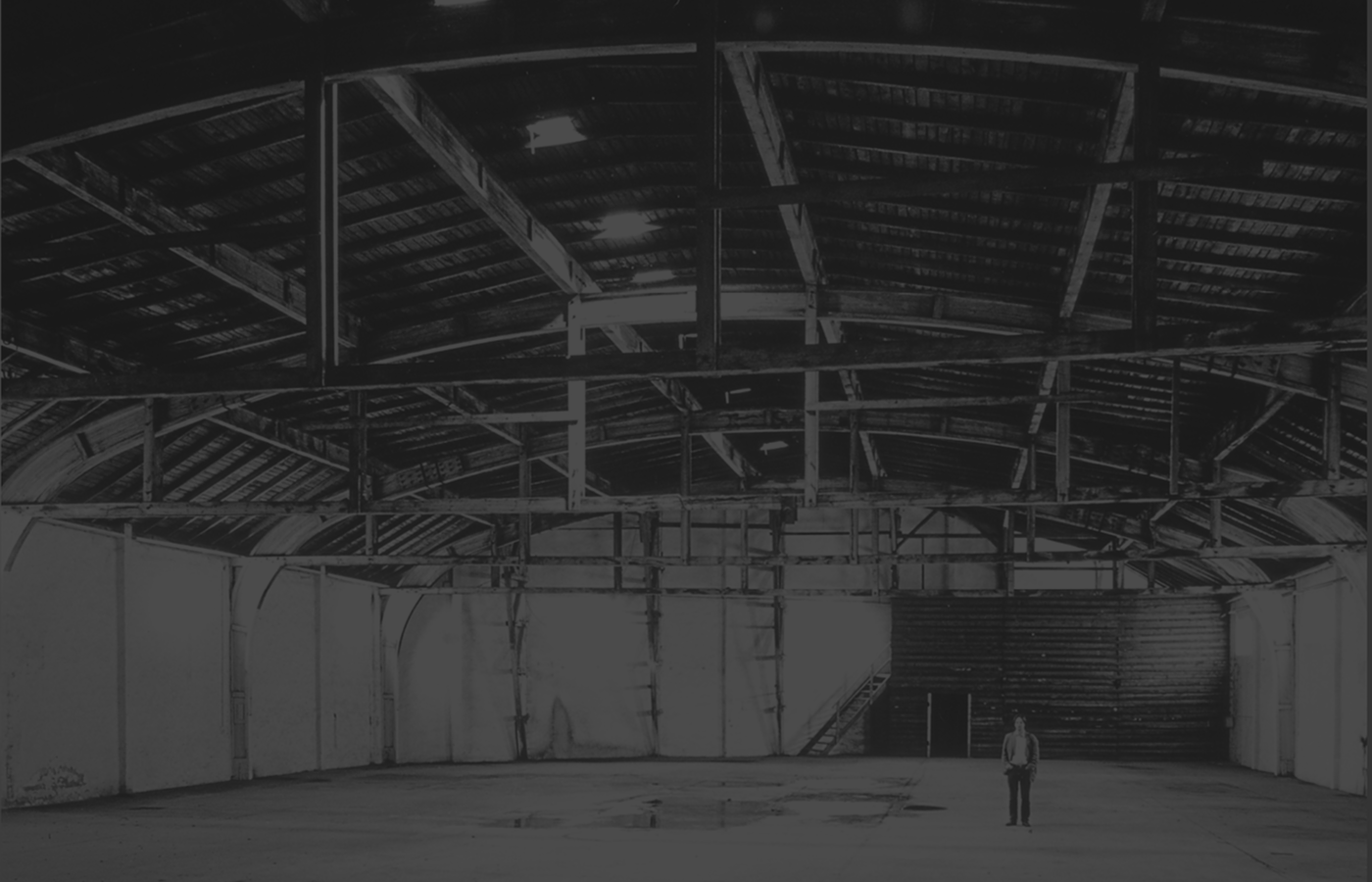
  • The halls were one of the first industrially constructed buildings in the world to feature curved glulam beams. The supporting structure consisted of an arched wooden frame construction, while the exterior walls were mostly made of brick masonry. The curved beams gave the interior a clear, elegant and rhythmic structure.
1-4

Dive into the structure of the The Hetzer Timber Halls

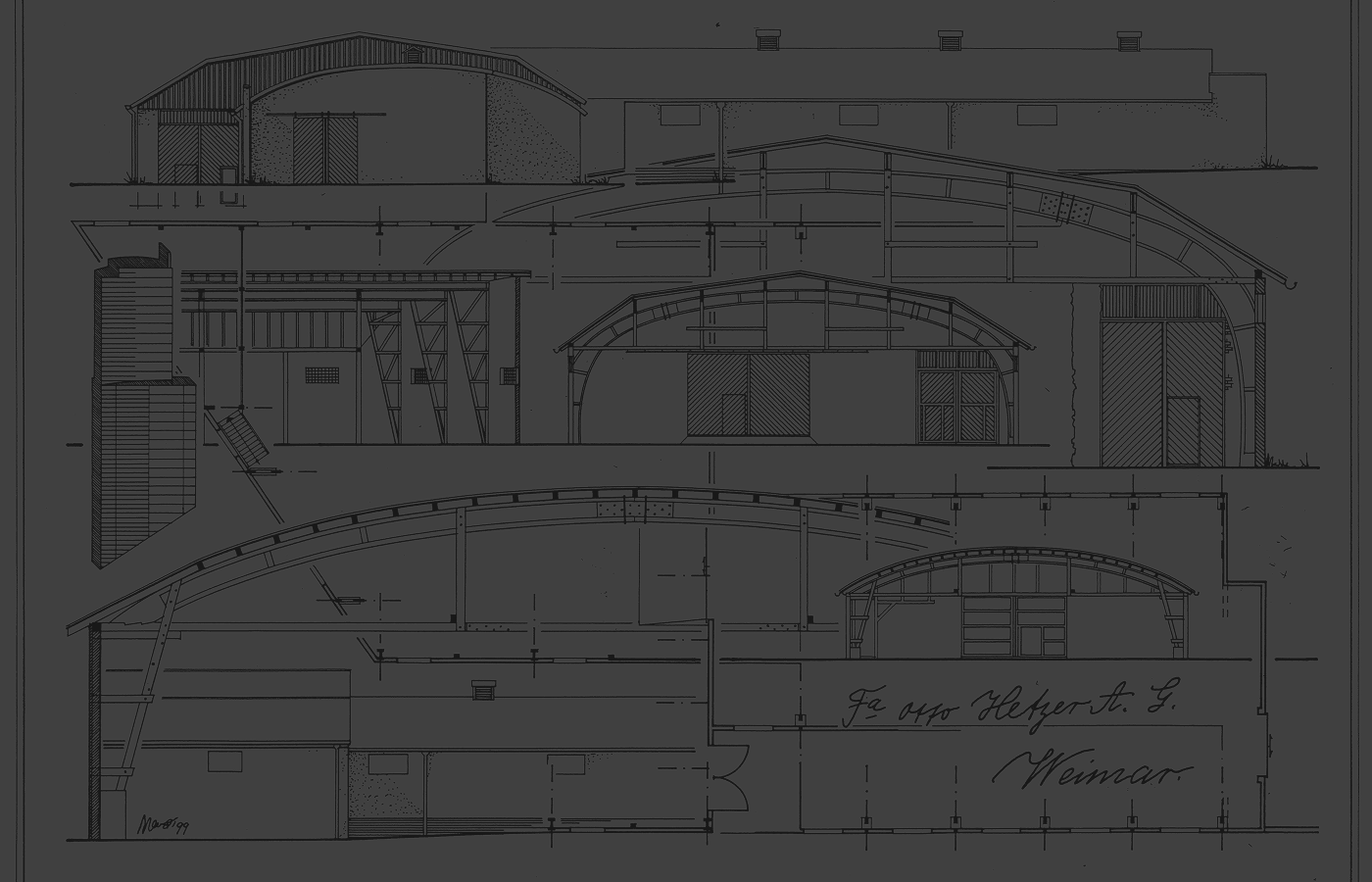
Click on the feature buttons and discover original drawings, photos, videos and explanations that tell you a story about the art of engineering.

The “Hetzer” system
The large “Hetzer” hall
The small “Hetzer” hall
The frame of the large “Hetzer” hall
The frame of the small “Hetzer” hall
Application examples of the patented Hetzer beam

The “Hetzer” system

The large “Hetzer” hall

The small “Hetzer” hall

The frame of the large “Hetzer” hall

The frame of the small “Hetzer” hall

Application examples of the patented Hetzer beam

The “Hetzer” system

The large “Hetzer” hall

The small “Hetzer” hall

The frame of the large “Hetzer” hall

The frame of the small “Hetzer” hall

Application examples of the patented Hetzer beam

The “Hetzer” system

At the beginning of the 20th century, traditional timber construction was in a difficult situation. New building materials such as steel and concrete had almost completely replaced it in bridge and hall construction. Timber remained common only in residential construction and for smaller spans. Otto Hetzer, carpenter from Weimar, recognized this situation as an opportunity to modernize timber construction using new technical processes and restore its performance capabilities.
At the turn of the century, Otto Hetzer made a decisive breakthrough:
He developed a process for permanently gluing multiple layers of wooden planks together. This technique made it possible to construct supporting structures with virtually any curvature and shape, regardless of the natural dimensions of the wood. This paved the way for the industrial production of large timber structures that were structurally efficient and economical.
In 1906, Hetzer was granted the “Deutsche Reichspatent” No. 197773. This patent describes structural elements made from several glued wooden laminations, which are pressed into a desired curved shape using a moisture-resistant adhesive. The resulting wooden components could serve as load-bearing elements in roof structures without losing their form. The invention offered the advantage that the shape of the beams could be adapted to structural requirements (such as beam height). This targeted dimensioning allowed for material savings.
By using multiple glued wooden laminates, Hetzer beams could not only be curved but also precisely shaped in cross-section. This allowed to produce rectangular, I-, C-, or T-shaped girders, with height and width adapted to specific bending stresses. Different wood species could be used for webs and flanges depending on load requirements. For the first time, it was possible to create beams with uniform bending strength—a principle that clearly differed from metallic girders. Large beams were manufactured in transportable segments and only assembled on-site using iron plates.
After 1900, Otto Hetzer Jr. (born 1876) joined his father’s company following his studies in architecture at the Technical University of Berlin-Charlottenburg. Contemporary reports suggest that he played a key role in further developing curved glued-laminated timber beams. He was particularly committed to promoting the use of free-spanning Hetzer beams and to marketing licenses and patents both domestically and abroad. The first tests of curved beams took place at the new factory site in Weimar—a milestone in the practical implementation of the Hetzer construction method.
The major breakthrough came in 1910 at the World Exhibition in Brussels. There, an exhibition hall for the “Deutschen Reichsbahn” was built with a span of 43 meters—a record for timber structures at the time. Constructed by the Munich firm Kügler and Steinbeis & Cons. from Rosenheim, the hall impressively demonstrated the performance of the Hetzer system.
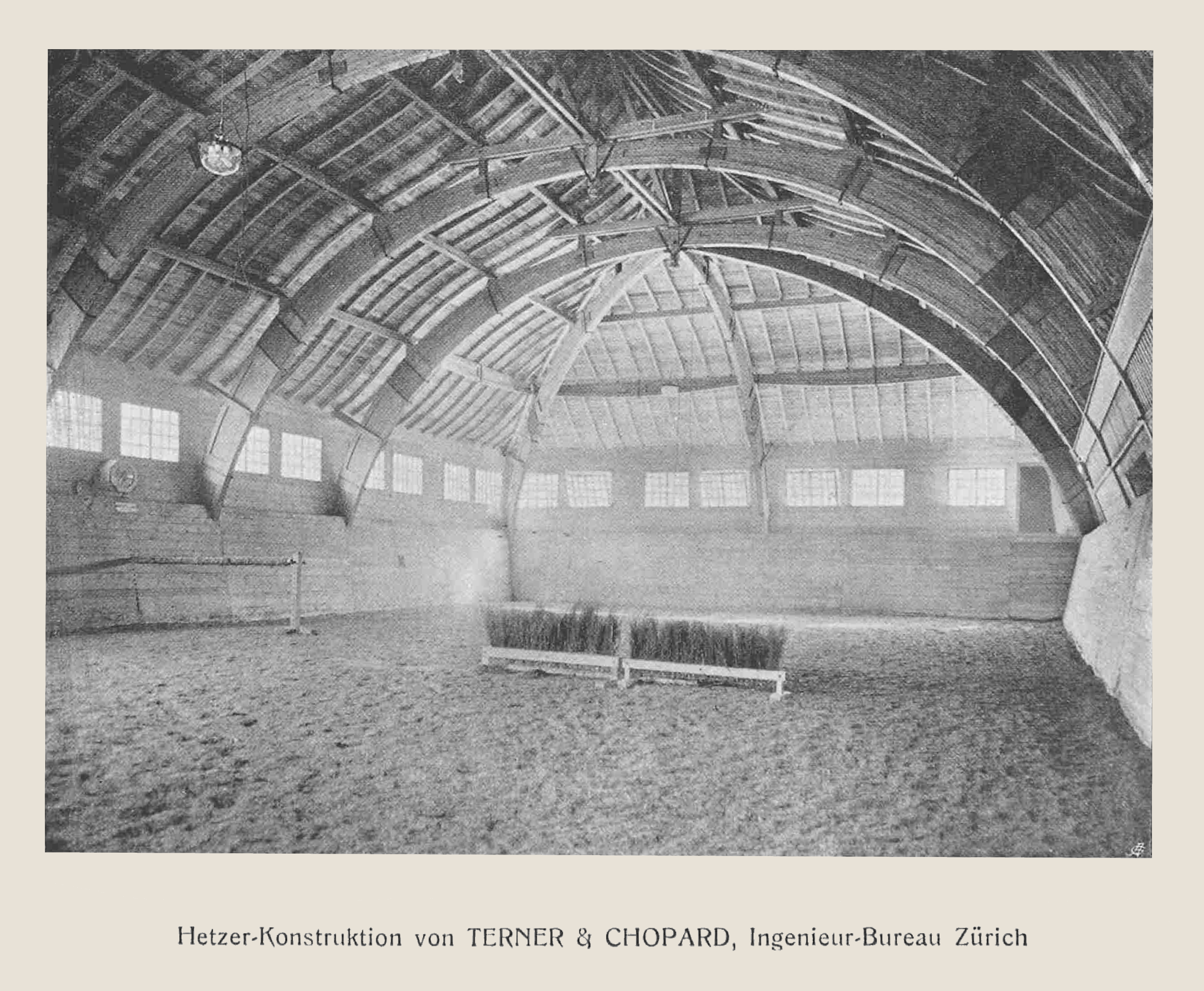
As early as 1909, Hetzer’s patents were sold to Switzerland. The Zurich engineering firm Terner & Chopard acquired the rights and implemented the construction method in numerous projects—including the “Reithalle” in St. Moritz and the domes of the University of Zurich. From Weimar, the Hetzer system evolved into an internationally applied engineering principle that decisively shaped modern glued-laminated timber construction.
1/7

The large “Hetzer” hall

The Weimar “Hetzer” halls are an early example of the use of the “Hetzer” construction method in hall construction. Based on the glued laminated timber patent developed by Otto Hetzer, it demonstrates how curved glued laminated timber beams enable large spans with high material efficiency. The following section examines the large “Hetzer” hall – its structural design, supporting structure and underlying engineering concept.
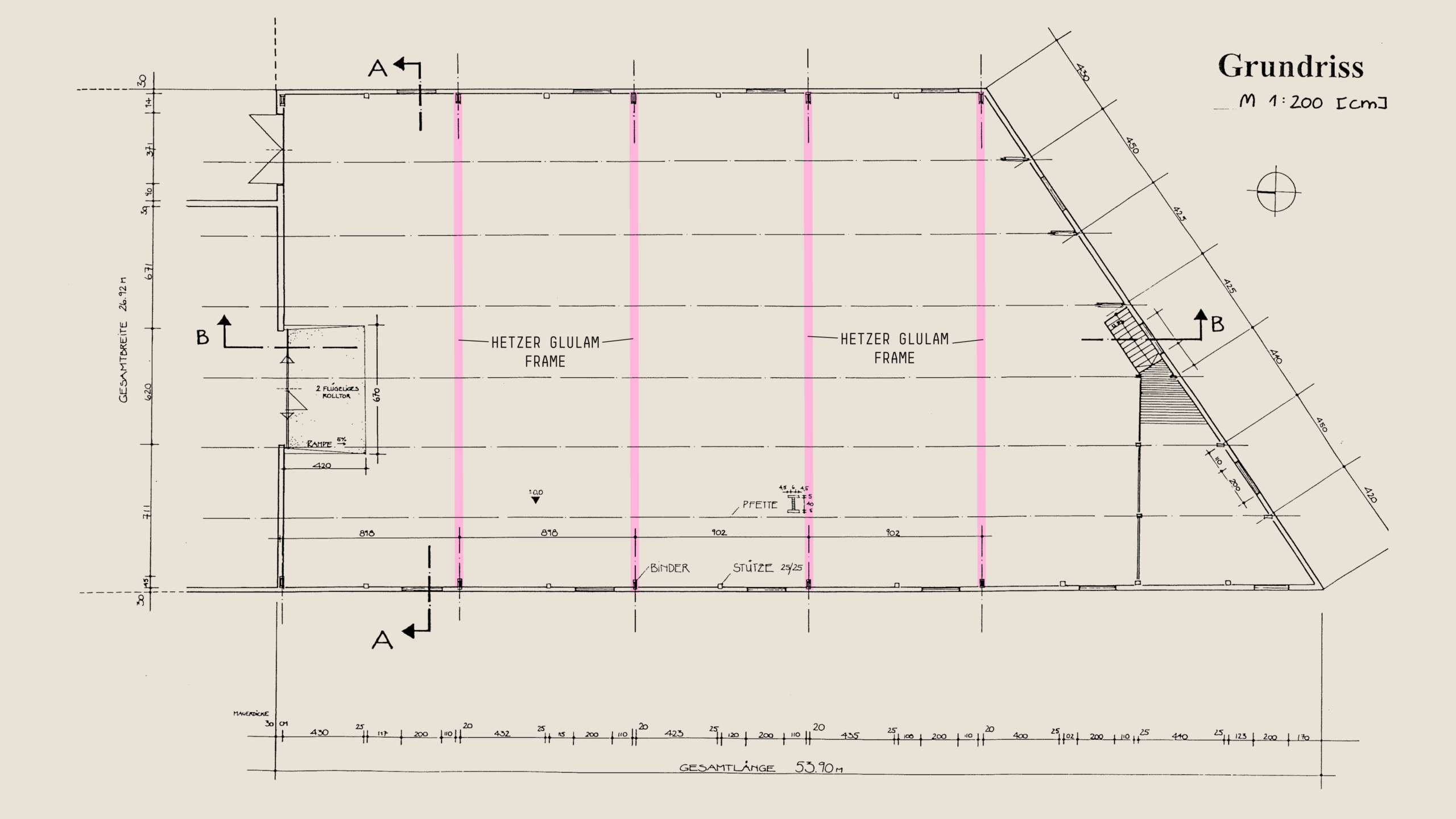
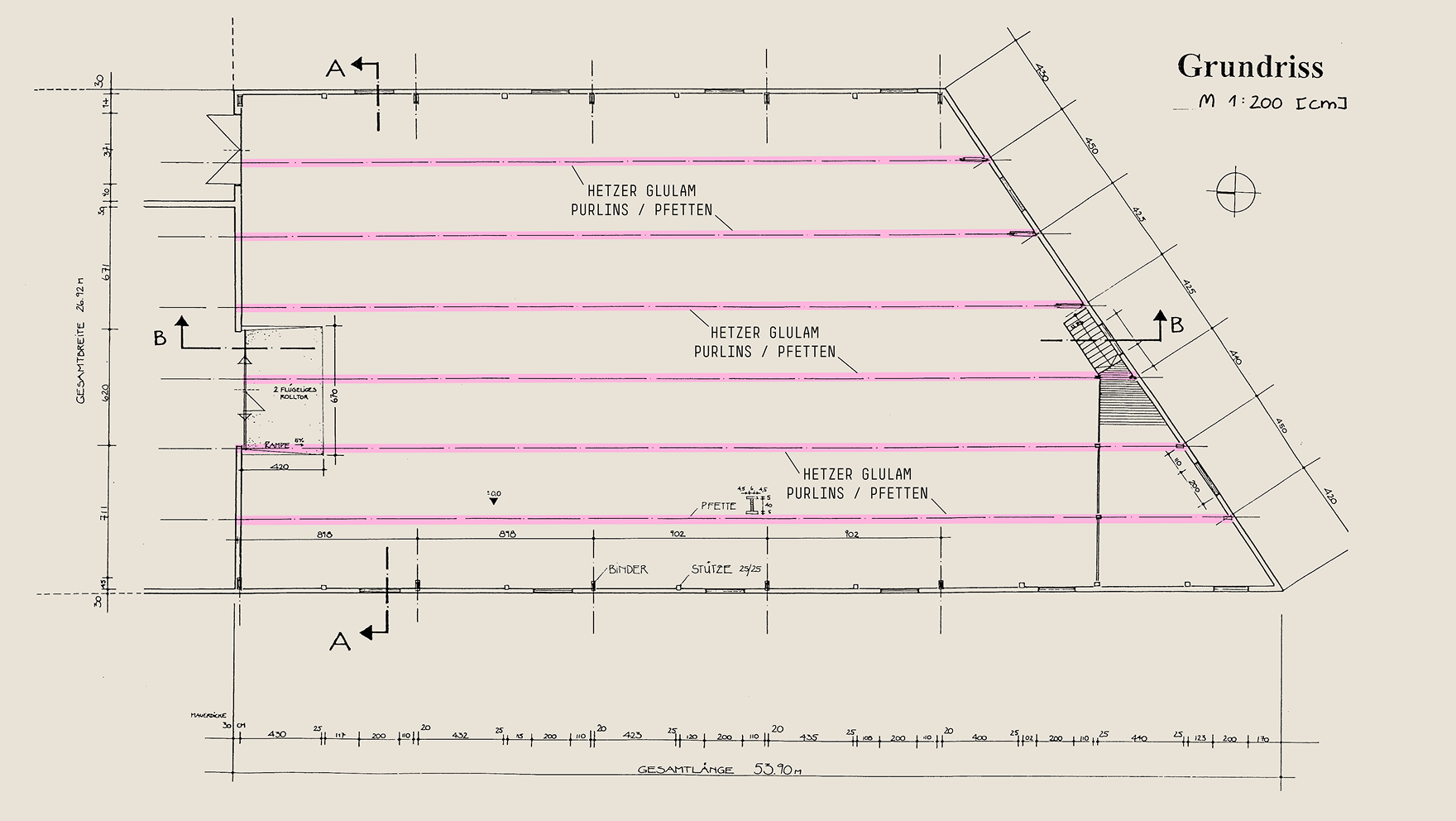
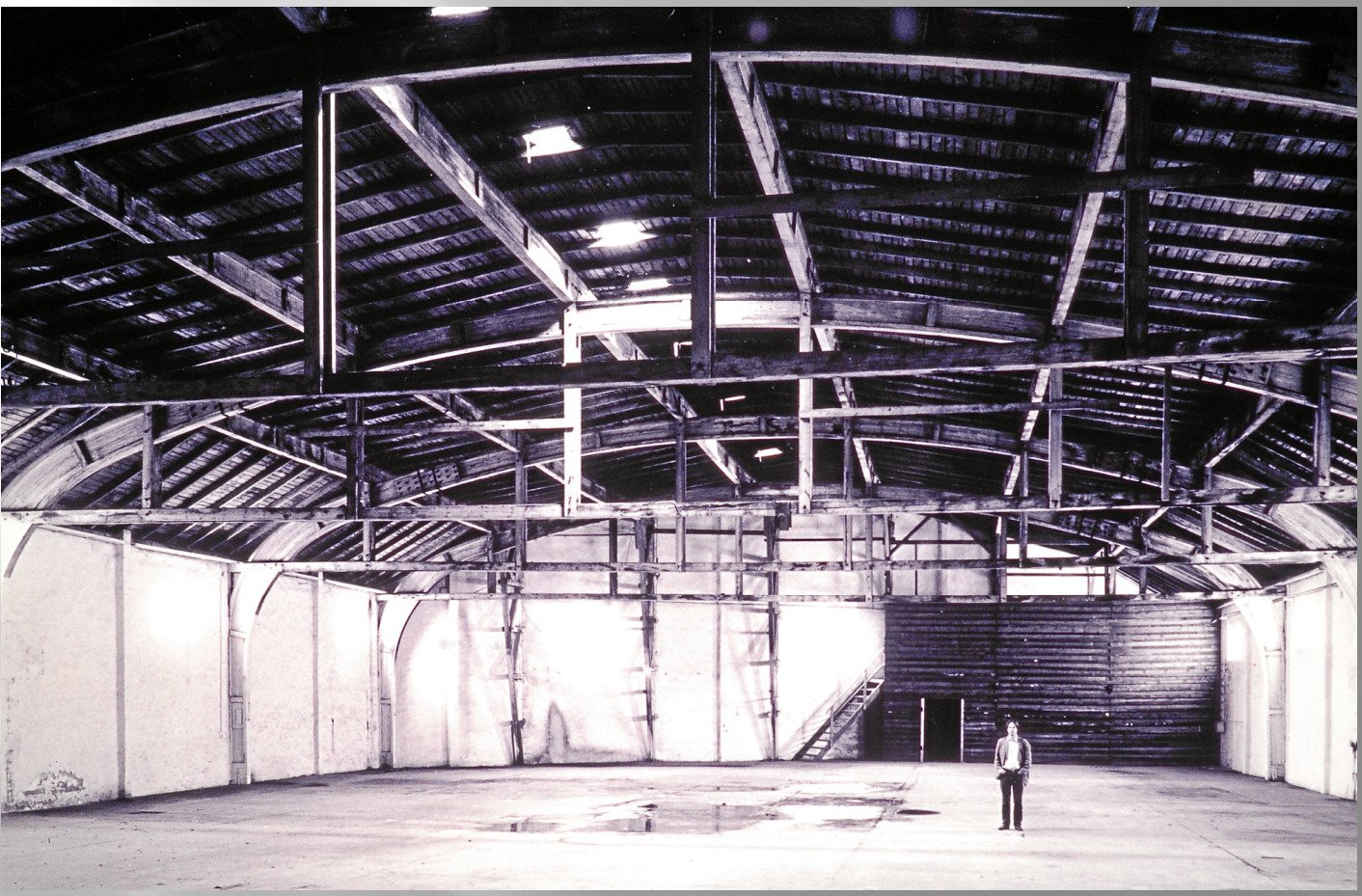
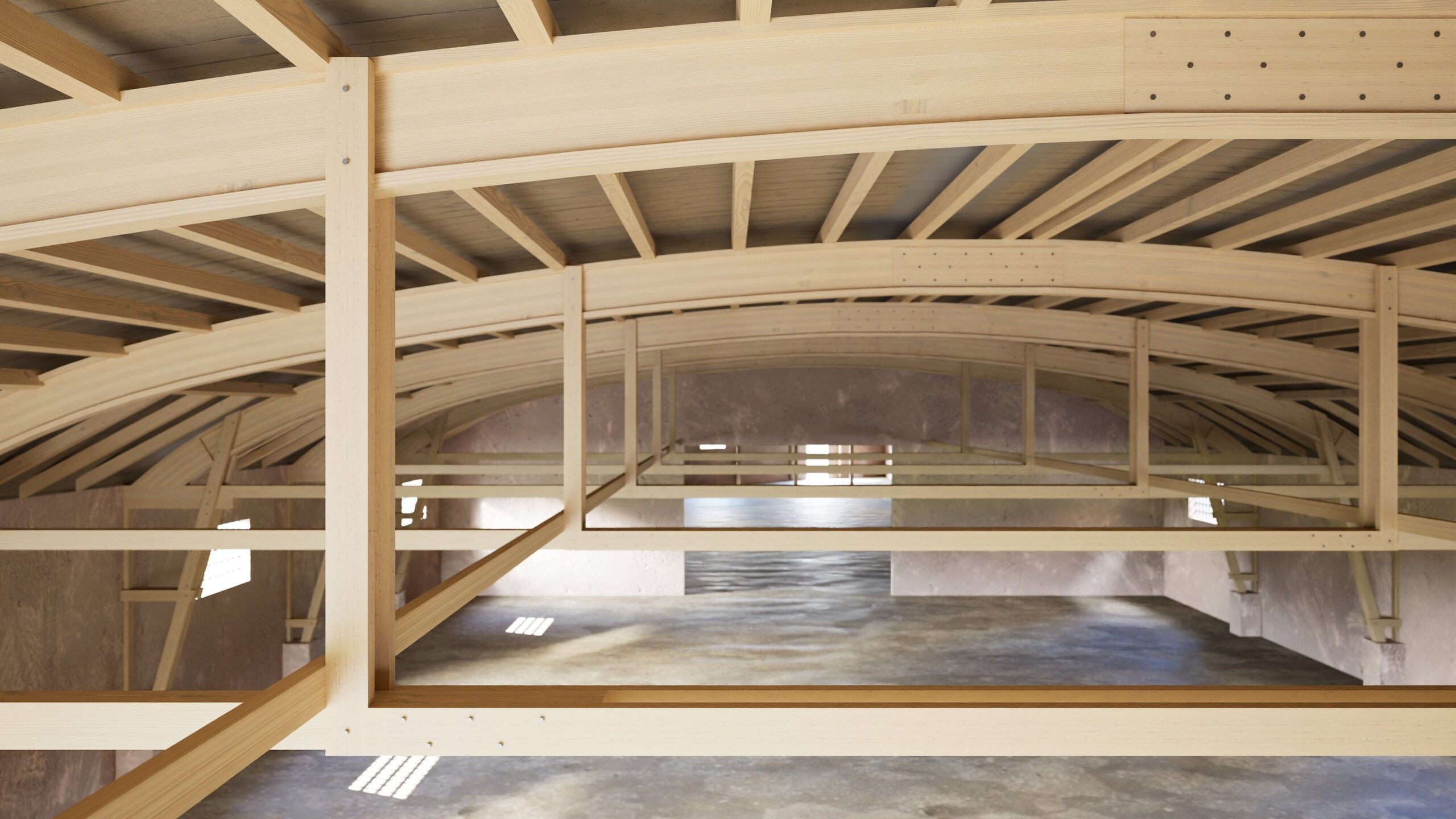
The large “Hetzer” hall measures around 27 m in width and up to 54 m in length. With a span of around 25 m and a ridge height of around 9 m, it provides a largely column-free interior space.
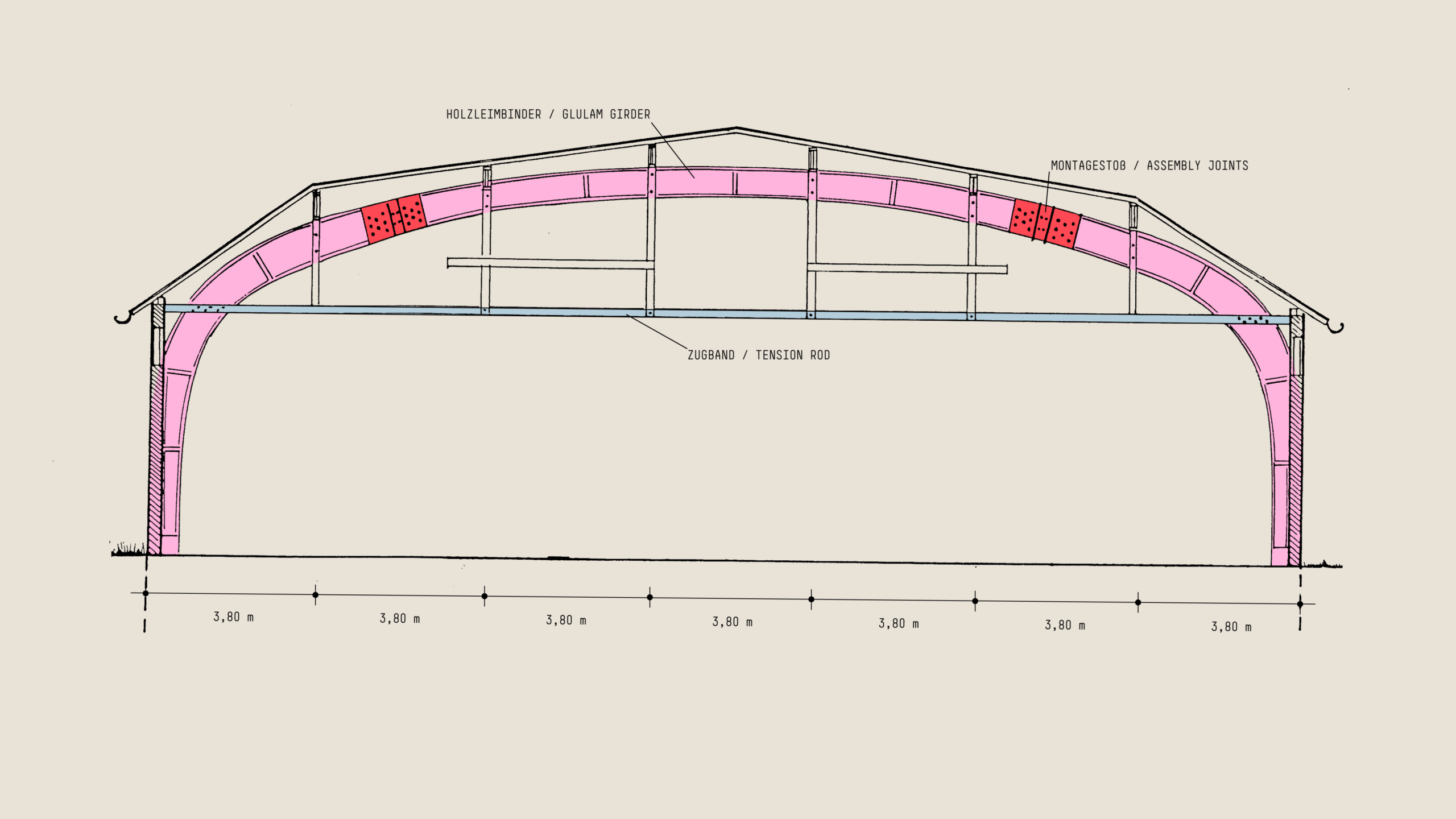
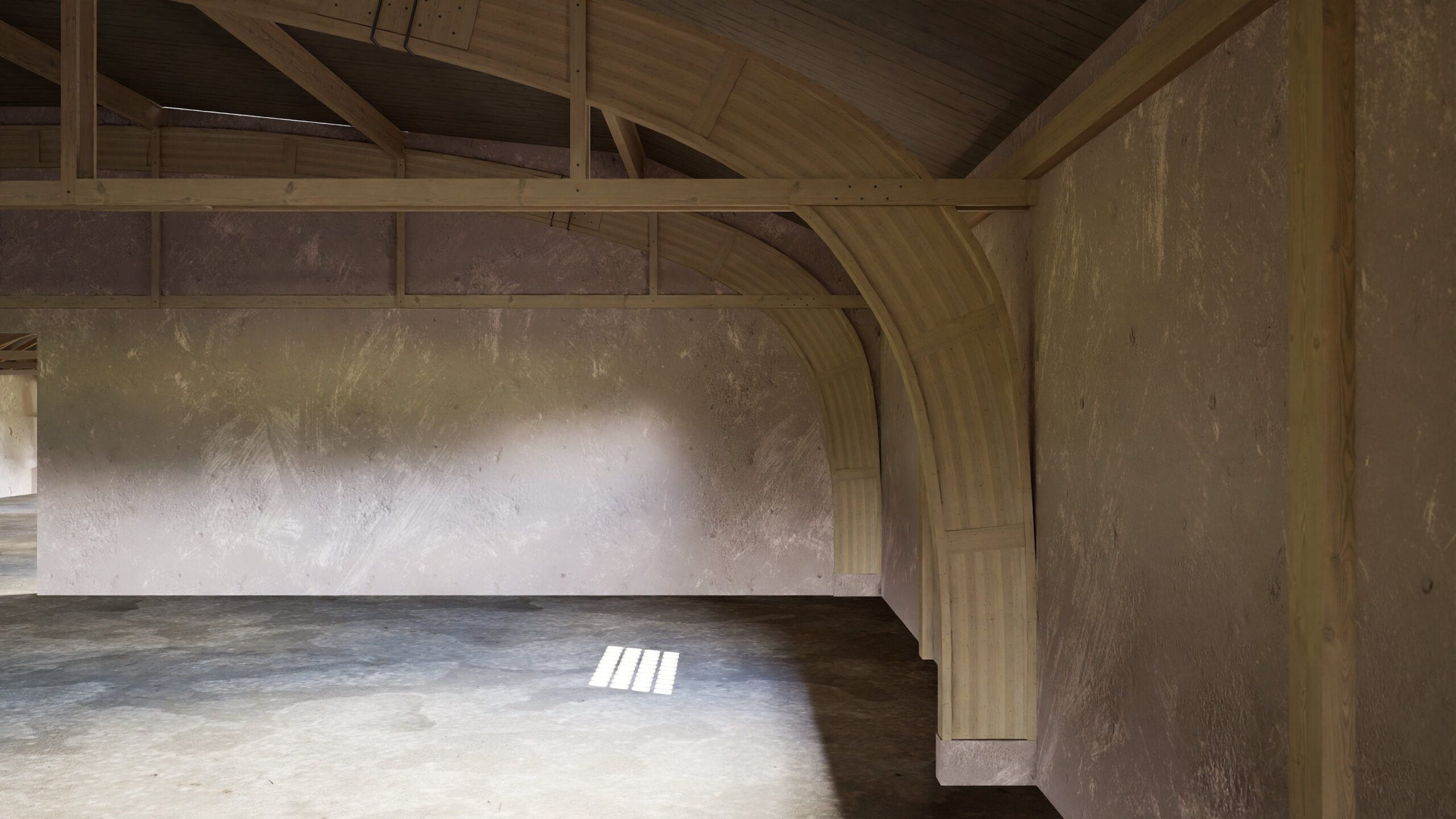
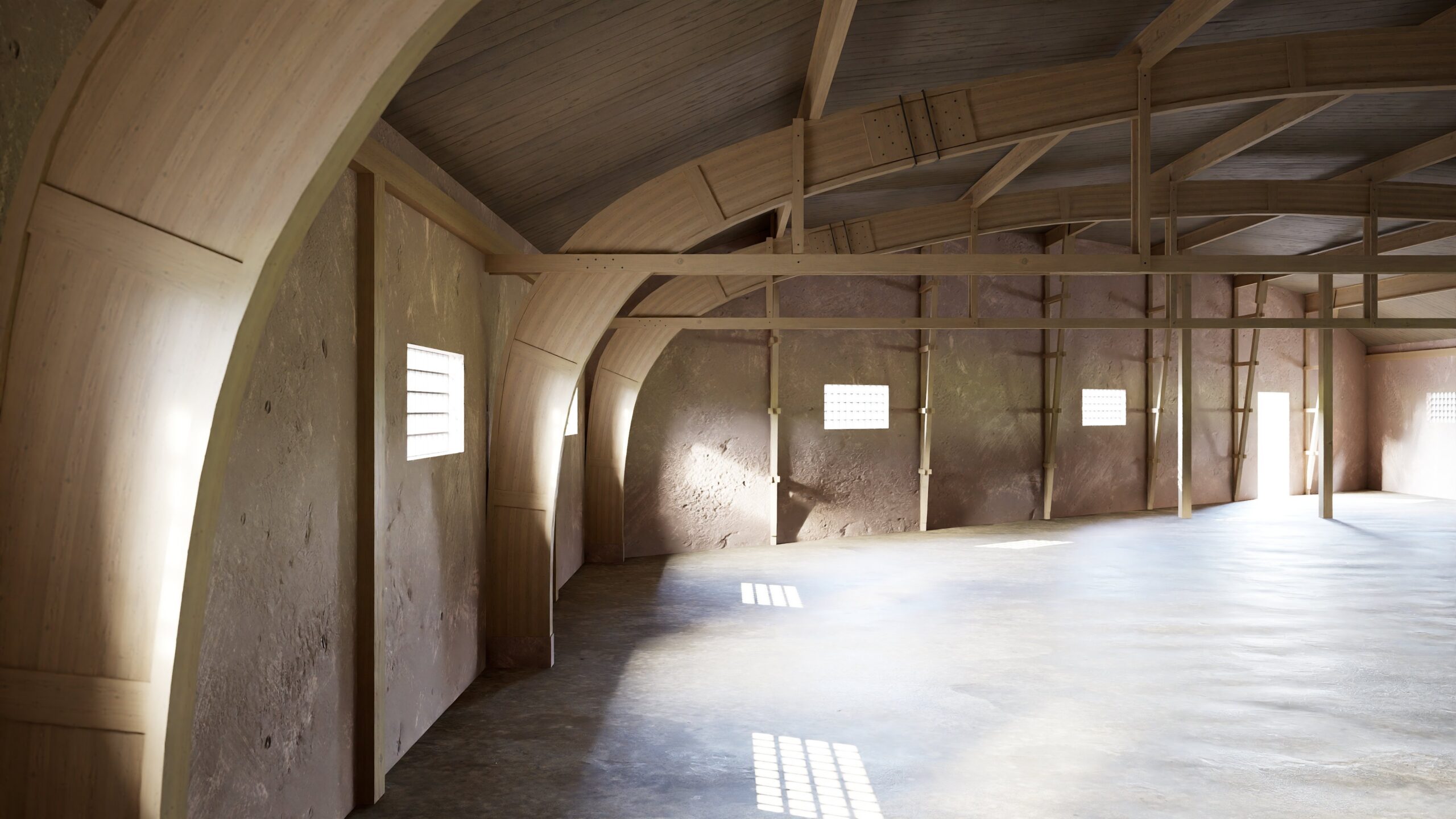
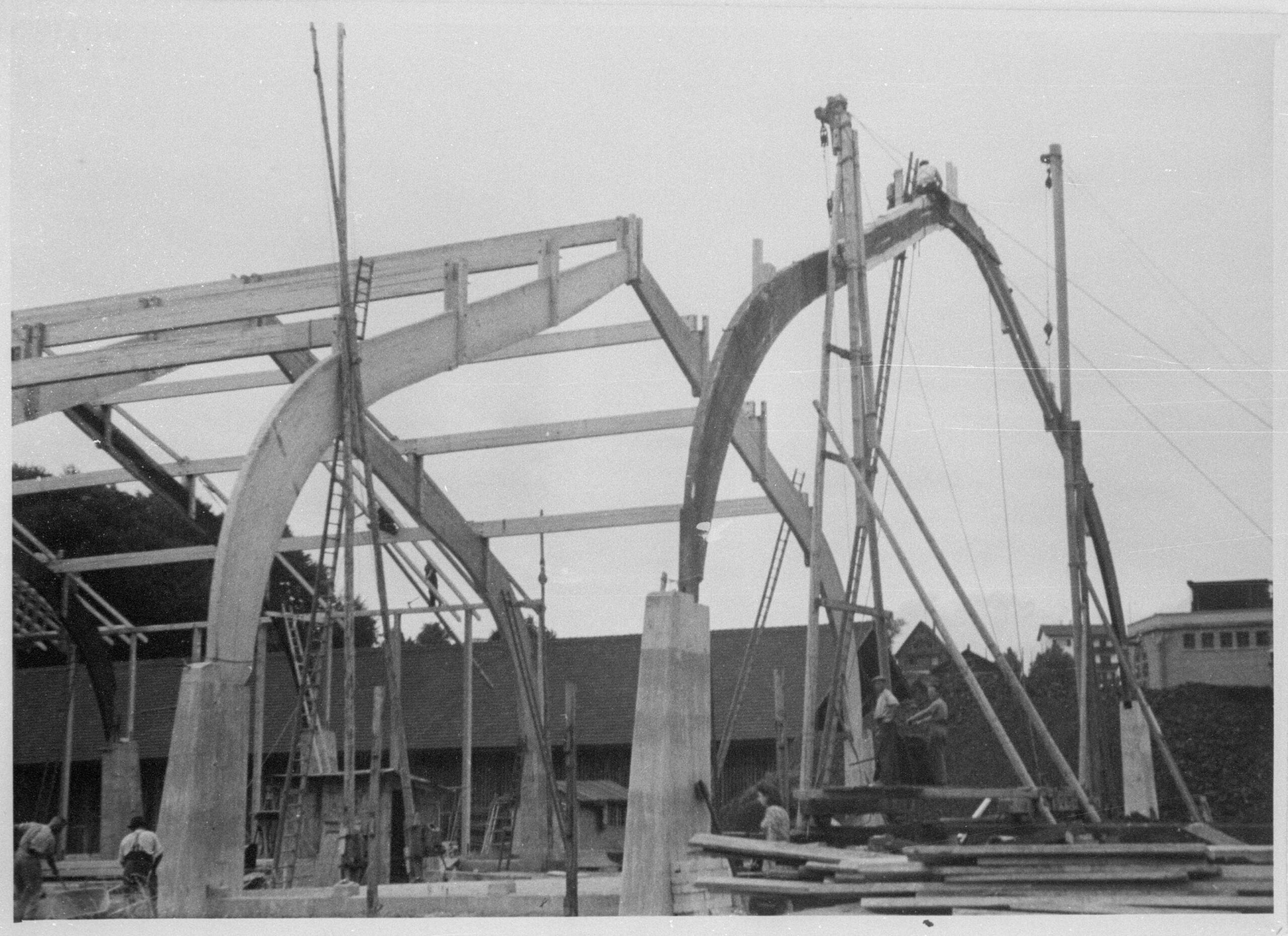
The load bearing structure consists of four rigid double-hinged frames made of curved glued laminated timber beams, which are arranged at an axial distance of approximately 9 m. Each frame is composed of three prefabricated glued laminated timber elements, which were connected using assembly joints. They are supplemented by a tension strap that supports horizontal bracing.
The roof loads are absorbed by a roof covering made of wooden planks and initially transferred to transverse solid wood beams. From there, the load is transferred via six glued laminated purlins to the curved frame girders. These transfer the forces in a controlled manner to the foundations and ultimately to the ground– an efficient system for large spans in timber construction.
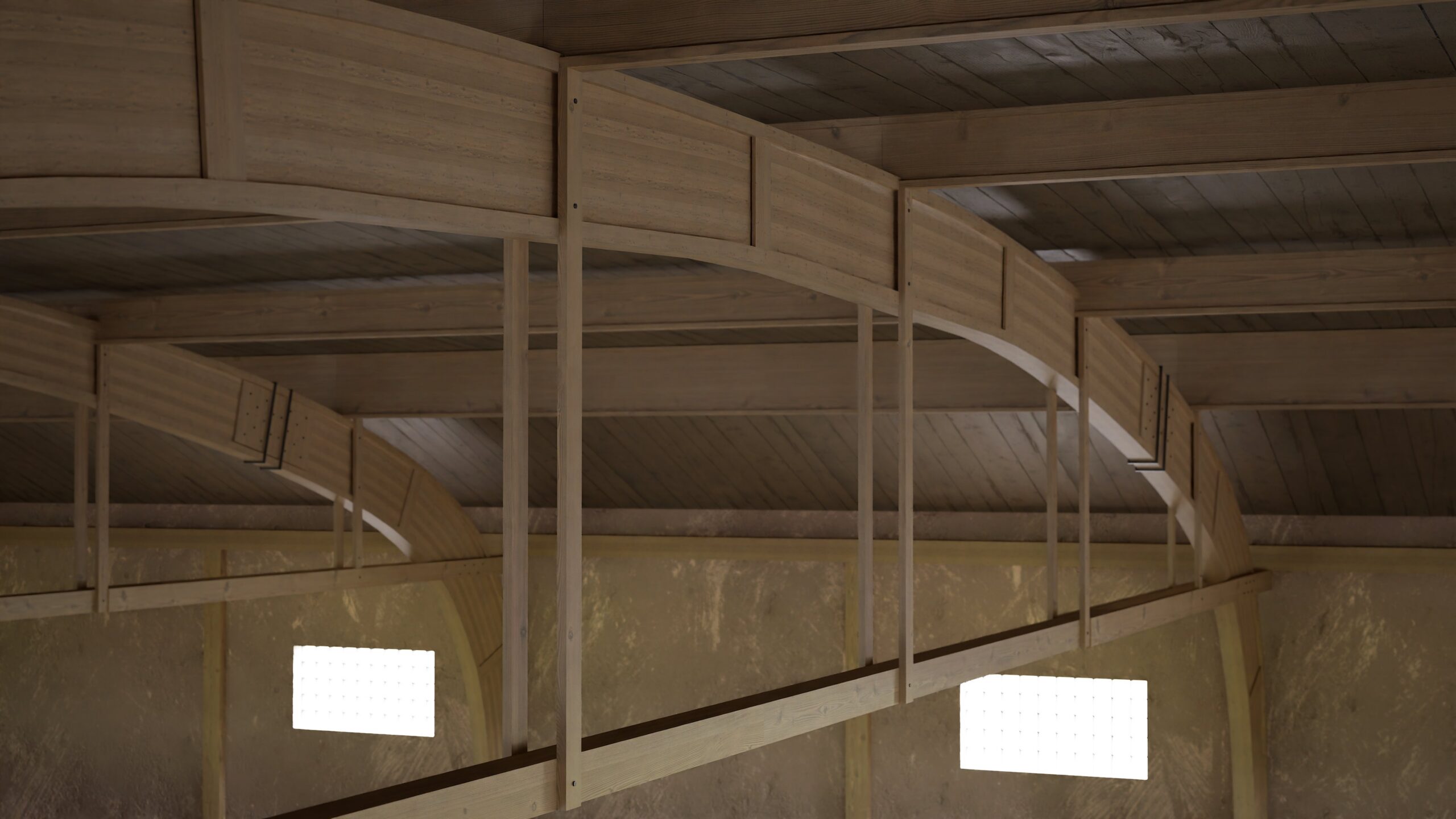
The purlins are also designed as glued laminated timber beams with an I-section. They connect the frames and absorb vertical loads and distribute the load horizontally in the longitudinal direction. Their design shows how consistently the Hetzer construction method was used in the construction of the large hall.
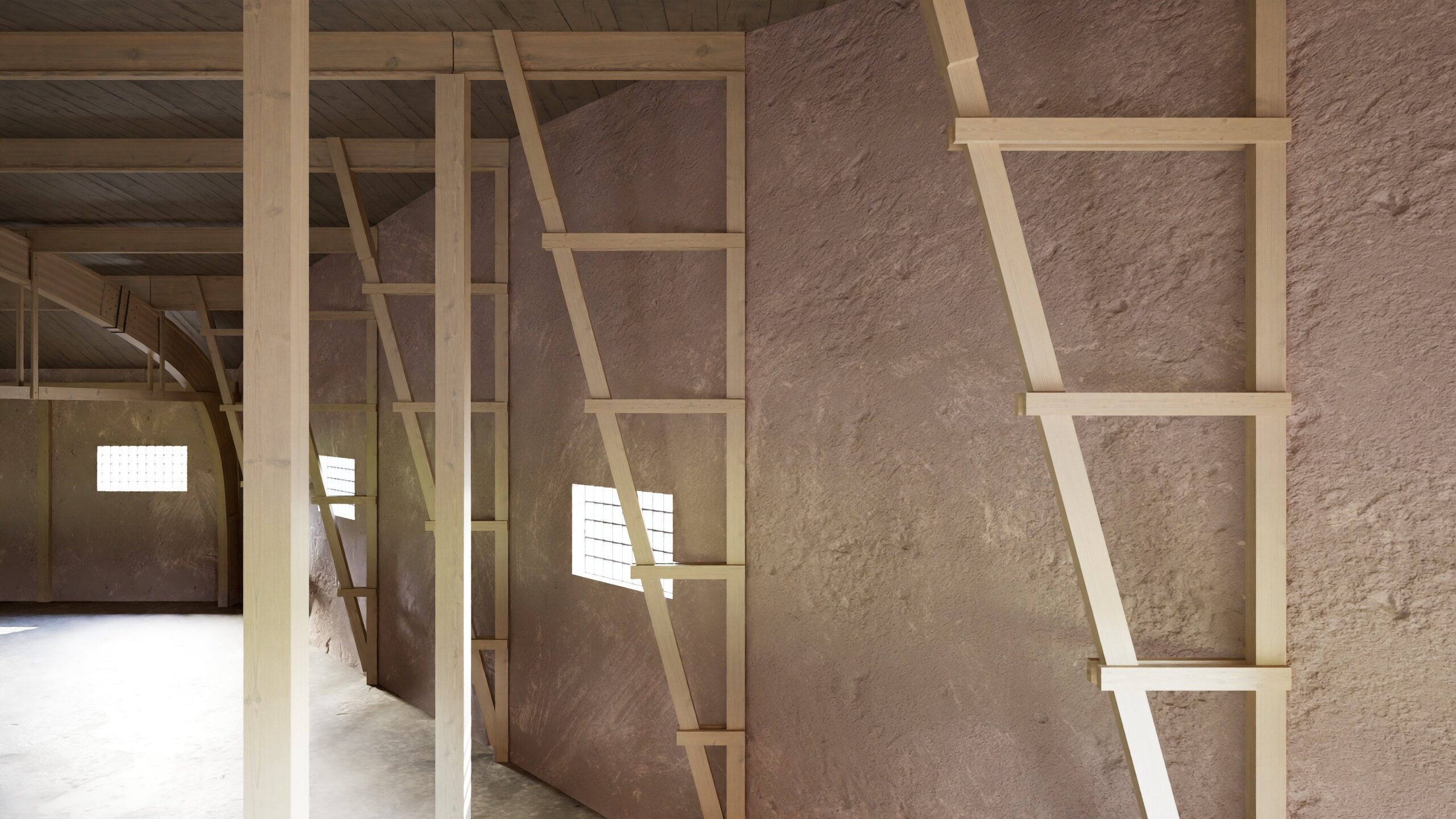
In the transverse direction, the rigid double-jointed frames reinforce the hall. In the longitudinal direction, six glued laminated timber purlins connect the frame trusses. In addition, a diagonally arranged gable wall with a truss-like design stabilizes the structure.
1/7

The small “Hetzer” hall

The structural system of the small “Hetzer” hall follows the same basic design principles as the large hall but is designed for smaller spans and loads. Its structural concept, load transfer and bracing are described in more detail below.
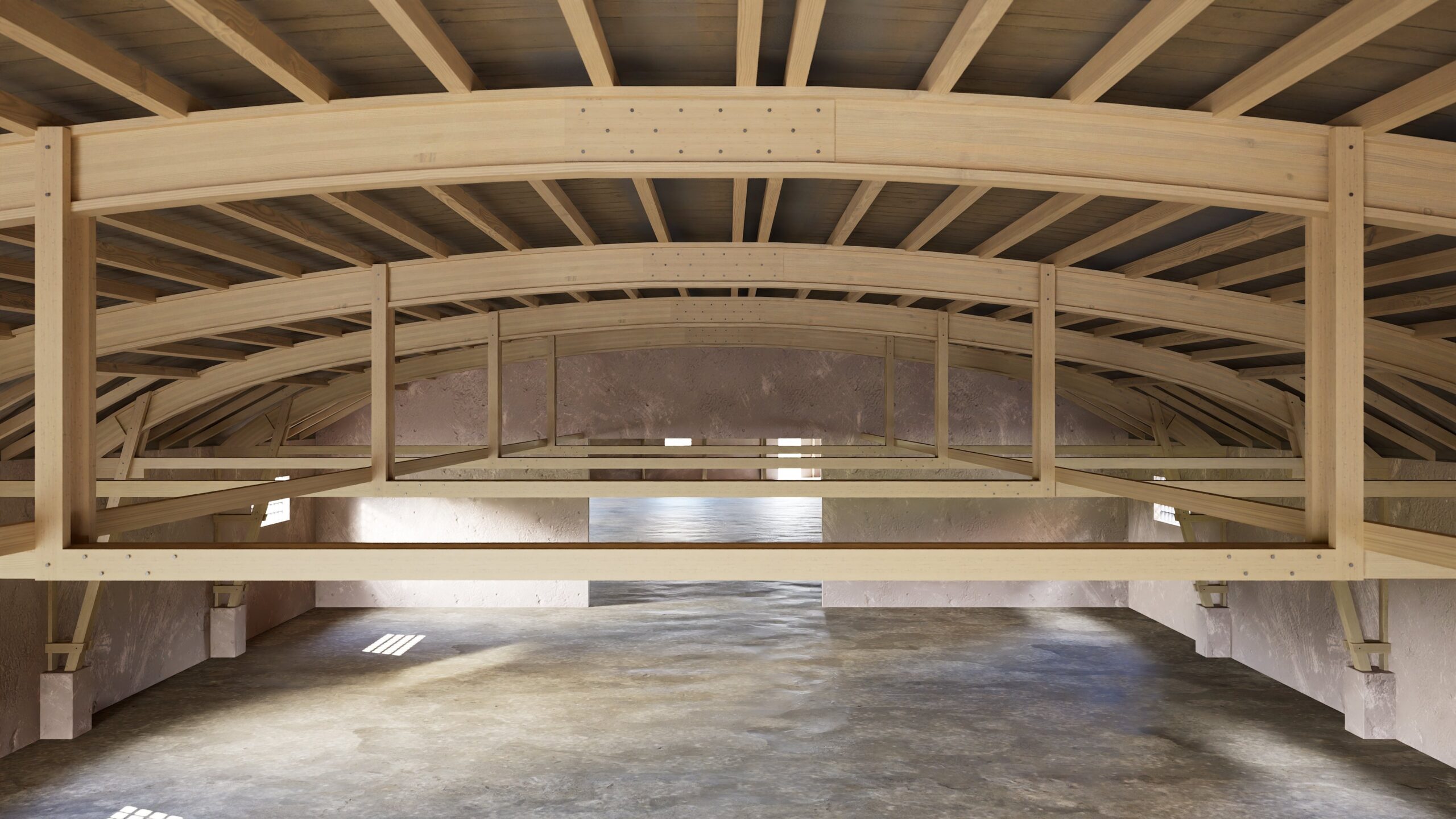
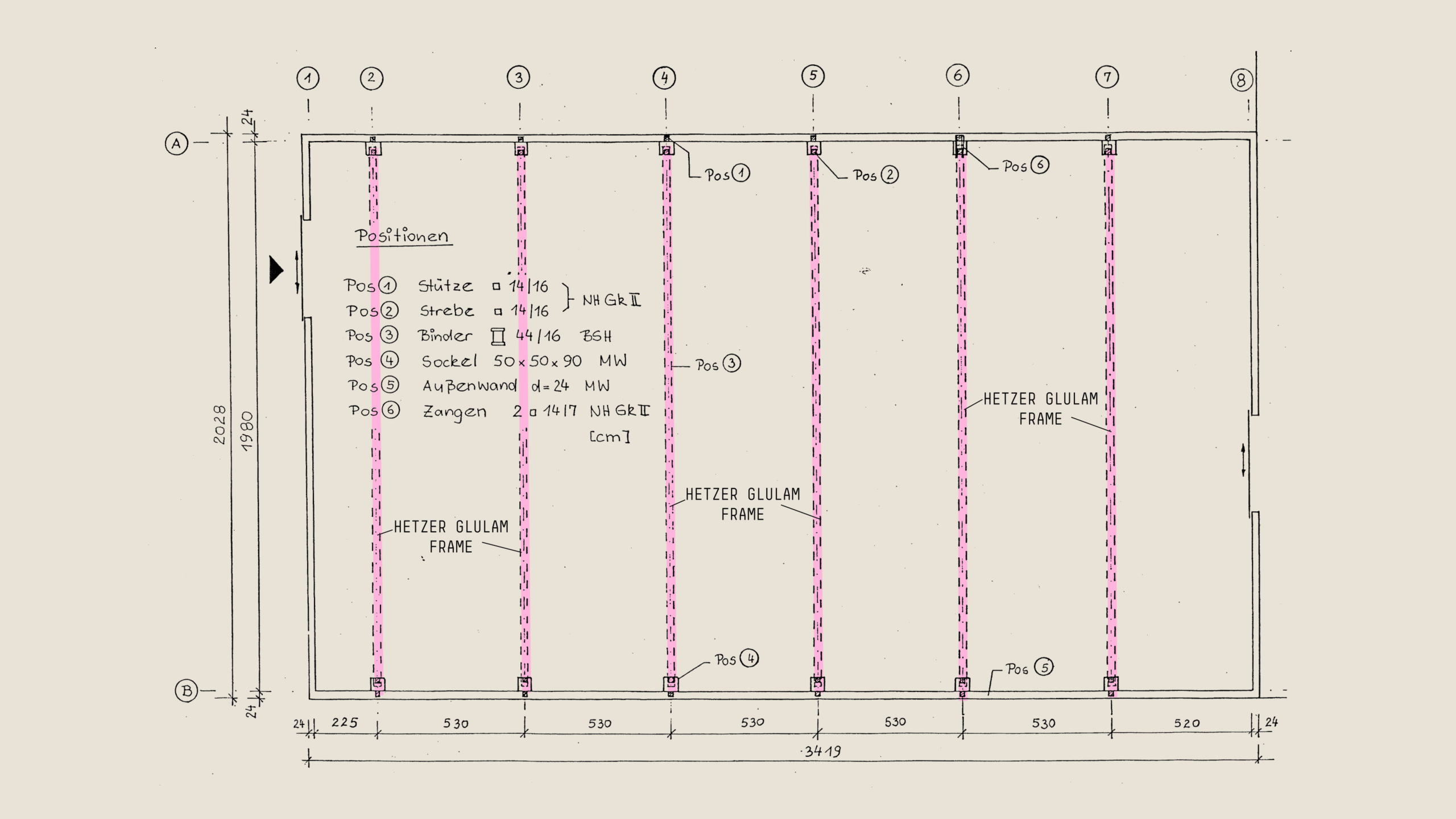
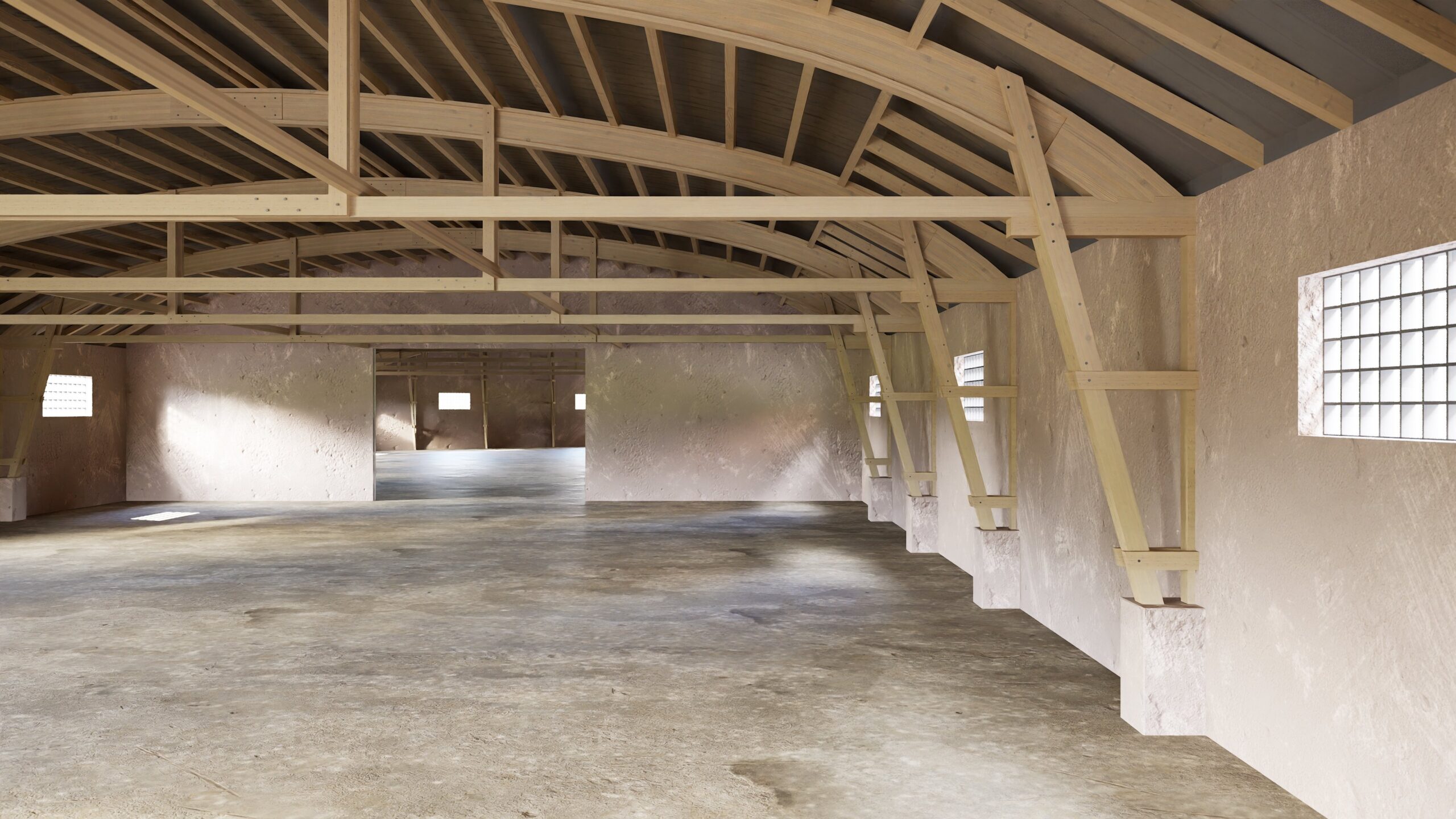
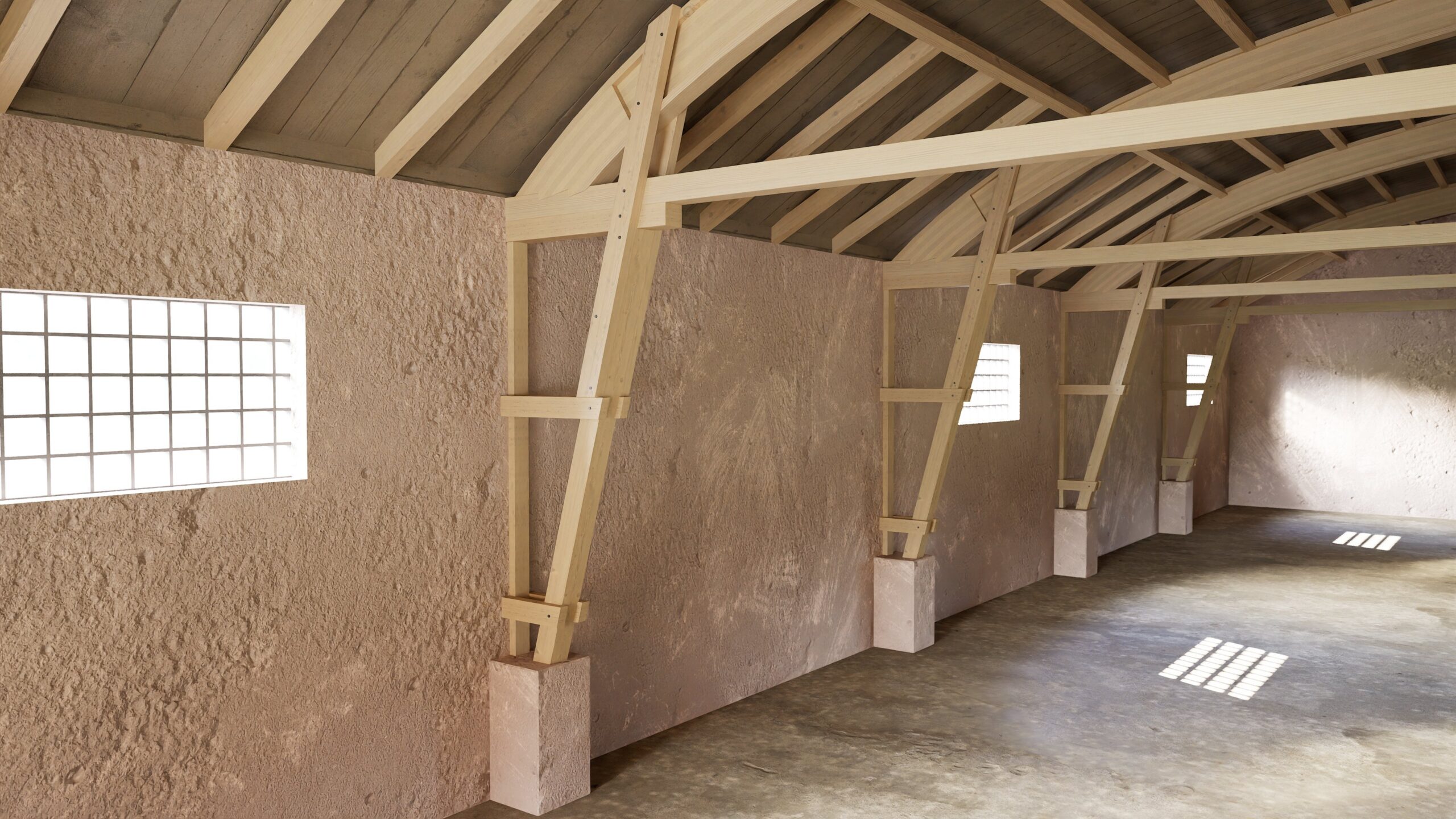
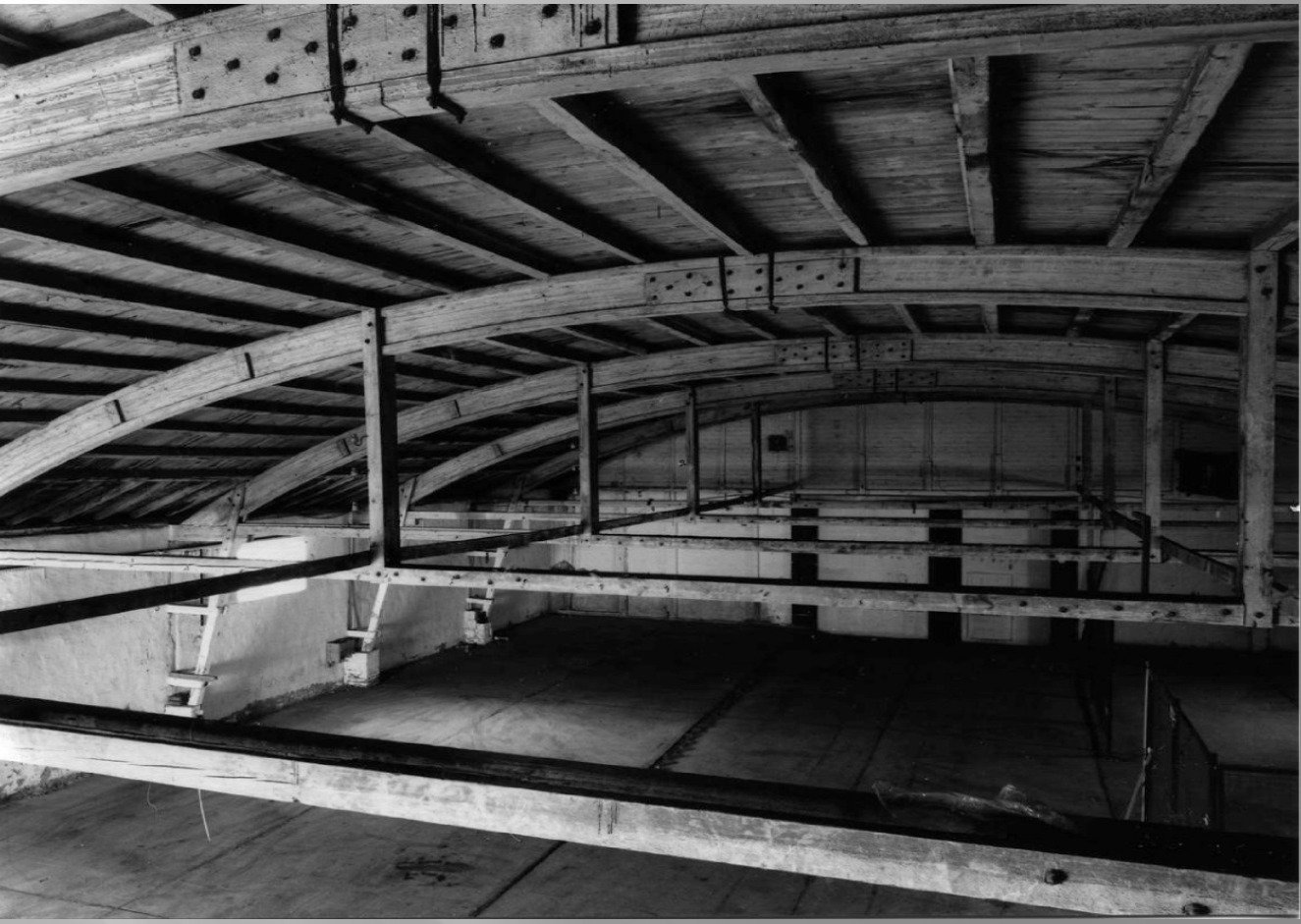
The small “Hetzer” hall measures approximately 34 m in length and 20 m in width. With a span of approximately 19 m and a ridge height of 6.4 m, six curved glued laminated timber beams support the roof. The main frames are spaced approximately 5.3 m apart and form the primary supporting structure.
The roof loads are absorbed by wooden boards laid parallel to the frames and transferred to transverse solid wood beams. From there, the load is transferred directly to the curved frame girder, then via the supports and foundations to the building ground. Lifting forces are absorbed structurally via foundation anchors.
The rigid main frames themselves provide the cross bracing. Additional diagonal struts in the frame corners specifically dissipate horizontal forces and increase the stability of the structure against wind and lateral loads.
After completion, the hall will be braced lengthwise by brick walls between the supports (24 cm). During the construction phase, beams on the tension rods performed this function. Each frame was manufactured in two parts and connected via an assembly joint in the center.
1/7

The frame of the large “Hetzer” hall

The load bearing structure of the large “Hetzer” hall is determined by its main frames. Their structural design, cross-section and joints are explained in more detail below.
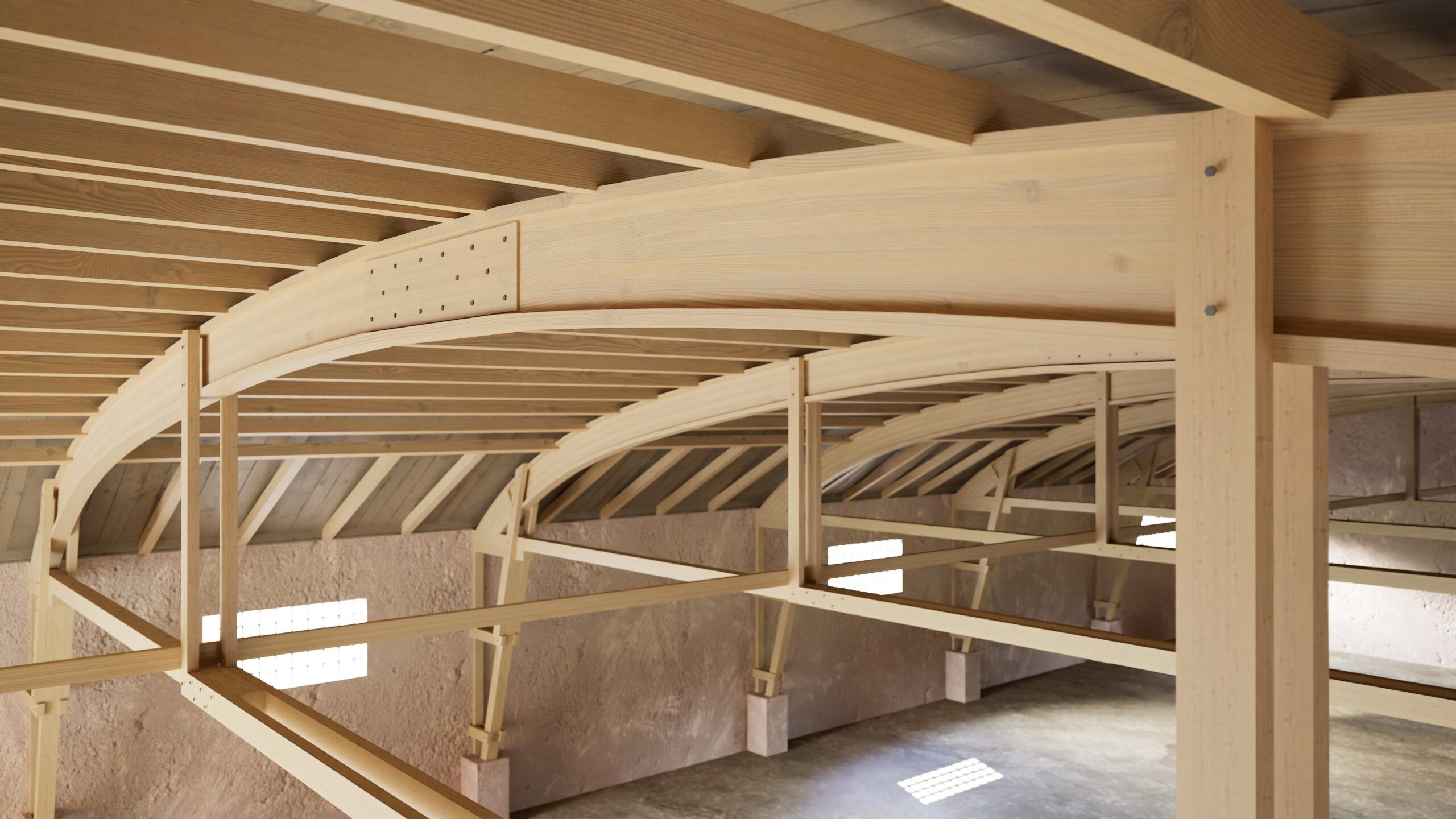
The main frames consist of curved glued laminated timber beams in the form of rigid double-hinged frames. Their geometry follows the flow of forces and enables large spans with comparatively little material.
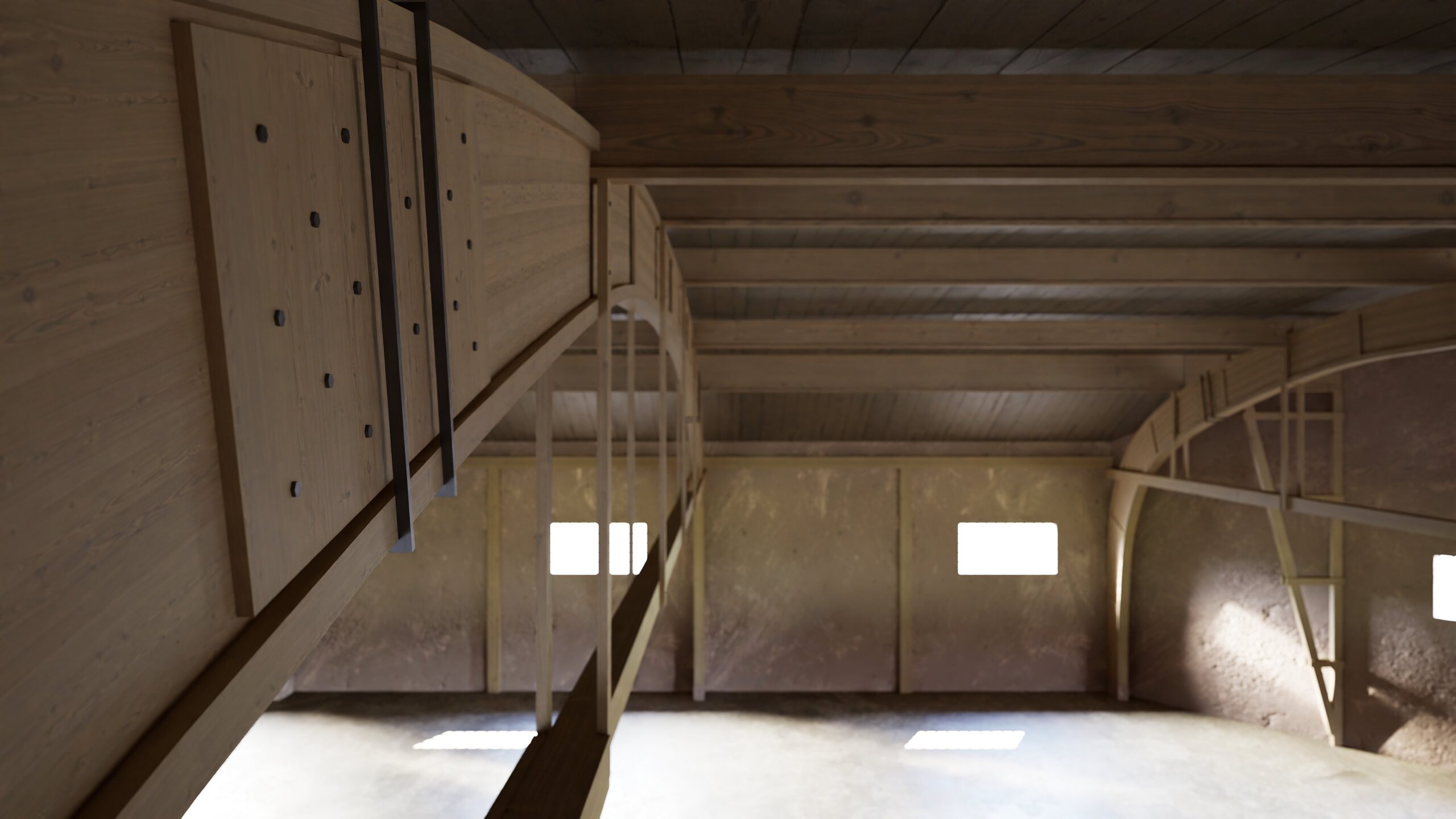
The frames have an I-shaped cross-section with variable height: up to 600 mm in the frame corners, approximately 500 mm in the middle of the field and at the base. This gradation corresponds to bending stresses and specifically reduces the amount of timber required.
The frames are constructed from prefabricated segments and connected via assembly joints in the web area. Iron straps secure the force transmission. The purlins abut directly against the frames and connect them structurally in the longitudinal direction.
1/7

The frame of the small “Hetzer” hall

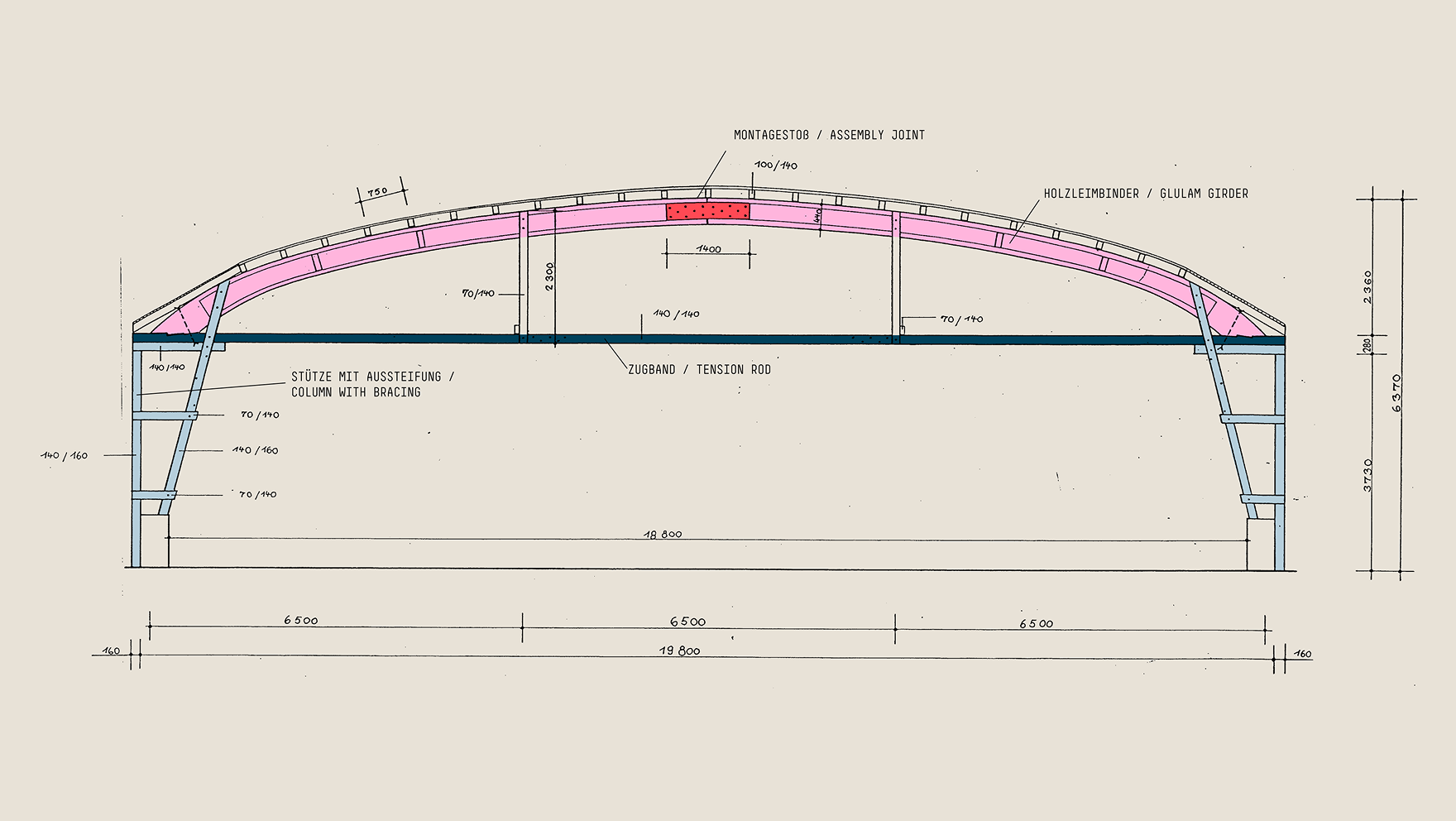
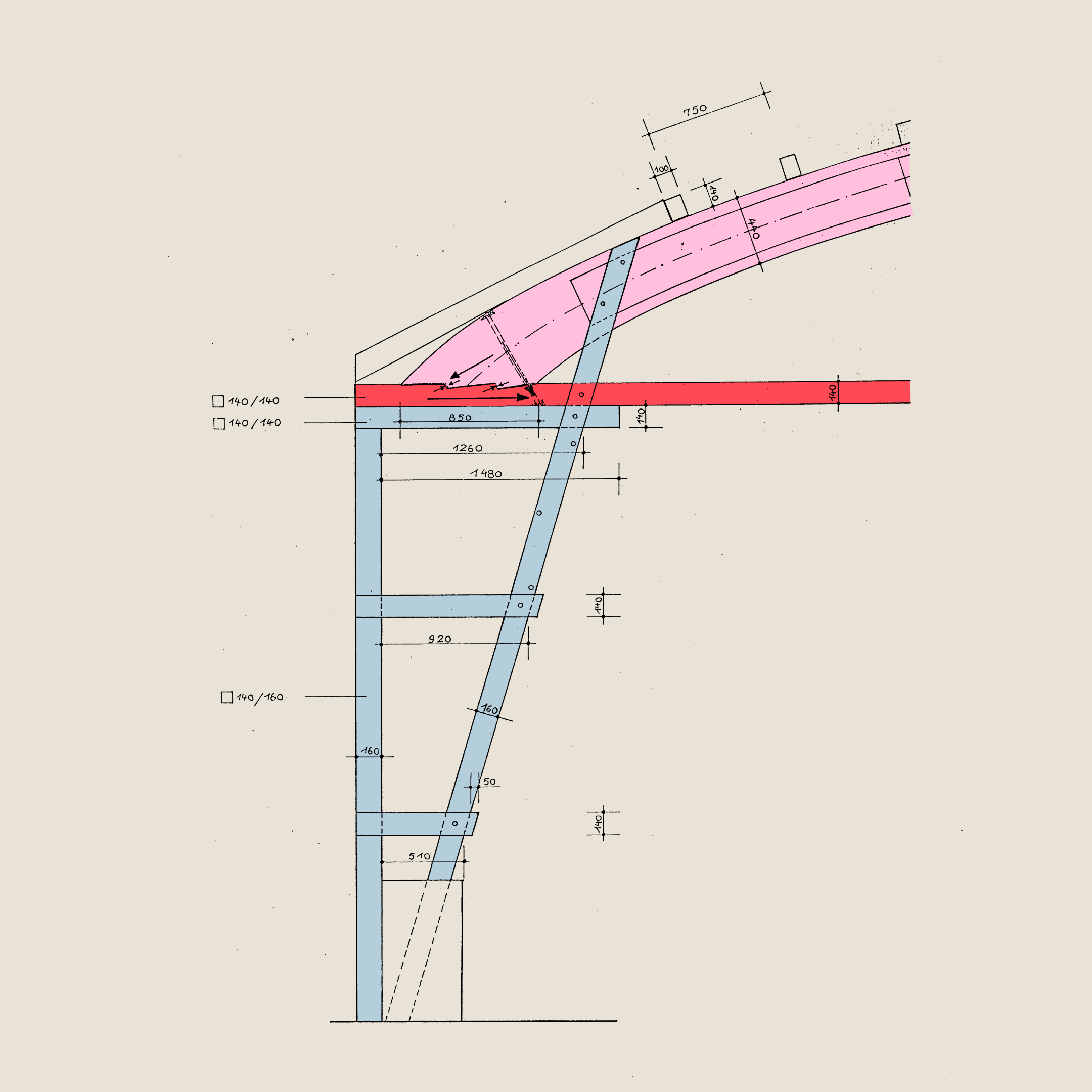
The load-bearing capacity of the small “Hetzer” hall is largely determined by its frame corners. Here, the curved glued laminated timber truss is connected to supports, tie rods and diagonals to form a compact, structurally clear system.
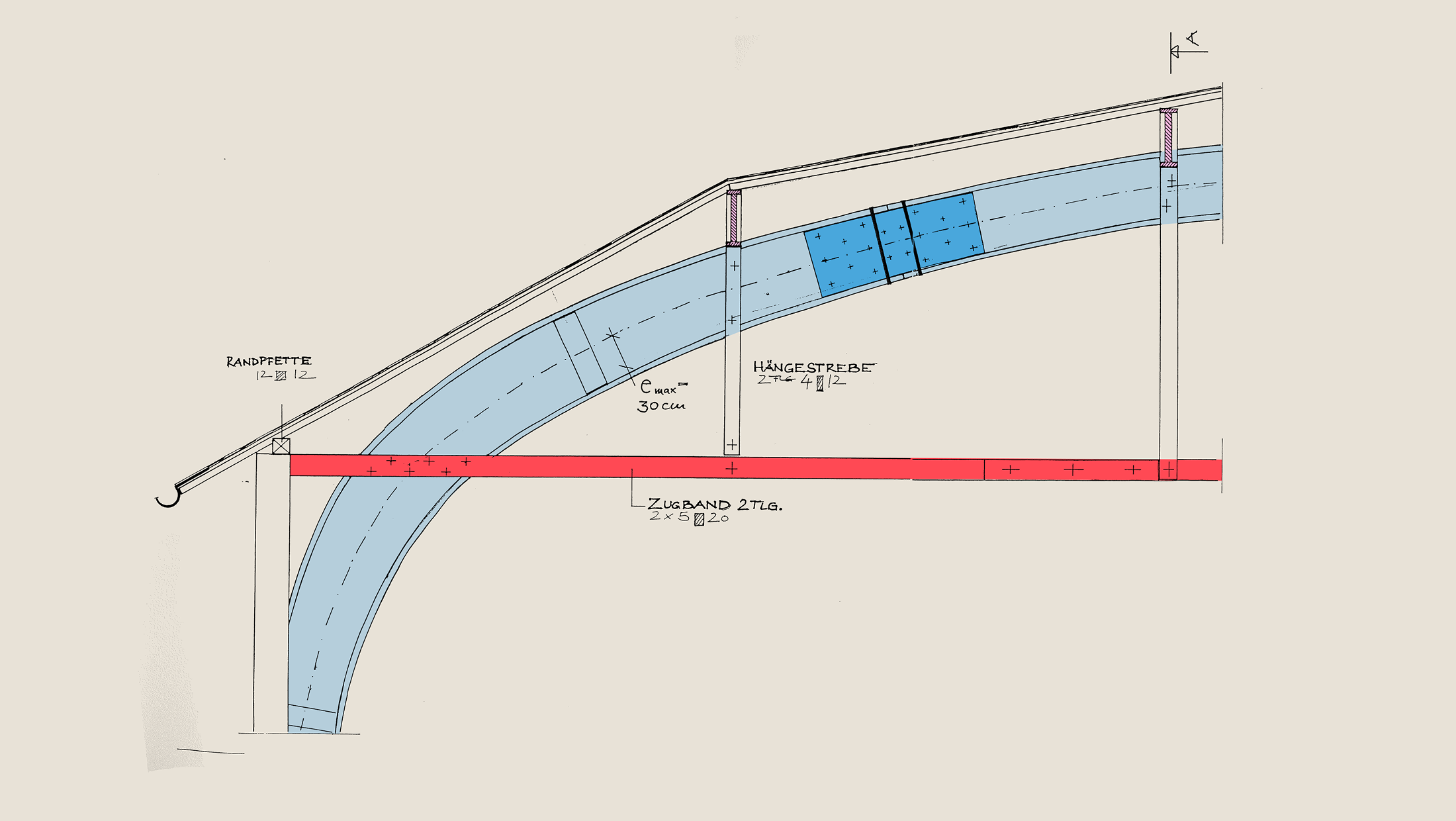
The frames are designed as double-hinged frames. They consist of a curved glued laminated timber girder with an additional tension strap that absorbs horizontal shear forces. The frame is hinged to the foundations, allowing controlled deformation under load.
The frame corner is designed as a rigid joint using a truss system made of solid timber. A diagonal brace connects the curved beam and the column, efficiently transferring horizontal forces. A wedge joint provides a force-locked connection between the beam and the tie rod. Together, the frame corner plays a key role in the lateral bracing of the hall.
The curved glued laminated timber girder is designed as an I-beam with a cross-section of approx. 440 × 160 mm and ensures high bending stiffness with low material usage. Supports and diagonals are made of solid wood (140 × 160 mm), and the tension rod measures 140 × 140 mm.
1/7

Application examples of the patented Hetzer beam

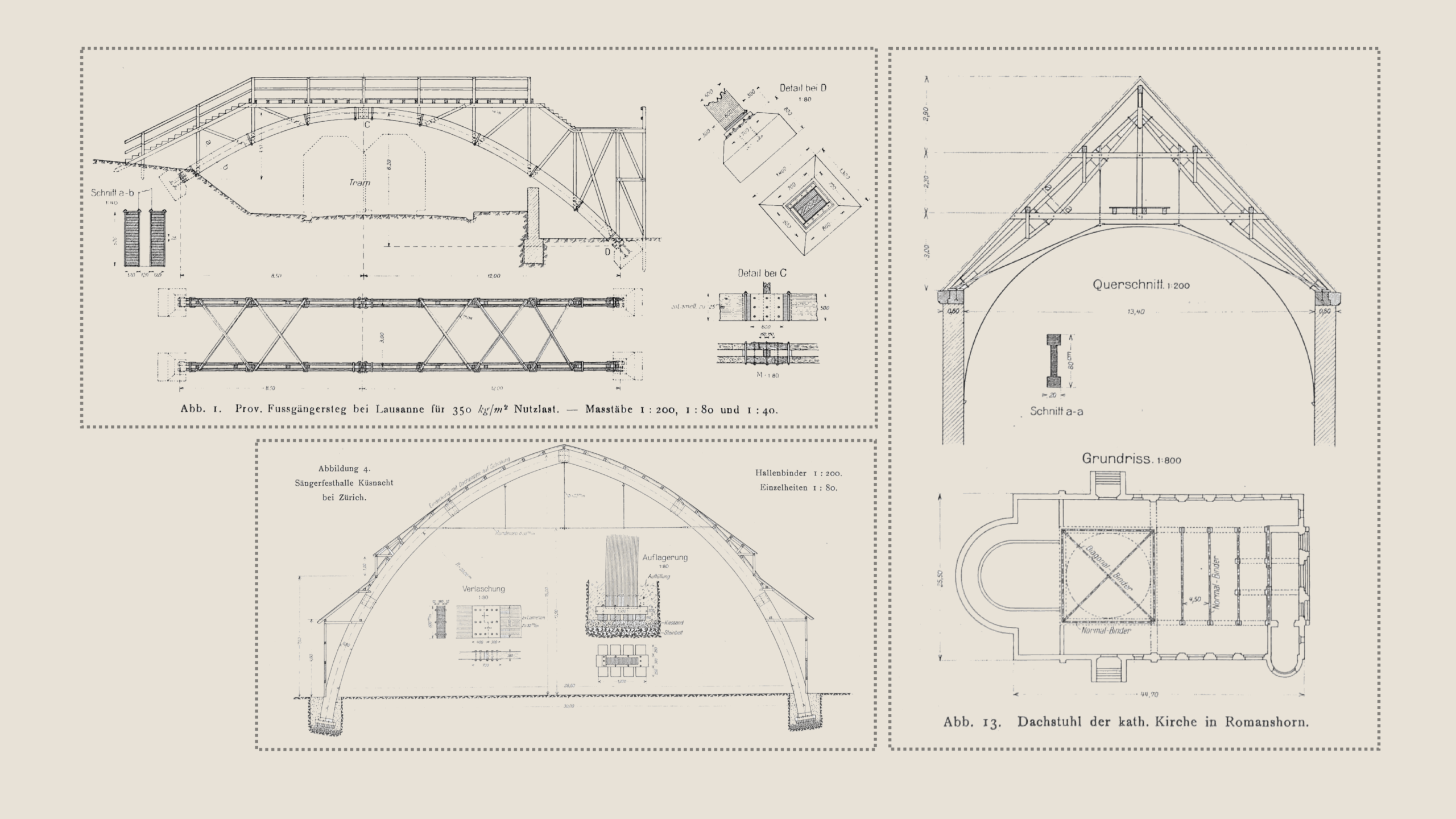
Among the first adopters of Otto Hetzer’s patented glued-laminated timber beam was the Zurich-based engineering firm Terner & Chopard. Shortly after acquiring the patent, they began applying the system in bridge and hall construction and played a key role in further developing the Hetzer beam during the early decades of the 20th century. The following examples illustrate early applications in Switzerland.
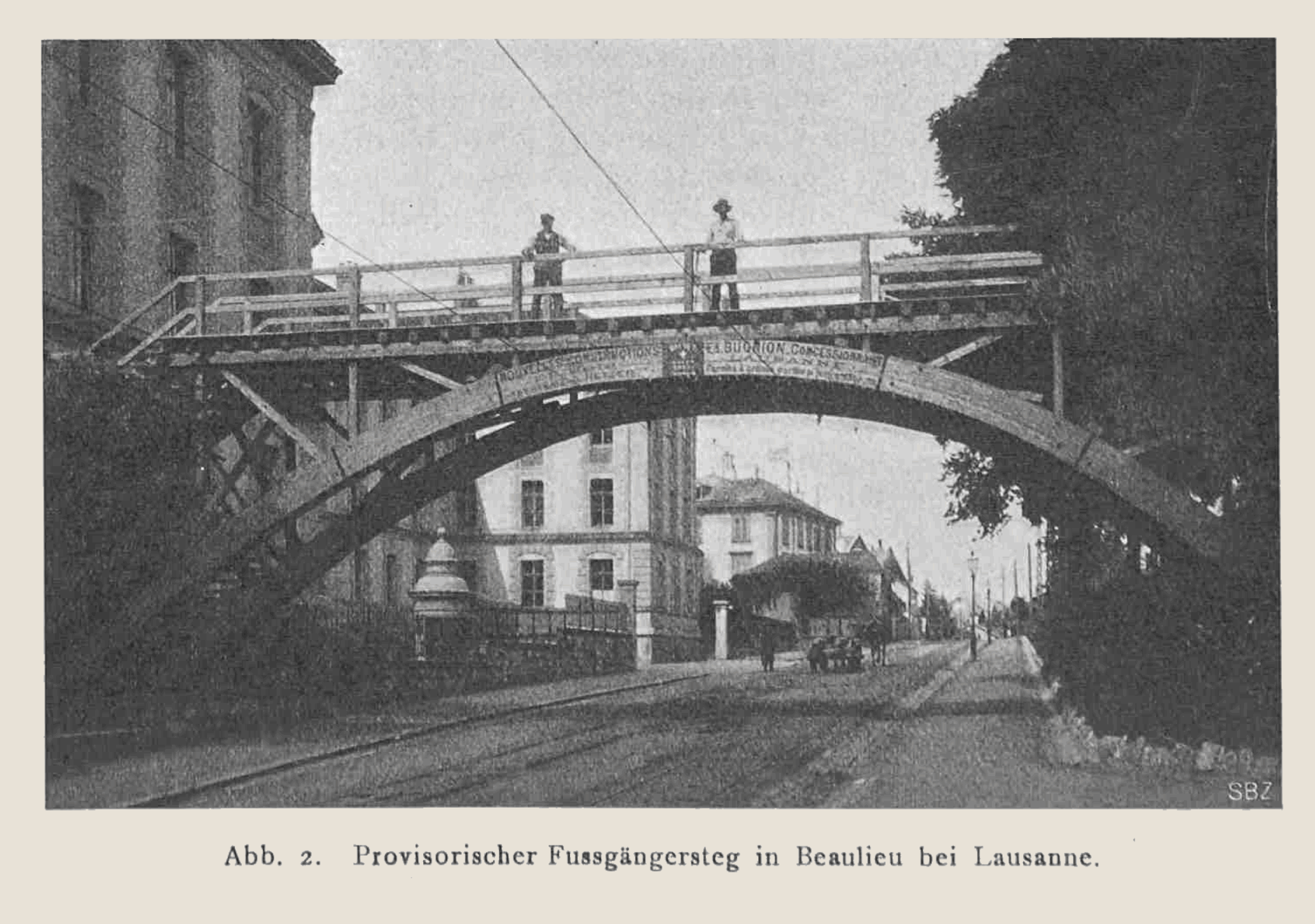
A temporary pedestrian bridge in Beaulieu near Lausanne is among the earliest applications of the Hetzer binder in bridge construction. It demonstrates the potential of the new glued-laminated timber method for lightweight structures that could be erected quickly and efficiently.
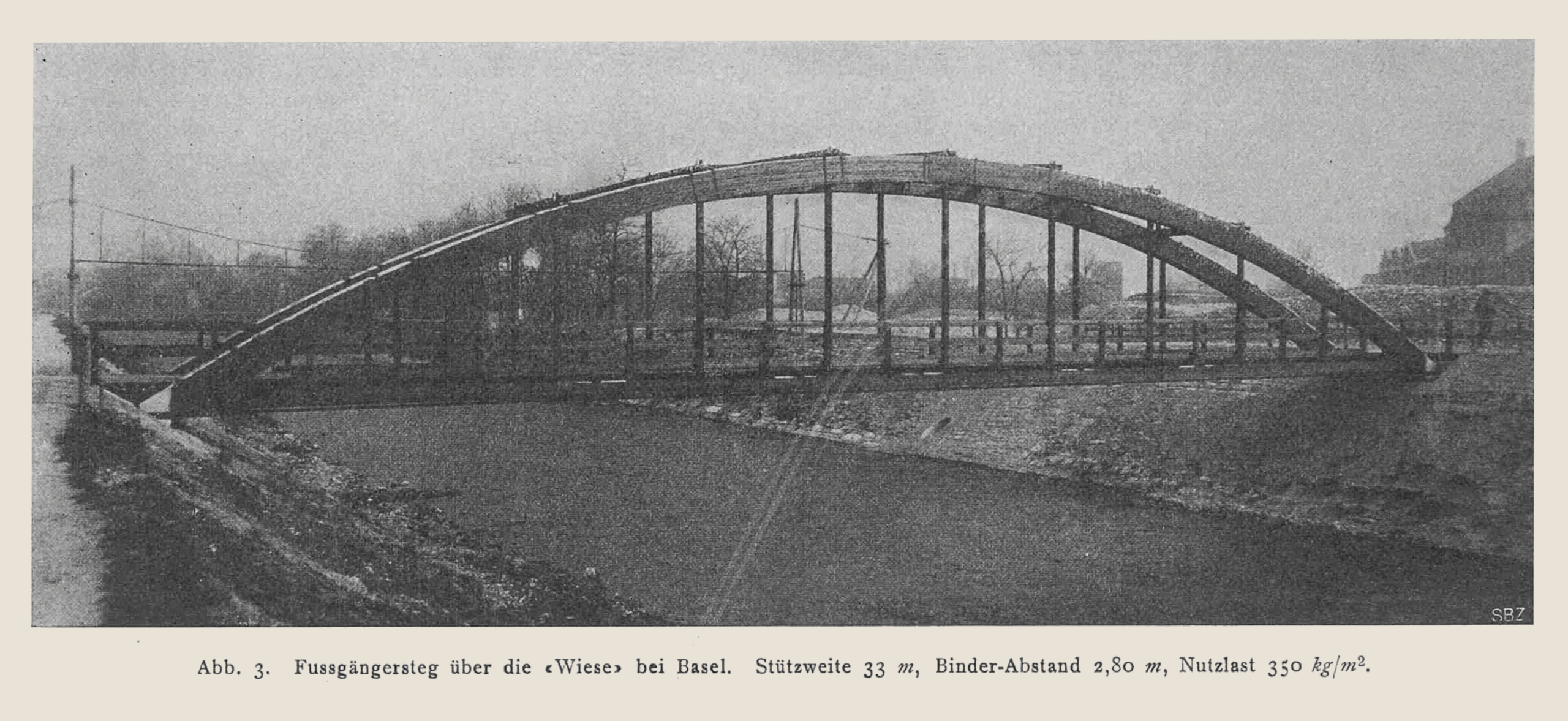
The pedestrian bridge over the Wiese River in Basel spans 33 m, with a girder spacing of 2.80 m and a live load of 350 kg/m². The structure demonstrates the load-bearing capacity and durability of Hetzer girders in infrastructure construction.
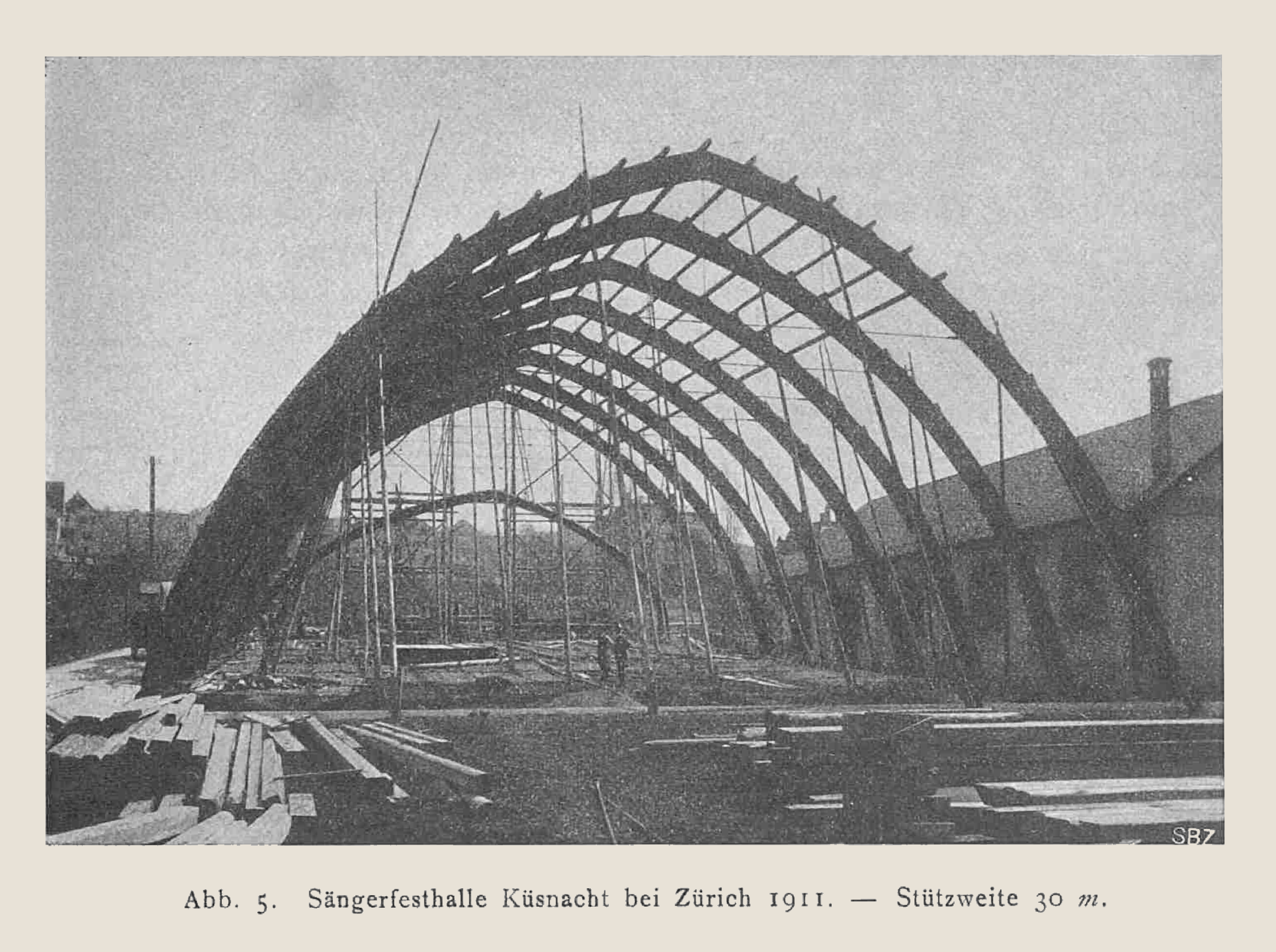
The “Sängerfesthalle” in Küsnacht near Zurich (1911) achieved a span of approximately 30 m. It is one of the early large-scale hall structures built using the Hetzer system and demonstrates its suitability for wide-span assembly spaces.
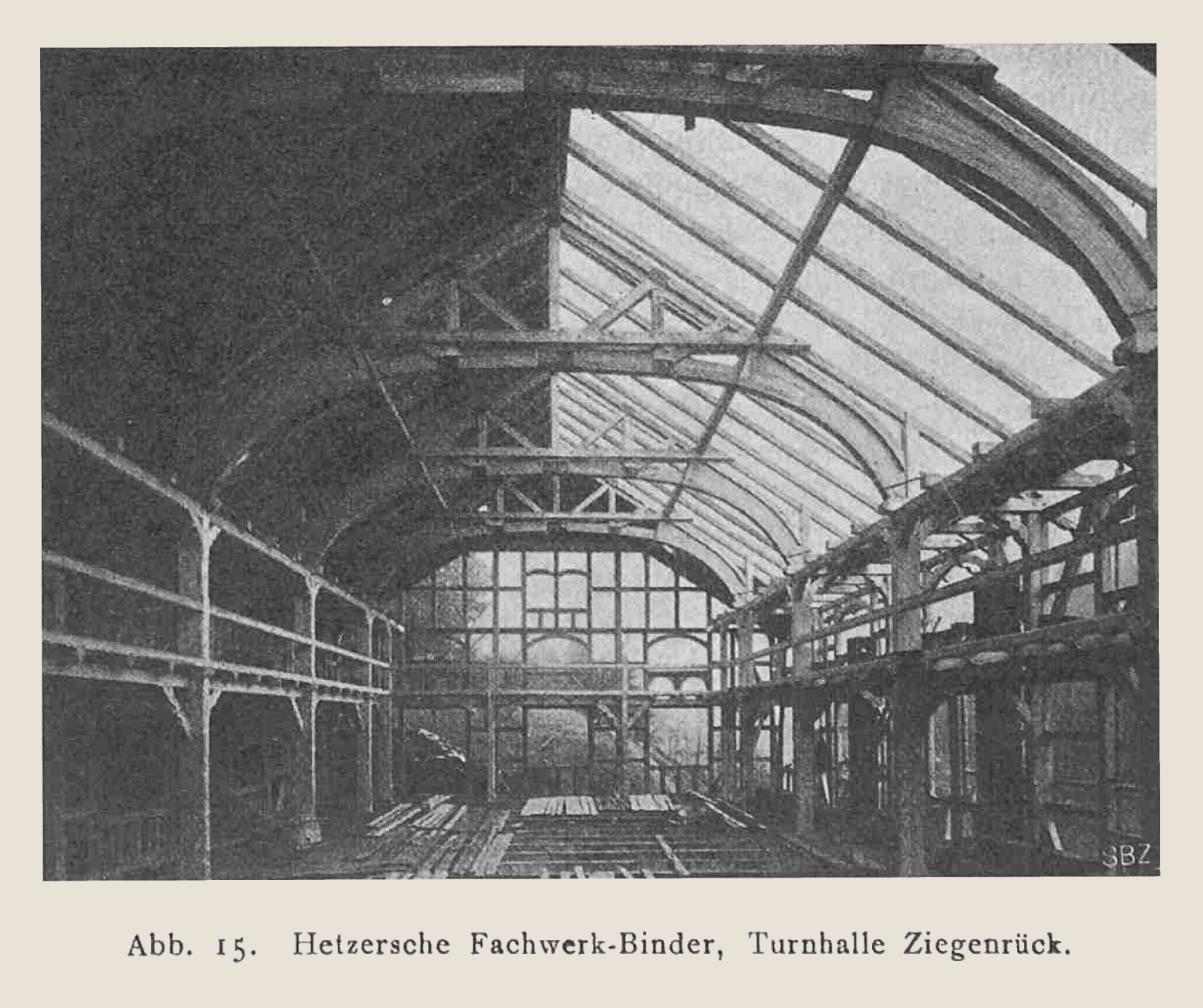
The gymnasium in Ziegenrück employs Hetzer truss girders that further develop the principle of curved glued-laminated timber. The structure illustrates the adaptability of the system to different structural forms.
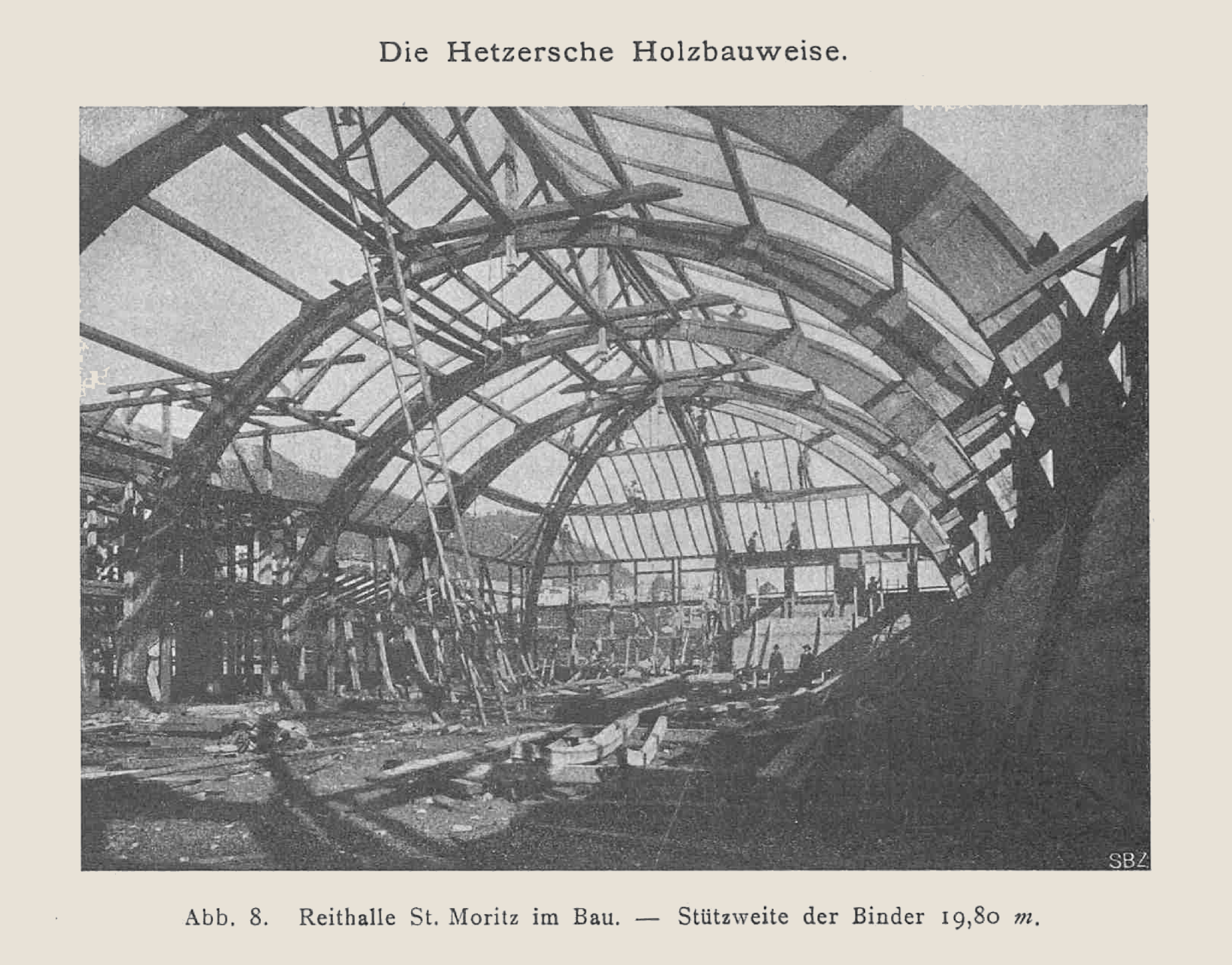
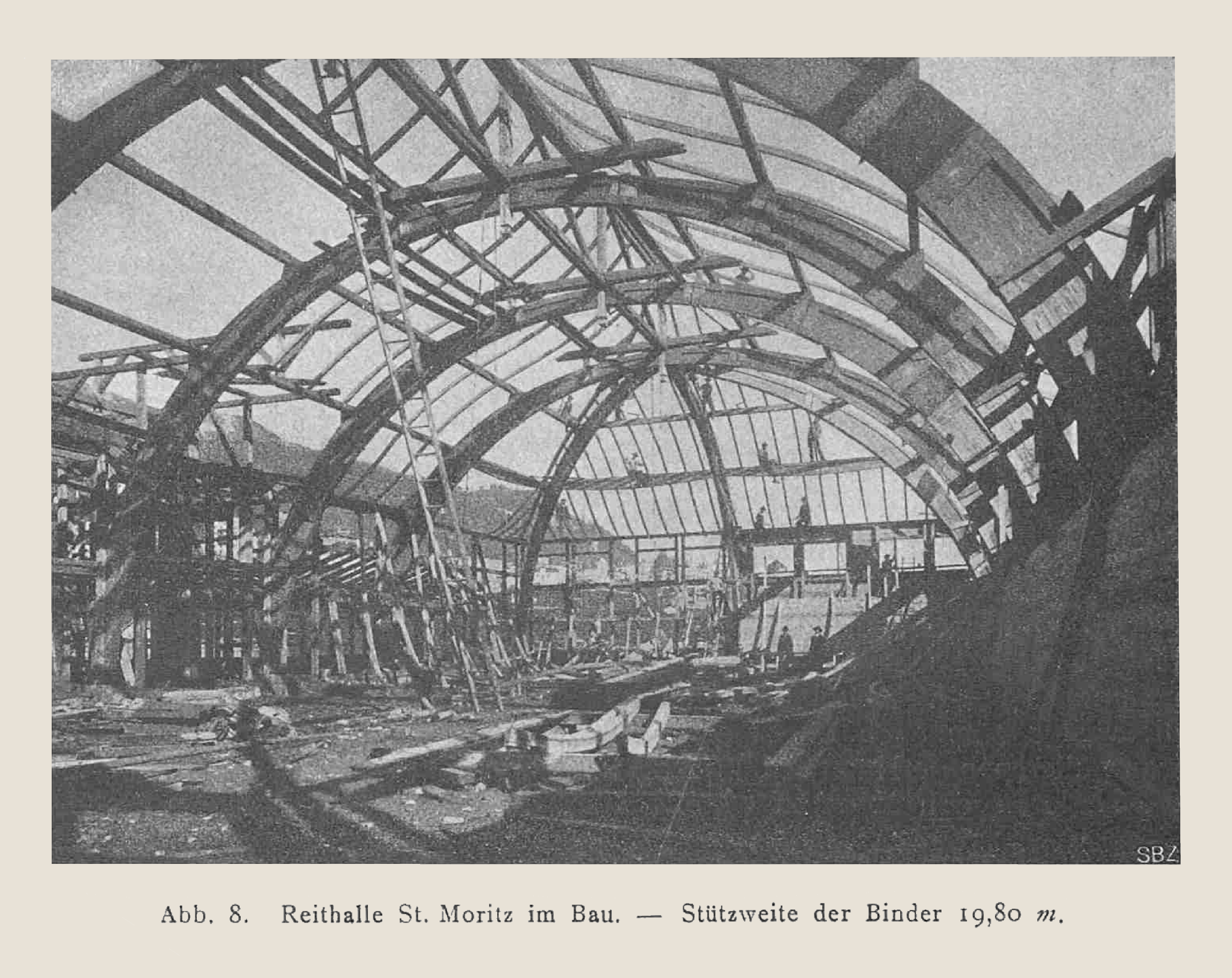
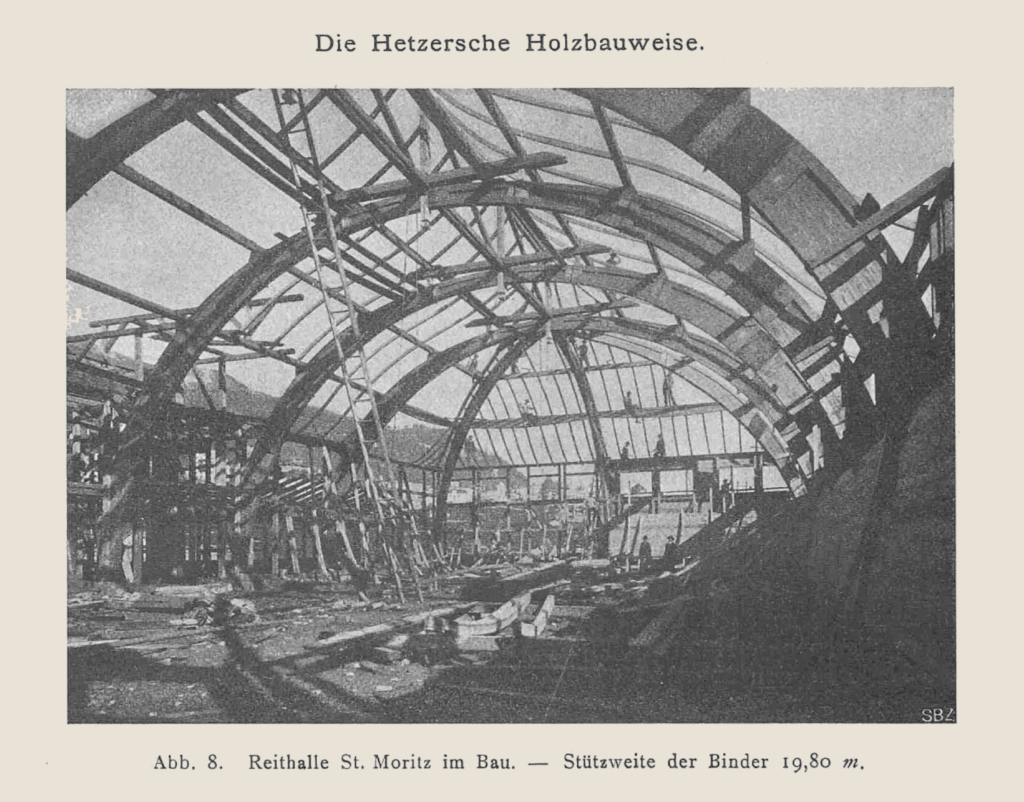
The “Reithalle” (horse riding hall) in St. Moritz under construction shows Hetzer girders with a span of 19.80 m during the erection phase.
Once completed, the St. Moritz “Reithalle” reveals the spatial effect of the construction. The Hetzer beams enable a column-free hall with a clear supporting structure.
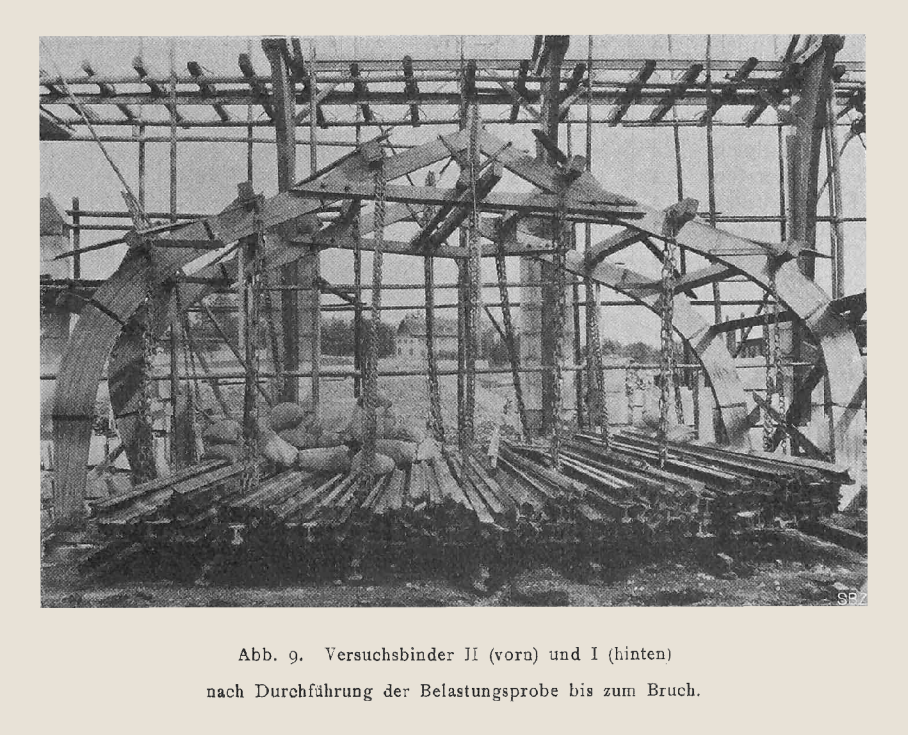
Load tests with Hetzer girders such as these from the 1920s provided the basis for growing confidence in glued-laminated timber construction and paved the way for its increasing use in the building industry.
1/7

EXPLORE THE STRUCTURE OF THE The Hetzer Timber Halls IN THE COMFORT OF YOUR HOME.

Here you can download the entire VR exhibition of the The Hetzer Timber Halls for free.
Pause

WHO MADE THIS PROJECT POSSIBLE?WE GRATEFULLY THANK

Where were the lost structures located? Find them on the map.

Berlin

The “Ahornblatt” Restaurant

This double-curved concrete shell structure enables large spans with minimal material use. Its futuristic form shapes the Berlin cityscape beyond the GDR era.

Berlin

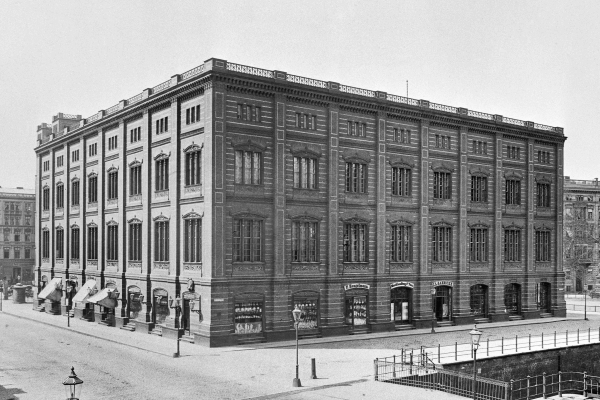
The Berlin “Bauakademie”

This masonry skeleton construction is a prototype building with a uniform column grid, consisting of rib-reinforced vaulted ceilings, masonry columns , and arches, which set standards for economical and functional construction throughout Prussia.

Berlin

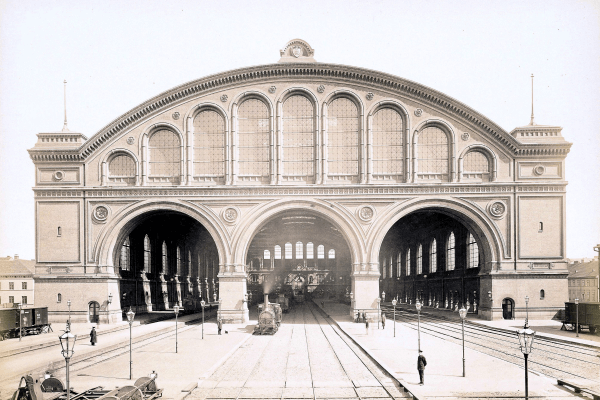
The “Anhalter” Train Station

This masonry structure with pin-jointed iron truss arches connects Berlin to the world. A train station whose innovative roof structure, at the time, featured the largest span in Europe.

Berlin

The Old “Kaisersteg”

This iron truss bridge with an arch and central hinge connects two districts of Berlin. With a main span of 86 meters, it was a technical masterpiece of its time and represents innovative bridge engineering of the late 19th century.

Schmehausen

The Cable Net Cooling Tower

The cable-net cooling tower of the Hamm-Uentrop nuclear power plant in Schmehausen is globally unique in its design. The load-bearing network of steel cables replaces traditional concrete structures, enabling an exceptionally lightweight and efficient construction.

Munich

The Munich Glass Palace

This cast steel and glass structure is built in 1854 using innovative industrial manufacturing processes in a very short time. Although intended as a temporary building, it shaped Munich’s reputation as a city of art for over 75 years through its exhibitions.

Weimar

The Hetzer Timber Halls

The timber halls of the company Otto Hetzer AG were based on a construction principle patented in 1906: glued and curved timber elements that enabled large spans – a groundbreaking innovation in timber construction.

Awareness information

Let’s talk

Collaborate
with us

You have ideas for the content development of the museum and would like to exchange thoughts with us? We’d love to hear from you!

Collaborate as a Museum

Your museum is interested in a partnership? We offer a curated exhibition that we’d be happy to bring to your institution. Get in touch – we look forward to working together!

Become
a Partner

You’re passionate about structural engineering and believe in the importance of sharing it with others? We have big plans and are looking for committed partners. We’d love to hear from you!