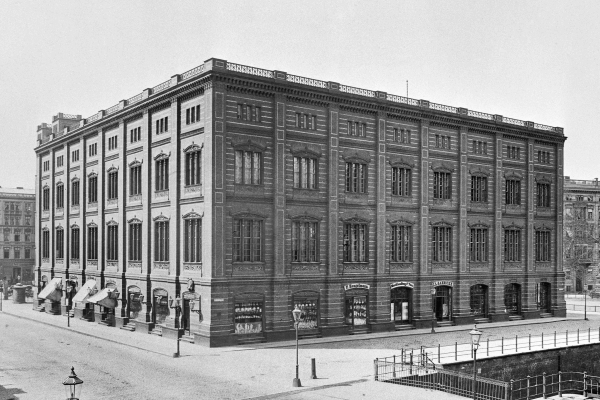
NEW STRUCTURE RECOVERED: The Berlin "Bauakademie" has been online since April 20. Enjoy exploring it!

The art  of engineering. reimagined.

A digital cultural space for the art of engineering — to learn, discover, and be amazed. Take a virtual stroll and experience the art of engineering as a cultural practice of the past and the future.

Explore seven extraordinary lost structures brought back to life through detailed, interactive 3D engineering reconstructions.

click on the location to show a structure.

Where were the lost structures located? Find them on the map.

Berlin

52° 30' 49" N, 13° 24' 21" E

The “Ahornblatt” Restaurant

This double-curved concrete shell structure enables large spans with minimal material use. Its futuristic form shapes the Berlin cityscape beyond the GDR era.

Berlin

52° 30′ 58″ N, 13° 23′ 56″ E

The Berlin “Bauakademie”

This masonry skeleton construction is a prototype building with a uniform column grid, consisting of rib-reinforced vaulted ceilings, masonry columns , and arches, which set standards for economical and functional construction throughout Prussia.

Berlin

52° 30′ 11″ N, 13° 22′ 55″ E

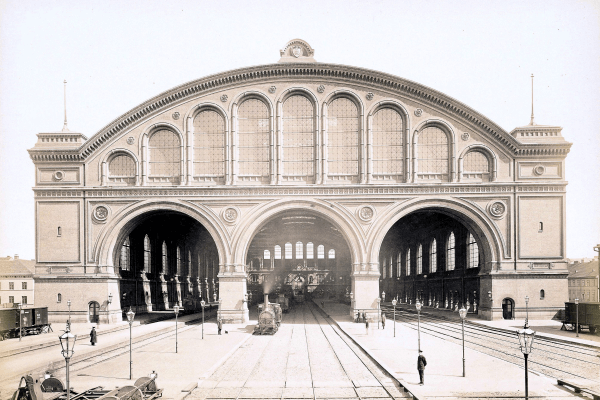
The “Anhalter” Train Station

This masonry structure with pin-jointed iron truss arches connects Berlin to the world. A train station whose innovative roof structure, at the time, featured the largest span in Europe.

Berlin

52° 27' 29" N, 13° 31' 11" E

The Old “Kaisersteg”

This iron truss bridge with an arch and central hinge connects two districts of Berlin. With a main span of 86 meters, it was a technical masterpiece of its time and represents innovative bridge engineering of the late 19th century.

Schmehausen

51° 41' 2" N, 7° 58' 37" E

The Cable Net Cooling Tower

The cable-net cooling tower of the Hamm-Uentrop nuclear power plant in Schmehausen is globally unique in its design. The load-bearing network of steel cables replaces traditional concrete structures, enabling an exceptionally lightweight and efficient construction.

Munich

48° 8′ 32″ N, 11° 33′ 52″ E

The Munich Glass Palace

This cast steel and glass structure is built in 1854 using innovative industrial manufacturing processes in a very short time. Although intended as a temporary building, it shaped Munich’s reputation as a city of art for over 75 years through its exhibitions.

Weimar

50° 59′ 34″ N, 11° 18′ 60″ E

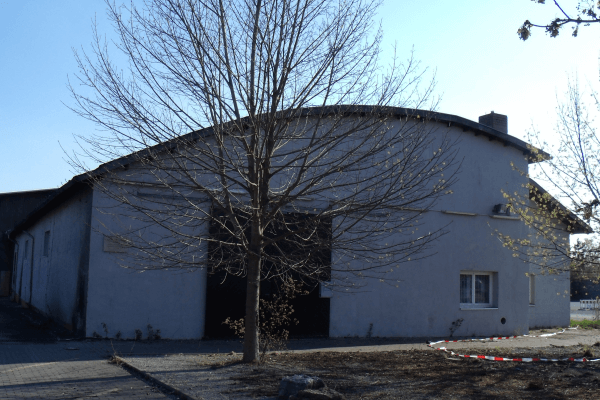
The Hetzer Timber Halls

The timber halls of the company Otto Hetzer AG were based on a construction principle patented in 1906: glued and curved timber elements that enabled large spans – a groundbreaking innovation in timber construction.

Experience the art of engineering immersively – not just online, but directly with a virtual reality headset.

The VR experience brings structural engineering to life: Explore the lost structures of this exhibition as walk-through 3D reconstructions, examine structural details up close, witness historical construction phases through animated sequences – and immerse yourself in materials, scales, and atmospheres that cannot even be felt in existing structures.

The VR Museum invites you to experience rotating exhibitions right on site. During our exhibitions, you’ll get guided access to the VR headsets, and we’ll personally take you through the impressive structures. This way, we guarantee you a captivating experience of modern VR engineering marvels.

Lost & Found - A virtual walk through lost objects of the art of engineering

Experience lost objects of the Art of Engineering a new -
virtually and on-site. From February 11 to March 29, 2026, we present our first VR exhibition at the Roter Saal on Schinkelplatz, in the heart of Berlin.

11 February - 29 March 2026 WED,THU,FRI 14:00 - 19:00, SAT & SUN 12:00 - 17:00, FROM 11 March WED-SUN 14:00-18:00

YOU CAN EXPLORE THE STRUCTURES FROM HOME, TOO.

You can do this either online here on the website or via our Android apps, which you can download on the individual structure pages.


Especially for educational institutions, they offer new didactic opportunities to convey the art of engineering.

Our Philosophy

Understand more about the idea and the background of the Digital Museum for the art of engineering.

Who made this project possible.
We gratefully thank

Funding

Let’s talk

Collaborate
with us

You have ideas for the content development of the museum and would like to exchange thoughts with us? We’d love to hear from you!

Collaborate as a Museum

Your museum is interested in a partnership? We offer a curated exhibition that we’d be happy to bring to your institution. Get in touch – we look forward to working together!

Become
a Partner

You’re passionate about structural engineering and believe in the importance of sharing it with others? We have big plans and are looking for committed partners. We’d love to hear from you!